

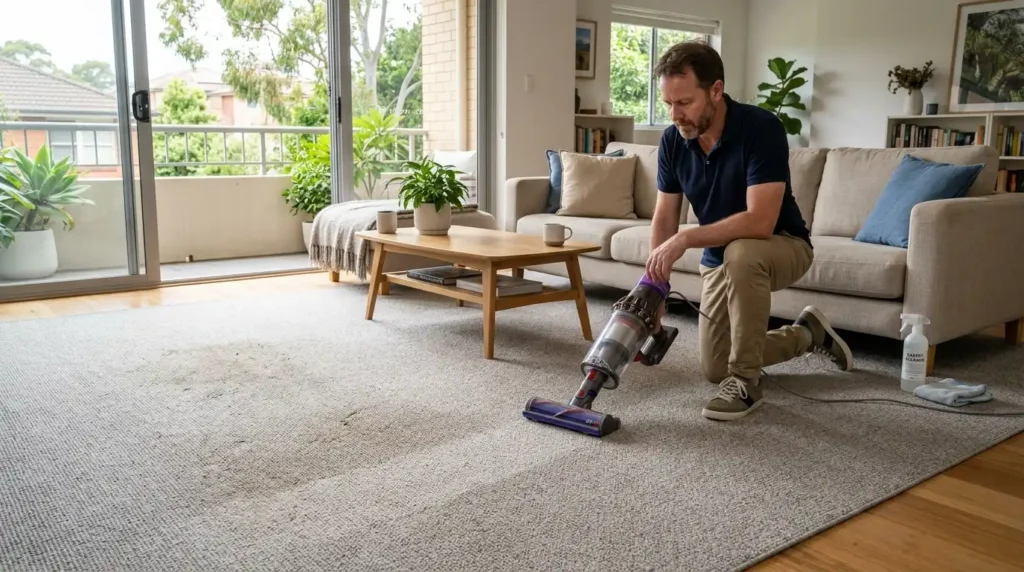
To clean carpet at home, begin by vacuuming thoroughly to remove loose dirt and debris, then treat stains with a suitable carpet cleaning solution. Clean the carpet using controlled moisture, avoid over-wetting the fibres, and allow enough drying time before using the area again. Small sections can often be cleaned by hand, while larger or heavily soiled carpets may require a carpet cleaning machine.
DIY carpet cleaning can improve appearance and freshness, but it has limits. Deep contamination, persistent odours, delicate fibres and extensive staining may require a more specialised approach.

Before You Clean Your Carpet
Preparation plays an important role in the final result. Cleaning products work more effectively when loose dirt has already been removed and the carpet is ready for treatment.
Clear the Cleaning Area
Remove lightweight furniture, toys, cables, rugs, and other objects from the carpeted area before starting.
You do not always need to empty the entire room. Focus on the sections you plan to clean and make sure you can move around safely while working.
Vacuum Thoroughly Before Cleaning
Vacuuming is one of the most important steps before applying any moisture or cleaning solution.
A vacuum removes loose dry soil, including:
- dust
- hair
- crumbs
- grit
- surface debris
Removing this material first prevents loose dirt from mixing with cleaning products and becoming harder to remove.
If you are preparing carpet for a professional service, our guide on whether you need to vacuum before carpet cleaning explains when pre-vacuuming is required and when it may already be included.
Check Your Carpet Type
Before using any cleaning product, identify what type of carpet you have.
Common carpet fibres include:
- wool
- nylon
- polyester
- polypropylene
- blended fibres
Different fibres react differently to moisture, chemicals and cleaning methods. A solution suitable for synthetic carpet may not be appropriate for wool or delicate carpet.
If you have wool carpet, our guide on whether you can steam clean wool carpet explains why fibre type matters before choosing a cleaning method.

The Best Way to Clean Carpet at Home
The most effective DIY approach is to work in the correct order:
- Remove loose dirt.
- Treat stains based on their cause.
- Apply a suitable cleaning solution.
- Control moisture during cleaning.
- Allow the carpet to dry completely.
Each step has a different purpose. Skipping preparation or using too much moisture can reduce the quality of the result.
Step 1: Treat Stains Correctly
Different stains require different treatment. A general carpet cleaner may not address every type of mark.
| Stain type | Recommended approach |
| Food and drink spills | Remove excess material first and treat carefully |
| Mud and soil | Allow loose dirt to dry before removing |
| Pet urine | Use a suitable pet accident treatment |
| Grease or oily marks | Use a product designed for oily contamination |
Avoid aggressively scrubbing stains because this can push the substance deeper into the fibres or damage the carpet pile.
For pet accidents, ordinary stain treatment may not remove the source of the odour. Our guide on how to get pet urine out of carpet explains why these stains often need a different approach.
Step 2: Apply a Suitable Carpet Cleaning Solution
The right carpet cleaning solution depends on:
- carpet fibre
- stain type
- product instructions
- cleaning method
Before applying a new product across a visible area, test it on a hidden section of carpet first.
Avoid using excessive amounts of solution. More product does not automatically mean better cleaning. Too much solution can leave residue behind, which may attract dirt after the carpet dries.
The Carpet and Rug Institute recommends following appropriate carpet maintenance and cleaning practices to help protect carpet performance.
Step 3: Clean the Carpet Without Over-Wetting
Once the carpet has been prepared and stains have been treated, apply the cleaning method carefully.
For small areas, this may involve:
- applying a small amount of solution
- gently working the area
- removing excess moisture with a clean towel
For larger areas, a carpet cleaning machine may provide more consistent results.
The goal is to loosen and remove soil while keeping moisture controlled. Carpet should be cleaned, not soaked.
Step 4: Allow the Carpet to Dry Completely
Drying is a critical part of carpet cleaning.
After cleaning:
- improve airflow where possible
- keep unnecessary foot traffic away
- avoid replacing furniture too quickly
- wait until the carpet is fully dry before normal use
Drying time depends on factors such as carpet thickness, cleaning method, airflow,w and how much moisture was used.

Cleaning Carpet Without a Machine
You can clean carpet without a machine when dealing with small stains, light soiling, ng or specific areas that need attention.
Hand cleaning is useful for:
- small spills
- isolated marks
- light surface dirt
- areas that do not require full carpet cleaning
A simple process involves:
- Vacuum the area thoroughly.
- Apply a suitable carpet cleaning solution.
- Gently work the affected section.
- Remove excess moisture with a clean towel.
- Allow the carpet to dry completely.
This approach works best for smaller areas. Cleaning an entire carpet by hand can be difficult because it is harder to remove moisture evenly, which may increase drying time.
Deep Cleaning Carpet at Home With a Machine
Deep cleaning carpet at home involves more than removing visible marks. It is designed to remove more embedded soil that regular vacuuming cannot reach.
For larger carpeted areas, a carpet cleaning machine or shampooer can make the process easier by applying cleaning solution and extracting loosened dirt and moisture.
A typical deep cleaning process includes:
- Vacuum the carpet thoroughly to remove loose soil.
- Prepare the machine according to the manufacturer’s instructions.
- Apply the recommended carpet cleaning solution.
- Clean the carpet slowly and evenly.
- Extract as much moisture as possible.
- Allow the carpet to dry completely.
The final result depends on factors such as:
- carpet fibre type
- carpet condition
- equipment quality
- cleaning technique
- type of soil present
Avoid using excessive water or repeating passes unnecessarily. Over-wetting can increase drying time and may create moisture-related problems.
Carpet shampooers and cleaning machines can improve results for general soiling, but they are not suitable for every carpet type or situation. Delicate fibres, deep contamination, persistent odours or severe staining may require a different approach.
Choosing the Right Carpet Cleaning Solution
The best carpet cleaning solution depends on the problem you are trying to solve.
Commercial Carpet Cleaners
Purpose-made carpet products are designed for carpet materials and usually include instructions for correct use.
When choosing a product:
- check carpet compatibility
- follow the label instructions
- avoid using more than recommended
- test it before applying widely
Homemade Carpet Cleaning Solutions
Some homeowners prefer homemade carpet cleaning solutions for minor cleaning tasks.
However, homemade mixtures are not suitable for every carpet or every stain. Household ingredients may help with surface freshness, but they may not address deeper soil, contamination, or odour sources.
Before using any DIY mixture:
- test it on a hidden area
- avoid mixing cleaning chemicals
- consider the carpet fibre and condition

Common DIY Carpet Cleaning Mistakes
DIY carpet cleaning problems often happen because of incorrect technique rather than the cleaning method itself.
Using Too Much Water
Carpet should be cleaned with controlled moisture, not saturated.
Too much water can:
- increase drying time
- leave carpet damp for longer
- create moisture-related problems
Applying Too Much Cleaning Product
More solution does not mean better cleaning.
Excess product can remain in the carpet fibres and attract dirt after drying.
Scrubbing Stains Too Hard
Aggressive scrubbing can:
- damage carpet fibres
- spread some stains
- change the appearance of the pile
Use gentle treatment methods instead of forcing the stain out.
Cleaning Without Vacuuming First
Skipping vacuuming leaves loose dirt inside the carpet during cleaning.
Removing dry soil first makes the cleaning process more effective and reduces unnecessary residue.
When DIY Carpet Cleaning Is Not Enough
DIY carpet cleaning is useful for regular maintenance, small spills, and light soiling. However, some carpet problems require more than household equipment and products.
Professional assessment may be more suitable when:
| Situation | Why DIY may not solve it |
| Persistent odours | The source may be deeper than the carpet surface |
| Large stained areas | The affected material may extend beyond visible marks |
| Repeated pet accidents | Contamination may have reached deeper carpet layers |
| Heavy embedded soil | Household cleaning methods may not remove deeply trapped dirt |
| Delicate carpet | Incorrect products or moisture levels may damage fibres |
The main difference is the depth of the problem. Surface dirt and recent spills are often easier to manage at home, while older stains, recurring odours and deeper contamination may require specialist equipment or treatment.
If you are comparing professional cleaning methods, our guide on carpet dry cleaning vs steam cleaning explains how different approaches work and when each method may be suitable.
How to Maintain Carpet After Cleaning
Cleaning your carpet is only part of keeping it in good condition. Regular maintenance helps slow down future dirt buildup and keeps the carpet looking cleaner for longer.
Useful habits include:
- vacuuming regularly
- removing spills as soon as possible
- placing mats near entrances
- reducing outdoor dirt entering the home
- addressing stains before they become harder to remove
Regular maintenance does not replace deep cleaning, but it can reduce how quickly carpet becomes heavily soiled.
For more practical maintenance tips, see our guide on how to keep carpet clean.
Professional Carpet Cleaning in Sydney
When DIY methods are not suitable, professional carpet cleaning in Sydney can provide access to specialist equipment and methods designed for heavier soil, difficult stains and deeper contamination.
Westlink Cleaning Service provides professional carpet cleaning in Sydney for residential and commercial properties.
If you are comparing cleaning providers, our guide on how to choose a carpet cleaning company explains what to consider before booking a service.
Conclusion
Learning how to clean carpet at home is mainly about choosing the right method for the condition of your carpet.
For everyday dirt, small stains and routine maintenance, careful vacuuming, suitable cleaning products and controlled moisture can improve carpet appearance.
The biggest DIY mistakes are usually using too much water, applying unsuitable products or expecting household methods to solve deeper carpet problems.
Match your cleaning approach to your carpet type, the level of soiling,g and the problem you are trying to solve. When stains, odours or contamination go beyond what DIY methods can handle, professional cleaning may be the more practical option.
Frequently Asked Questions
Can I Clean Carpet at Home Without a Carpet Cleaner Machine?
Yes. Small areas can often be cleaned by hand using a suitable carpet solution, clean towels, and controlled moisture. Machine cleaning is usually more practical for larger areas or carpets with heavier soil buildup.
What Is the Best Homemade Carpet Cleaning Solution?
There is no single homemade carpet cleaning solution that works for every carpet. The safest option depends on the carpet fibre, type of stain, and whether the ingredients are suitable for the material.
Can I Use Vinegar to Clean Carpet at Home?
Vinegar is sometimes used in DIY cleaning, but it is not suitable for every carpet type or stain. Always test any solution on a hidden area first and avoid relying on household ingredients for deep contamination or delicate fibres.
How Do I Clean Carpet Naturally?
Natural carpet cleaning usually focuses on removing loose dirt, treating minor marks, and controlling surface odours. Vacuuming regularly and using suitable products carefully are generally more reliable than applying large amounts of household ingredients.
How Long Does Carpet Take to Dry After Cleaning?
Drying time depends on carpet thickness, cleaning method, airflow, humidity, and the amount of moisture used. Allow the carpet to dry completely before returning furniture or normal foot traffic.
Is DIY Carpet Cleaning Safe for All Carpet Types?
No. Different carpet fibres respond differently to moisture and cleaning products. Wool and delicate carpets require more care than many synthetic carpets, so always check the recommended cleaning method before starting.


