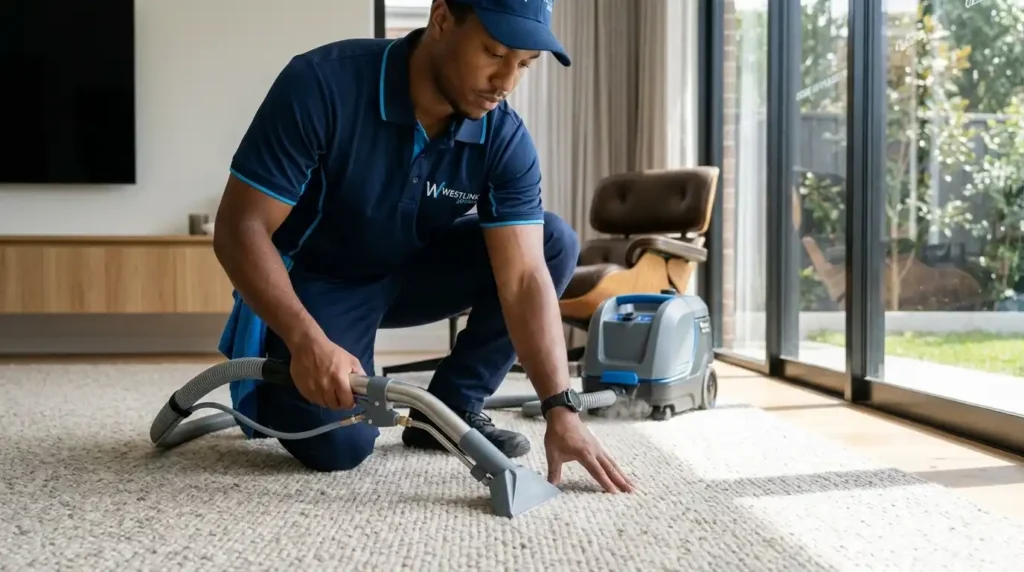
Yes, many wool carpets can be professionally steam cleaned when the method suits the fibre, construction and condition of the carpet. The main concerns are excessive moisture, unsuitable cleaning chemistry and aggressive mechanical action. Wool carpet should therefore be assessed before hot water or spray extraction is used.
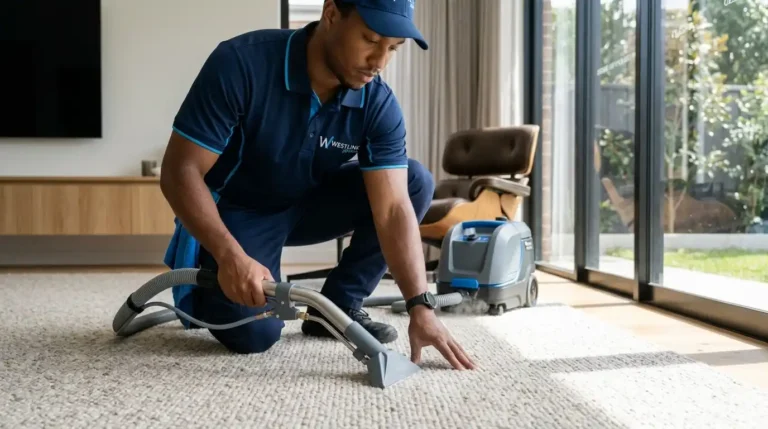
In professional carpet cleaning, “steam cleaning” generally refers to hot water or spray extraction rather than directing literal steam onto the carpet. Water and suitable cleaning solution loosen soil, then extraction equipment removes the suspended dirt and moisture.
The important point is not whether wool can get wet. It is whether the cleaning process is appropriate for that particular wool carpet.
Why Wool Carpet Needs a Different Cleaning Approach
Wool is a natural protein fibre, so it does not respond exactly like nylon, polyester or polypropylene during cleaning.
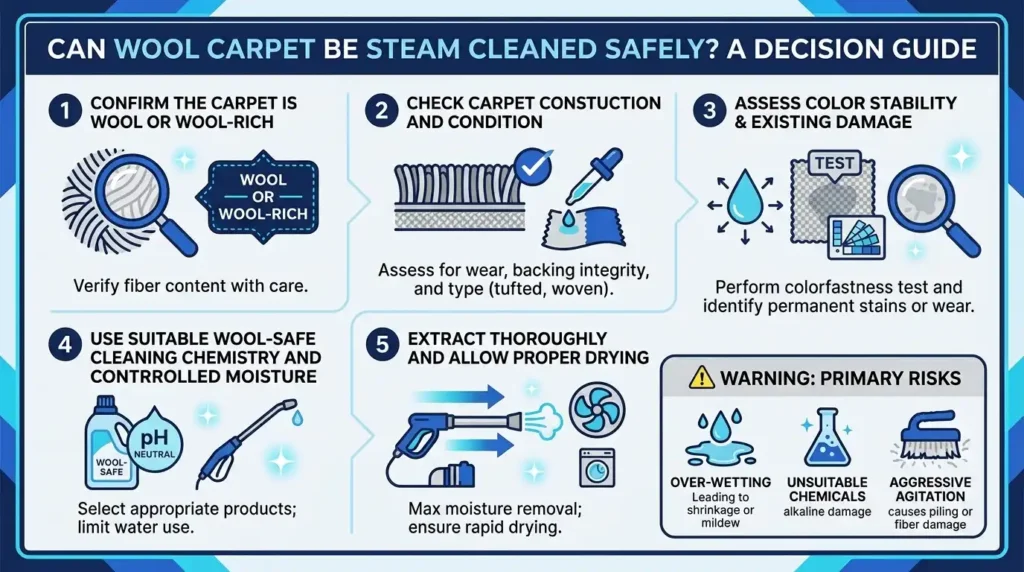
Professional wool carpet cleaning needs to account for three main variables: moisture, cleaning chemistry and mechanical action. Carpet construction and dye stability can also affect what method is appropriate.
The WoolSafe Organisation’s wool carpet care guidance explains that there is no single cleaning technique that is best for every wool carpet. Its technical guidance identifies over-wetting, excessive mechanical action and unsuitable chemicals as common causes of damage during wet cleaning.
That is why “wool carpet” alone is not enough information to decide how it should be cleaned.
When Can Wool Carpet Be Steam Cleaned?
Hot water or spray extraction can be suitable when the wool carpet is in an appropriate condition, and the cleaning process can be controlled.
| Carpet condition | What it means for steam cleaning |
| Installed wool carpet in sound condition | Professional extraction may be suitable |
| Wool-rich blend | Wool content and manufacturer care guidance still matter |
| Long-pile wool carpet | May require gentler mechanical action |
| Coarse loop-pile wool | Aggressive brushes or beaters may be unsuitable |
| Carpet with uncertain colour stability | Testing should take place before wet cleaning |
| Previously over-wet or discoloured carpet | Existing damage should be assessed first |
| Unknown fibre or construction | The carpet should be identified before choosing a method |
WoolSafe specifically notes that spray extraction can be suitable for some long-pile and coarser loop-pile wool carpets, while brushes or beaters should generally be avoided on those constructions. It also notes that operator skill affects the result.
Manufacturer instructions should take priority where they specify particular care requirements.
What Should Be Checked Before Professional Steam Cleaning?
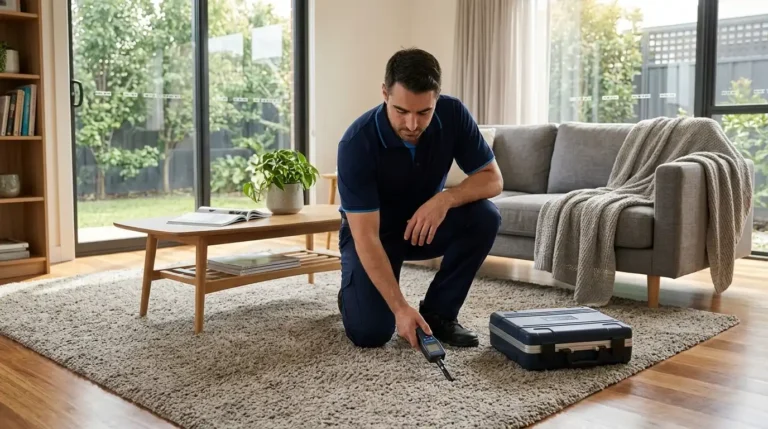
A professional assessment helps determine whether extraction is suitable and what precautions the carpet requires.
Fibre and Carpet Construction
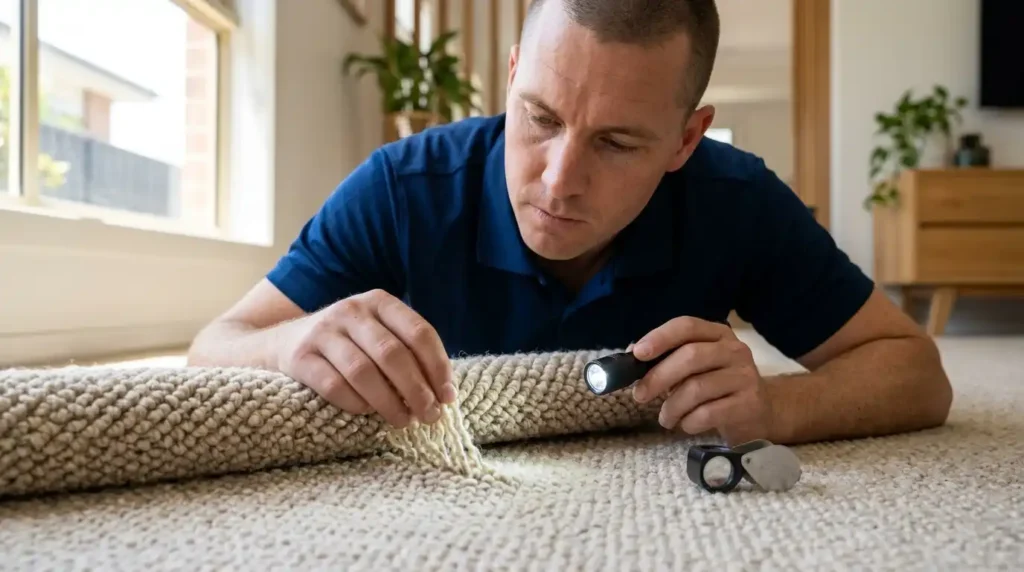
The cleaner should establish whether the carpet is pure wool, wool-rich, or another fibre rather than relying only on appearance.
Construction matters too. Cut pile, loop pile and longer-pile wool carpets can respond differently to mechanical agitation and cleaning equipment.
Colour Stability
Colourfastness describes how well carpet dyes resist changing or transferring during cleaning.
Where colour stability is uncertain, pre-testing can identify potential problems before the entire carpet is wet cleaned. WoolSafe recommends pre-testing wet-cleaning chemicals and techniques to check that they will not adversely affect the carpet’s colour or structure.
Existing Condition
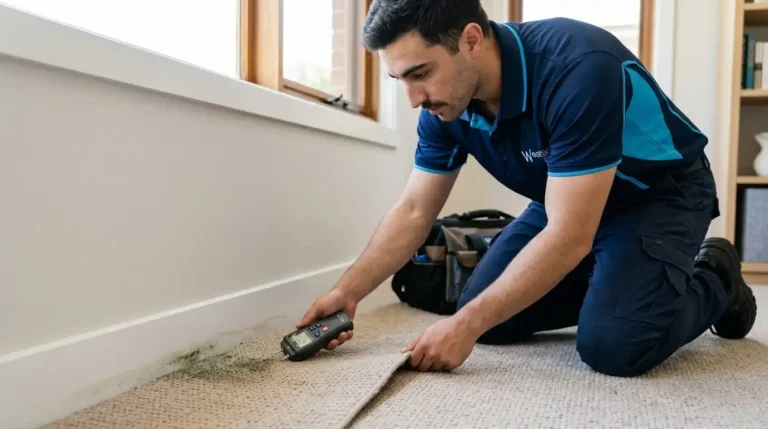
Wear, fading, previous cleaning residue, browning, water marks and other pre-existing conditions should be identified before cleaning begins.
This matters because cleaning can remove soil, but it cannot necessarily reverse permanent fibre damage or colour loss.
Type and Level of Soiling
General embedded soil, oily contamination, and isolated stains are not the same problem.
The type and extent of soil help determine whether full extraction is appropriate and whether specific areas require separate professional treatment.
What Are the Main Risks of Steam Cleaning Wool Carpet?
Steam cleaning problems usually occur when the process is poorly matched to wool rather than simply because water is used.
| Risk | Possible effect |
| Excessive moisture | Longer drying and possible discolouration |
| Unsuitable cleaning chemistry | Colour changes, fibre effects or problematic residue |
| Aggressive agitation | Fuzzing, pile distortion or texture changes |
| Poor extraction | Excess moisture and cleaning solution remain in the carpet |
| No pre-testing | Unexpected colour or structural response |
| Excess cleaning product | Residue may contribute to faster re-soiling |
WoolSafe’s technical guidance specifically associates wet-cleaning damage with over-wetting, excessive mechanical action and unsuitable chemicals. It also explains that high alkalinity can contribute to colour bleeding, yellowing and, in extreme cases, weakening of wool fibres.
This is why temperature alone should not determine whether a wool-cleaning method is considered safe.
Will Steam Cleaning Remove Stains From Wool Carpet?
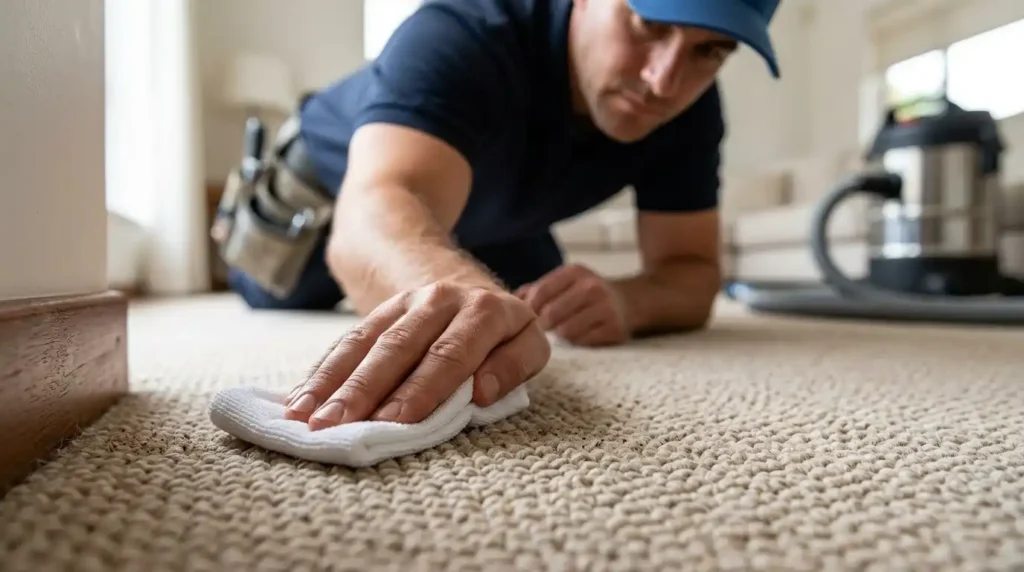
Steam cleaning can improve many soiled or stained areas, but cleaning the entire carpet does not guarantee that every visible mark will disappear.
The outcome can depend on:
- what caused the stain
- how long it has been present
- previous treatments
- carpet colour and dye stability
- whether permanent fibre or colour change has occurred
A stain and permanent discolouration are not always the same thing. The contaminating substance may be removed while a visible colour change remains.
That distinction is particularly important with wool because repeatedly applying increasingly aggressive treatments to permanent damage can create additional problems.
For a broader explanation of stain types and realistic removal expectations, see our expert guide to common carpet stains.
Is Steam Cleaning Always the Best Method for Wool Carpet?
No. Steam cleaning can be appropriate for many wool carpets, but it is not automatically the best method in every situation.
Method selection depends on factors such as carpet construction, soil level, colour stability, existing condition, drying requirements and manufacturer guidance.
A professional may recommend wet extraction where embedded soil needs more thorough removal. In another situation, a lower-moisture approach may be more appropriate.
The important decision is therefore which method suits the carpet, not whether one cleaning method is universally superior.
If you want to understand the broader differences between the two approaches, see our comparison of carpet dry cleaning vs steam cleaning.
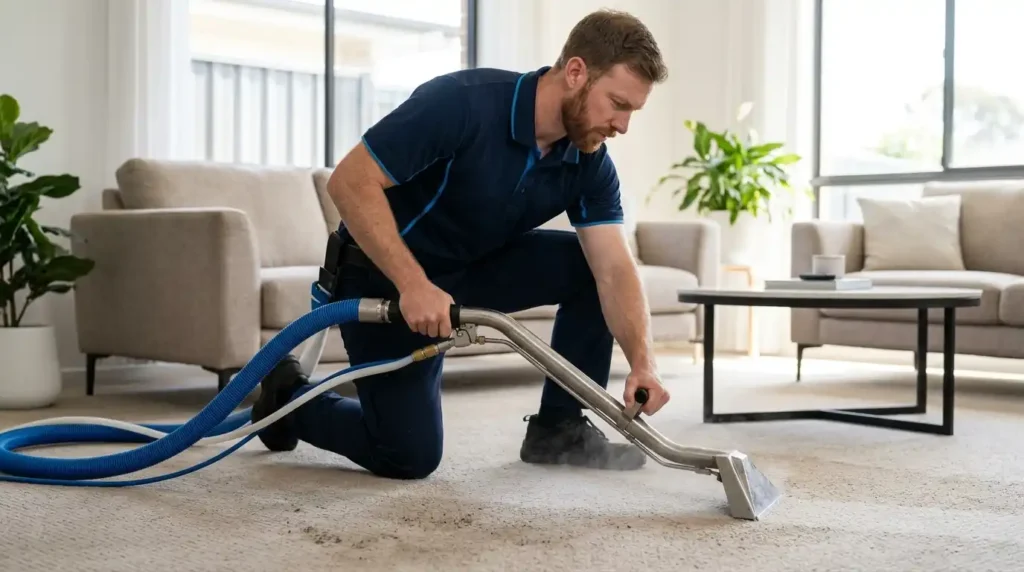
When Professional Wool Carpet Cleaning Makes Sense
Professional assessment becomes particularly useful when the wool carpet is extensively installed, heavily soiled, valuable, difficult to identify, or already showing colour, texture,e or moisture-related problems.
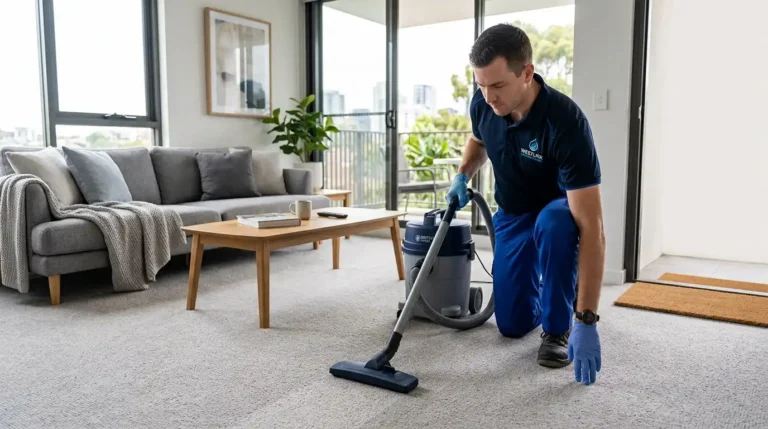
The value of professional cleaning is not simply access to a larger machine. It is the ability to assess the carpet, select an appropriate method, manage material-specific risks and set realistic expectations before treatment begins.
When discussing wool carpet with a cleaner, you should be able to get a clear explanation of why the proposed method suits the carpet and whether any limitations or testing requirements apply.
For broader provider-selection guidance, see how to choose a carpet cleaning company.
For Sydney properties where professional treatment is appropriate, Westlink Cleaning Services provides professional carpet cleaning in Sydney for residential and commercial properties.
Conclusion
Can you steam clean wool carpet? Yes, professional hot water or spray extraction can be suitable for many wool carpets, but the decision should be based on the individual carpet rather than the cleaning method alone.
Wool carpet requires appropriate assessment of fibre, construction, colour stability and existing condition, followed by a cleaning process that manages moisture, chemistry and mechanical action correctly. Where those factors are uncertain, professional assessment is the safer starting point.
Frequently Asked Questions
Can Professional Steam Cleaning Shrink Wool Carpet?
Improper wet cleaning can contribute to dimensional or structural changes in some carpets, particularly when moisture is poorly controlled. Wool carpet does not automatically shrink simply because it becomes wet, so the carpet construction and cleaning process need to be considered together.
Can Steam Cleaning Restore Flattened Wool Carpet Pile?
Sometimes the appearance may improve if soil is contributing to the flattened look, but cleaning cannot reverse permanent wear or fibre damage. Areas exposed to repeated foot traffic may remain visibly different even after professional cleaning.
Can Older Wool Carpet Be Steam Cleaned?
Possibly. Age alone does not determine suitability. The carpet’s current fibre condition, backing, colour stability, previous treatments and existing damage are more important when deciding whether professional wet extraction is appropriate.
How Can I Tell Whether My Carpet Is Wool?
Check the manufacturer’s label, installation records or product information where available. Appearance alone is not always enough to distinguish pure wool, wool-rich blends and some synthetic carpets, so uncertain fibres should be identified before wet cleaning.
Does Stain Protection Affect How Wool Carpet Is Cleaned?
It can. Some wool carpets have factory-applied or aftermarket protective treatments, so the cleaner should consider the carpet manufacturer’s care instructions and any known previous treatments before selecting products or methods.
How Long Does Wool Carpet Take to Dry After Steam Cleaning?
There is no universal drying time. Carpet construction, moisture application, extraction efficiency, airflow, and indoor conditions all affect drying. A professional cleaner should provide a realistic estimate based on the actual carpet and cleaning process.
Should Furniture Be Put Back on Wool Carpet Immediately After Cleaning?
Generally, furniture should not return to normal contact with damp carpet until it is sufficiently dry or suitable protection is used. Follow the cleaner’s post-treatment instructions to avoid transferring soil, moisture, or furniture marks.