

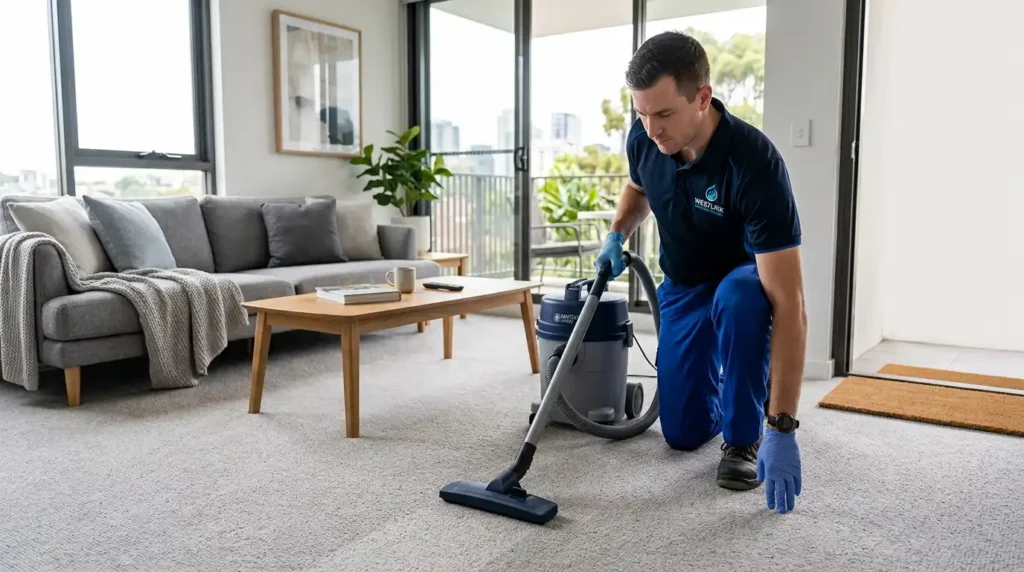
The best way to keep carpet clean is to prevent dirt from entering, vacuum regularly, deal with spills quickly, and protect high-traffic areas. These habits reduce soil buildup, help prevent stubborn stains, and keep carpets looking better between professional cleanings.
For Sydney homes and businesses, carpet maintenance should reflect how each area is used. A busy hallway collects dirt faster than a spare bedroom, while homes with pets or children may need more frequent attention.
At Westlink Cleaning Services, we help customers with carpets that need more than everyday maintenance. Here is how to keep your carpet cleaner for longer and recognise when professional treatment is worthwhile.

Follow a Simple Carpet Maintenance Schedule
Keeping carpets clean does not require constant deep cleaning. A consistent routine is usually more practical than waiting until dirt becomes visible.
|
Frequency |
Recommended Carpet Care |
|
Daily or as needed |
Remove tracked-in debris, attend to spills, and check entrance mats |
|
Weekly |
Vacuum regularly used bedrooms and living areas |
|
Twice weekly or more |
Give extra attention to busy entrances, hallways, stairs, and pet areas |
|
Every few weeks |
Inspect furniture edges, neglected corners and areas showing early signs of wear |
|
Periodically |
Check whether routine maintenance is still removing accumulated soil effectively |
These are general starting points. Adjust the routine according to foot traffic, carpet type and manufacturer recommendations.
Stop Dirt Before It Enters Your Carpet
Outdoor dust, grit and moisture are easily carried inside on shoes and pet paws. Once these particles settle into carpet fibres, repeated walking can push them deeper into the pile.
A few preventive habits make a difference:
- Use entrance mats: Place suitable mats at frequently used doors to collect dirt before it reaches the carpet.
- Remove dirty footwear: Keep muddy and wet shoes off carpeted floors.
- Wipe pet paws: Remove outdoor soil before pets enter living areas.
- Clean adjoining floors: Dust and grit from tiles or timber flooring can transfer onto nearby carpet.
Remember to clean entrance mats regularly. A mat already filled with dirt becomes less effective.
In Sydney apartments, focus on the path from the entrance to the main living area. For offices and commercial properties, prioritise reception entrances and regularly used corridors.
Vacuum Properly to Remove Embedded Dirt
Regular vacuuming helps prevent loose soil from accumulating within the carpet pile.
However, vacuuming technique matters just as much as frequency.
For effective cleaning:
- Use slow, overlapping passes rather than rushing across the carpet.
- Pay attention to edges and corners where dust often accumulates.
- Use suitable vacuum settings for the carpet fibre and pile construction.
- Maintain the vacuum cleaner by emptying containers, cleaning filters, and removing tangled hair.
- Check areas around furniture that may receive less frequent attention.
Avoid assuming stronger suction or aggressive brushing always produces better results.
Wool, loop-pile, and other delicate carpets may require specific vacuum heads or settings. Follow the carpet manufacturer’s care instructions to prevent unnecessary fibre damage.
If a carpet still looks dull after thorough vacuuming, the problem may involve accumulated residue, staining or wear rather than loose surface dirt.

Prevent Fresh Spills From Becoming Permanent Stains
Acting quickly can reduce the chance of a spill becoming difficult to remove.
When something spills onto your carpet:
- Carefully lift any solid material without pressing it into the fibres.
- Blot liquid using a clean white cloth, working from the outside towards the centre.
- Avoid scrubbing, which can spread the stain or damage the pile.
- Use only carpet-compatible cleaning products, following the manufacturer’s instructions.
- Remove excess moisture and allow the area to dry.
Avoid using bleach, excessive detergent, or untested household mixtures. These can affect carpet dyes, leave residue, or introduce unnecessary moisture into the backing.
If a stain remains after appropriate initial care, repeatedly applying stronger products may cause further damage.
Our guide to common carpet stains and how experts remove them explains why different spills require different treatments.
Protect High-Traffic Areas From Permanent Wear
Hallways, stairs, living-room walkways and office desk areas often develop dark or flattened patches.
Not all these marks are caused by dirt. Repeated pressure can also distort carpet fibres, creating permanent changes in appearance.
To reduce unnecessary wear:
- Use suitable carpet runners: Protect frequently used walkways with secure runners that have carpet-compatible backing.
- Install chair mats where appropriate: Rolling office chairs can place repeated pressure on the same section of carpet.
- Move lightweight furniture occasionally: This improves vacuum access and helps prevent hidden dirt buildup.
- Inspect busy areas regularly: Look for developing traffic marks before they become heavily soiled.
Choose protective mats carefully. An unsuitable backing may transfer colour, damage carpet fibres, or create a slipping hazard.
Professional cleaning can remove accumulated soil, but it cannot always reverse pile crushing, colour loss, or permanent wear.

Keep Carpet Cleaner After Professional Cleaning
How you care for carpet after a professional service affects how quickly new soil accumulates.
Start by following your cleaner’s instructions about drying, foot traffic, and furniture placement. Drying requirements vary according to the treatment, carpet material, and room conditions.
Once the carpet is ready for normal use:
- Resume regular vacuuming.
- Keep entrance mats clean.
- Address new spills promptly.
- Avoid unnecessary cleaning powders or excessive spot-cleaning products.
- Monitor areas that receive the most foot traffic.
Fragranced carpet powders may temporarily change how a room smells, but they do not replace soil removal. Some products can also leave residue within the carpet.
Carpet protection treatments may make certain spills easier to manage, but they do not prevent dry dirt and debris from collecting.
The goal is to maintain the cleaning result through everyday habits rather than repeatedly applying cleaning chemicals.
When Is Professional Carpet Cleaning Necessary?
Even with good maintenance, household vacuuming cannot remove every type of accumulated soil.
Consider professional cleaning when:
- High-traffic areas remain dark after thorough vacuuming.
- Large carpeted sections look dull despite regular care.
- Embedded dirt or residue is no longer responding to household maintenance.
- Several stains require targeted treatment.
- The carpet’s appearance is not improving through routine cleaning.
At Westlink Cleaning Services, our team considers carpet fibre, condition, soil levels, stains and drying requirements before recommending a suitable cleaning method.
We provide professional carpet cleaning in Sydney for homes, apartments, rental properties and commercial spaces.
Need professional help with heavily soiled carpet? Send our team your Sydney suburb, approximate carpeted area, photographs, and a description of the problem. We can discuss a suitable treatment and provide a quote based on your cleaning requirements.
For advice on scheduling deeper cleaning, see how often you should clean your carpets.
Conclusion
Keeping carpet clean comes down to consistent vacuuming, preventing tracked-in dirt, handling spills correctly, and protecting frequently used areas.
The right routine helps maintain carpet appearance and reduces avoidable soil buildup between professional cleaning appointments.
When everyday maintenance is no longer effective, Westlink Cleaning Services can assess your carpet and recommend an appropriate professional cleaning treatment for your Sydney property.
Frequently Asked Questions
Can a Robot Vacuum Keep Carpet Clean?
A robot vacuum can help remove everyday surface debris, particularly in frequently used rooms. However, it may miss stairs, corners, edges, and some embedded soil. Periodic thorough vacuuming with suitable equipment remains useful.
How Do I Keep Carpet Clean With Pets?
Vacuum pet areas according to hair and soil buildup, wipe muddy paws, and address accidents promptly. Pay attention to frequently used resting spots and walkways. Pet urine that penetrates the backing or underlay may need professional assessment.
Why Does Carpet Look Dirty Again Soon After Cleaning?
Rapid resoiling can result from remaining cleaning residue, heavy foot traffic, or contamination that was not fully removed. Some stains may also reappear as moisture dries. Identify the cause before applying additional cleaning products.
Does Carpet Protector Reduce the Need for Vacuuming?
No. Protective treatments may help with certain spills, but they do not stop dust, grit, hair, and debris from accumulating. Regular vacuuming and appropriate stain care are still necessary.
Can Frequent Vacuuming Damage Carpet?
Frequent vacuuming is generally suitable when the equipment matches the carpet construction. Damage is more likely when an unsuitable brush head or aggressive setting is used. Check the manufacturer’s guidance for wool, loop-pile, and delicate carpets.


