
Remove dust first, then clean with a slightly damp microfiber mop and a wood-floor cleaner matched to the finish. Avoid wet mops, steam mops, harsh chemicals, and excess water.
Polished timber floors need a low-moisture cleaning method because loose grit can scratch the finish, and excess water can damage both the finish and the wood over time. The correct method is dry soil removal first, controlled damp cleaning second, and professional treatment when dullness, residue, scratches, or finish wear no longer respond to routine care.
What is a polished timber floor?
A polished timber floor is a timber floor with a finished surface that must be maintained without excess moisture or abrasive cleaning. In practical cleaning terms, the surface being maintained is the finish layer, not unfinished raw wood. Common finished timber floor types include sealed timber floors, polyurethane-finished timber floors, and water-based finished timber floors.
Why does polished timber need a different cleaning method?

Polished timber needs a different cleaning method because grit, water, and unsuitable products can shorten finish life and increase visible wear. Tracked-in debris, for example, sand, dust, pet hair, and fine grit, can move across the surface during foot traffic or mopping and create scratches. Moisture exposure can also contribute to dullness, residue, swelling, gapping, cupping, or finish failure if it is repeated or excessive.
What is the correct step-by-step method?

1. Clear the floor
Remove loose items before cleaning. Move lightweight furniture, mats, toys, pet bowls, and portable décor off the floor so dirt is not dragged across the surface during cleaning. Lift chairs and stools instead of sliding them. Sliding hard legs across timber increases scratch risk.
2. Remove dry soil first
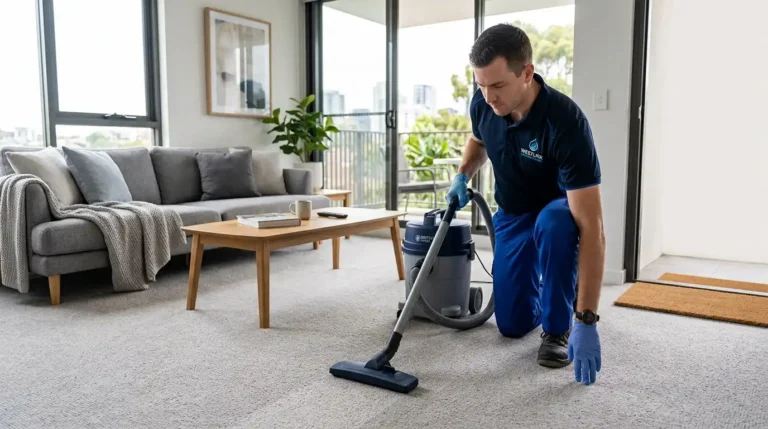
Dry cleaning is the first cleaning stage. Use a soft broom, a dry microfiber dust mop, or a vacuum on the bare-floor setting. Focus on open floor areas, edges, corners, and skirting lines where dry debris gathers. This stage matters because grit left on the floor can mark the finish during damp cleaning.
3. Treat spills immediately
Clean spills before full-floor mopping. Use a dry or slightly damp microfiber cloth to lift fresh spills, sticky spots, splash marks, and tracked-in residue. Do not leave spills on the floor. Immediate spill removal is part of standard wood-floor maintenance guidance.
4. Prepare a low-moisture mop
The mop must be slightly damp, not wet. Use a flat microfiber mop and a cleaner made specifically for the finish on the floor. Do not over-apply the cleaning solution. Excess product can leave tackiness, streaking, or haze. Excess water increases the risk for finish damage and wood movement.
5. Mop in small sections
Clean one section at a time. Work with controlled passes so moisture does not sit on the floor too long. Follow the grain where practical. Replace dirty pads during the job. A dirty pad spreads soil instead of removing it.
6. Dry remaining moisture
Remove visible dampness before it sits in joints or edges. If the floor still looks damp after mopping, dry it with a clean microfiber cloth or dry pad. Controlled drying helps reduce streaks and limits moisture exposure in board joins.
7. Protect the floor after cleaning
Reduce new abrasion after the clean. Reposition furniture carefully and keep felt pads on chair legs, table legs, and movable items. Protection after cleaning is part of maintenance, not a separate issue.
Which tools should you use?
Use simple tools that remove soil without scratching the finish. The core tool set is short and specific:
- microfiber dust mop
- soft broom
- vacuum with bare-floor setting
- flat microfiber mop
- clean microfiber cloths
- wood-floor cleaner matched to the finish
- felt pads for furniture legs
- entry mats at doorways
These tools support the same maintenance pattern: remove grit, limit moisture, protect the finish, and reduce repeat scratching from traffic and furniture movement.
Which products should you avoid?
Avoid products and methods that add water, heat, residue, or abrasive force. The main items to avoid are:
- wet mops
- steam mops
- tile cleaners on timber floors
- vinyl floor cleaners on timber floors
- polishes that promise extra shine
- waxes not specified for the finish
- restorers that leave buildup
- abrasive pads
- harsh chemical cleaners
NWFA guidance specifically warns against wet mops, steam mops, and non-wood-floor cleaners because they can damage the finish and the wood over time or leave the floor dull and slippery.
Can you use vinegar on polished timber floors?

A cleaner made for the floor finish is the safer choice. Repeated DIY cleaning with the wrong solution can leave haze, interfere with the finish, or create maintenance problems that look like dirt but are actually residue or surface wear. For service-led content, the safest recommendation is to use the manufacturer-approved or finish-specific cleaner rather than a generic household mix.
Can you use a steam mop on polished timber floors?

No. Steam mops are not recommended for polished timber floors. NWFA guidance states that wet mops and steam mops can damage the finish and the wood over time. That makes steam an inappropriate method for routine cleaning on this floor type.
How often should polished timber floors be cleaned?

The correct schedule depends on traffic, but the baseline routine is clear. NWFA guidance recommends sweeping or dust mopping as needed, vacuuming weekly on the bare-floor setting, and using the appropriate wood-floor cleaner monthly. Homes with higher traffic, such as family homes, pet homes, entry zones, kitchens, and living areas, may need dry cleaning more often than low-traffic rooms.
Recommended maintenance schedule
| Task | Minimum frequency | Examples of areas |
| Dry dust removal | as needed | hallways, living rooms, entries |
| Vacuum on bare-floor setting | weekly | whole floor area, room edges, corners |
| Cleaner matched to finish | monthly | sealed timber floors, polished timber floors |
This schedule is a strong maintenance baseline because it controls grit first, then controls damp cleaning frequency second.
Which common mistakes make the floor look worse?

Most appearance problems come from water, residue, abrasion, or misdiagnosis. The common mistakes are the following:
- mopping with too much water
- skipping dry dust removal
- using the wrong cleaner
- reusing dirty mop pads
- scrubbing a spot too aggressively
- treating finish wear as if it were loose dirt
- delaying spill cleanup
Each mistake creates a different result. Too much water can leave streaks and increase moisture exposure. The wrong cleaners can leave residue or dullness. Aggressive spot cleaning can create an uneven patch in the finish.
How do you remove marks, haze, and sticky residue?
The treatment must match the problem. A single method is not correct for every surface mark.
Light marks
Wipe light marks with a clean microfiber cloth and the correct wood-floor cleaner. Fresh footprints, splash marks, and minor surface residue often respond to controlled spot cleaning.
Sticky residue
Re-clean the area with the correct amount of cleaner and a fresh pad. Sticky residue often comes from spills, tracked-in grime, or too much product left on the surface.
Cloudy or dull areas
Cloudiness may come from residue, moisture exposure, or finish wear. Proper cleaning can remove some haze, but worn or compromised finish layers often need professional polishing, recoating, or restoration rather than more mopping. NWFA guidance notes that dull floors can often be renewed through recoating, with timing varying by wear and lifestyle.
Fine scuffs
Light surface scuffs may improve with careful cleaning, but repeated or deeper scuffs usually indicate finish wear. That is the point where a service inspection becomes more useful than repeated DIY cleaning.
When is routine cleaning no longer enough?
Routine cleaning is no longer enough when the problem is in the finish, not on the surface. Warning signs include persistent dullness, recurring haze, sticky buildup that returns after cleaning, visible traffic-lane wear, dark staining, swelling near joints, and an uneven finish.
Routine cleaning vs professional service
| Situation | Likely issue | Correct next step |
| dust, pet hair, light footprints | loose surface soil | dry dust removal and controlled damp cleaning |
| sticky patches after spills | residue on top of the finish | spot cleaning with the correct cleaner |
| Repeated haze after mopping | product buildup or wrong cleaner | reset cleaning method or professional deep clean |
| dull traffic lanes | finish wear | buffing, recoating, or restoration assessment |
| swelling, dark marks, joint movement | moisture-related damage | professional inspection |
This comparison matters because the wrong response wastes time and can worsen the surface. Cleaning solves soil. It does not reverse finish wear or water damage.
When should a service page mention professional help?
Professional help should be mentioned when routine maintenance no longer matches the condition of the floor. That keeps the article relevant to your service without turning an informational page into generic sales copy. For this topic, the service transition is appropriate after sections on haze, traffic-lane wear, finish dullness, recoating, buffing, polishing, and restoration.
Professional Timber Floor Cleaning in Sydney
Professional timber floor cleaning is the correct next step when the floor still looks dull, patchy, sticky, or marked after the correct low-moisture method. In service terms, that usually means one of four needs: a proper deep clean, machine buffing, polishing, or restoration assessment. The correct choice depends on whether the issue is soil, residue, finish wear, or moisture-related damage. NWFA guidance also notes that recoating intervals commonly fall in the 3 to 5 year range, although the actual schedule varies by traffic and wear.
Conclusion
The correct method is dry clean first, damp mop second, and escalate to professional treatment only when the finished condition requires it. That is the most accurate way to keep the page relevant to both the blog topic and your service. It answers the search query directly, keeps the H1 aligned with the page purpose, and creates a natural path from maintenance advice to timber floor cleaning, buffing, polishing, or restoration in Sydney.
People Also Ask
1. How do you clean polished timber floors properly?
Remove dust and grit first, then mop with a slightly damp microfiber mop and a cleaner made for polished timber floors. Avoid excess water, steam mops, and harsh chemicals.
2. What is the best mop for polished timber floors?
A flat microfiber mop is the best option because it gives better moisture control and helps reduce streaks and surface scratches. It is safer than a traditional wet mop.
3. Can you use water on polished timber floors?
Yes, but only in a controlled amount. The mop should be slightly damp, not wet, because too much water can damage the finish and seep into board joints.
4. Can you use a steam mop on polished timber floors?
No, steam mops are not recommended for polished timber floors. Heat and moisture can damage the protective finish and shorten the life of the floor.
5. What cleaner should you use on polished timber floors?
Use a pH-neutral cleaner made for finished timber floors. This helps clean the surface without leaving residue or damaging the polish.
6. Why do polished timber floors look dull after mopping?
Dullness usually comes from too much water, the wrong cleaner, dirty mop pads, or residue buildup. In some cases, it can also mean the finish is worn and needs professional attention.
7. How often should polished timber floors be cleaned?
Dry dust removal can be done as needed, while damp mopping is usually done weekly or based on foot traffic. High-use areas like hallways, kitchens, and living rooms often need more frequent care.
8. Can vinegar be used on polished timber floors?
It is better to avoid vinegar and use a cleaner made for timber floor finishes instead. Repeated use of the wrong solution can affect the surface and make the floor look dull.
9. How do you remove sticky residue from polished timber floors?
Clean the area with a fresh microfiber pad and the correct amount of timber floor cleaner. Sticky residue is often caused by spills, tracked-in dirt, or too much cleaning product.
10. When should you book professional timber floor cleaning?
Book professional timber floor cleaning when the floor stays dull, cloudy, sticky, or marked even after proper cleaning. This usually means the problem is deeper than normal surface dirt and may need buffing, polishing, or restoration.