

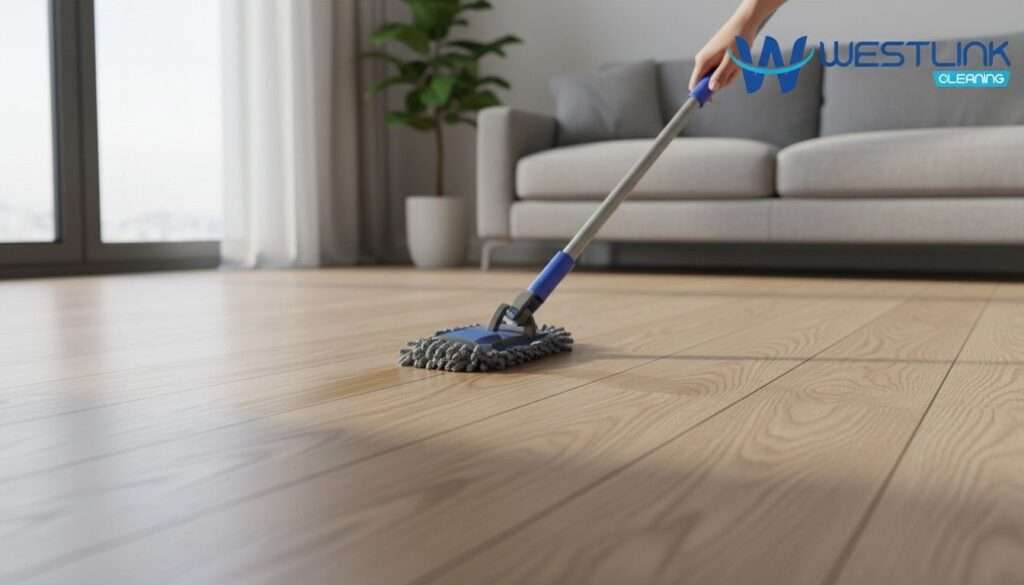
Clean vinyl plank floors by removing dry dirt first, wiping spills quickly, and mopping with a lightly damp microfiber mop and a vinyl-safe cleaner. This method helps reduce residue, protects the surface layer, and keeps the floor looking clean without adding avoidable wear.
Vinyl plank flooring is popular because it is durable, easy to maintain, and suitable for many spaces, including homes, rental properties, offices, and light commercial interiors. That does not mean it can be cleaned with any product or any method. Too much water, harsh chemicals, dirty mop water, abrasive tools, and poor daily habits can all reduce the floor’s appearance over time.
The goal is not only to remove visible dirt. The goal is to clean the floor in a way that protects the finish, keeps the planks looking even, and supports a longer service life. That is why vinyl plank floor care should follow a dry-first, low-moisture routine.
What Is the Best Way to Clean Vinyl Plank Floors?

The best way to clean vinyl plank floors is to remove loose dirt first, then damp-mop with a vinyl-safe cleaner.
Start with a soft broom, a microfiber dust mop, or a vacuum on the hard-floor setting. After the dry dirt is removed, mop the floor with a lightly damp microfiber mop. Use a cleaner suitable for vinyl plank or resilient flooring. The mop should be damp, not wet. Water should never pool on the surface.
This method works because dry dirt, such as dust, sand, crumbs, and pet hair, can scratch the floor if it is pushed around during mopping. A controlled damp mop removes light soil and residue without leaving too much moisture behind.
Why the Cleaning Method Matters on Vinyl Plank Floors

The cleaning method matters because repeated mistakes cause gradual wear.
Most vinyl plank floor problems do not come from one major cleaning mistake. They usually come from small habits repeated over time. These habits include using too much water, using the wrong cleaner, skipping dry soil removal, or using rough cleaning tools.
Loose grit can act like a fine abrasive under shoes. Dirty mop water can spread residue instead of removing it. Heavy product use can leave a dull film. Standing moisture can collect near edges, joins, trims, and transitions. In busy households and commercial interiors, those issues often appear faster because the floor faces more foot traffic and more frequent cleaning.
That is why a simple and controlled routine is usually more effective than aggressive cleaning.
How to Clean Vinyl Plank Floors Step by Step
Clean vinyl plank floors in four steps: remove dry dirt, clean spills, damp mop correctly, and let the floor dry fully.
1. Remove loose dirt first
Sweep with a soft broom, use a microfiber dust mop, or vacuum with the hard-floor setting. If the vacuum has a beater bar, keep it switched off for hard flooring.
This step removes dry particles before they are dragged across the surface. Common examples include dust, sand, crumbs, pet hair, soil near entrances, and fine renovation dust.
2. Clean spills as soon as possible
Wipe up spills quickly with a clean cloth, paper towel, or microfiber cloth. If needed, follow with a lightly damp cloth and a suitable vinyl floor cleaner.
Fast spill cleanup helps prevent sticky residue, stains, odours, and slip hazards. Common examples include drink spills, muddy footprints, food residue, and pet mess.
3. Damp mop with the right cleaner
Use a microfiber flat mop and a vinyl-safe cleaner. Work in small sections so you can control the moisture. Change the mop pad or rinse it when it becomes dirty. Replace the water when it starts to look cloudy.
The floor should be damp cleaned, not soaked. The purpose is to lift light soil and residue without flooding the surface.
4. Let the floor dry properly
Allow the floor to dry fully after mopping. Normal airflow usually helps the floor dry quickly when the mop is properly wrung out.
This step matters because leaving moisture behind can create avoidable problems near edges, joins, and trims.
How Often Should You Clean Vinyl Plank Floors?
The right cleaning schedule depends on traffic, spills, pets, children, and outdoor dirt.
Daily or as needed
Dry sweep, dust mop, or vacuum high-use areas. These areas usually include kitchens, hallways, entrances, dining spaces, and living rooms. Clean spills as soon as they happen.
Weekly
Damp mop the areas that get regular daily use. Homes with pets, children, or heavier traffic may need this more often.
Monthly
Clean edges, corners, under light furniture, and around skirting boards more carefully. These areas often collect hidden dust and residue.
Periodically
If the floor still looks dull after correct routine cleaning, the problem may be residue buildup, fine scratches, adhesive haze, or post-renovation dust. In that case, the floor may need a more targeted cleaning approach.
Tips for Maintaining Vinyl Plank Floors: Vacuuming and Sweeping Regularly

Regular vacuuming and sweeping help prevent scratches, dullness, and dirt buildup.
This is one of the most important parts of vinyl plank floor care. Dry dirt is often the first cause of avoidable surface wear. When sand, grit, and dust stay on the floor, they can be pushed across the surface by foot traffic and cleaning tools.
Vacuuming and sweeping regularly help control:
- dust
- sand
- pet hair
- crumbs
- tracked-in soil
- fine renovation dust
The best practice is to clean high-traffic zones more often than low-use rooms. Entry points, hallways, kitchens, and living spaces usually need the most attention. A vacuum with a hard-floor setting or a microfiber dust mop is usually the safest choice.
This maintenance step also supports better results during mopping. If the floor is not vacuumed or swept first, damp cleaning often spreads the dirt instead of lifting it.
Protecting Vinyl Plank Floors from Scratches and Dents

Protect vinyl plank floors from scratches and dents by reducing friction, impact, and concentrated pressure.
Cleaning is only one part of floor care. Daily use also affects the floor’s appearance. Scratches and dents usually come from furniture movement, sharp debris, rough footwear, and repeated pressure in the same areas.
You can reduce that risk with simple controls.
Use protective pads under furniture
Place felt pads or suitable floor protectors under chairs, tables, lounges, and other movable furniture. This helps reduce scratching when furniture shifts during normal use.
Lift furniture instead of dragging it
Dragging heavy items across the floor can mark or scratch the surface. Lift furniture where possible, or use proper moving protection during relocation or cleaning.
Use mats at entrances
Door mats help reduce the amount of grit and moisture brought inside. This is useful in homes, offices, retail spaces, and rental properties.
Keep caster wheels and furniture bases clean
Small particles trapped under chair legs, stools, and wheels can scratch the floor during movement.
Avoid sharp or abrasive contact
High heels, metal edges, rough brushes, and hard debris can all increase wear. The safest approach is to reduce direct abrasive contact wherever possible.
Rotate use where practical
If the same chair, table, or trolley always runs over one area, the wear pattern can become more visible. Small layout adjustments can help spread pressure more evenly.
These protective steps support the cleaning routine because a clean floor still loses visual quality if it is constantly scratched or dented by daily use.
Which Tools and Cleaners Are Best for Vinyl Plank Floors?
The best tools and cleaners are the ones that remove dirt without scratching the floor or leaving residue.
Useful tools include:
- soft broom
- microfiber dust mop
- vacuum with hard-floor setting
- microfiber flat mop
- clean microfiber cloths
Suitable cleaners include:
- vinyl-safe floor cleaners
- pH-neutral cleaners approved for resilient flooring
- manufacturer-approved cleaners for the specific product
It is better to avoid guessing. A cleaner that works on one hard floor type may not be suitable for vinyl plank flooring. Always check the product care instructions if there is any doubt.
What Should You Avoid When Cleaning Vinyl Plank Floors?
Avoid anything that adds too much water, too much residue, or too much abrasion.
Do not use:
- flood mopping
- soaking wet mops
- abrasive scrub pads
- rough brushes
- harsh chemicals
- strong solvent-based products
- polish-type buildup products
- steam, if the floor manufacturer does not allow it
Many floor problems are caused by over-cleaning rather than under-cleaning. More water does not mean better cleaning. Stronger chemicals do not automatically mean better results. In many cases, they create residue or surface problems that make the floor look worse.
Troubleshooting Common Issues with Vinyl Plank Floors

Most vinyl plank floor problems can be traced back to residue, moisture, grit, or incorrect cleaning methods.
Why does the floor still look dull after cleaning?
A dull look is often caused by cleaner residue, dirty mop water, too much product, or fine scratches from grit. The solution is to reset the cleaning method. Remove dry dirt first, use a clean microfiber mop, use less product, and choose a vinyl-safe cleaner.
Why does the floor feel sticky?
Sticky patches usually come from spills, food film, or too much cleaner left behind. Wipe the area with a damp microfiber cloth and a suitable floor cleaner, then dry it properly.
Why are there streaks after mopping?
Streaks often appear when the mop is too wet, the cleaner is overused, or the floor is cleaned with dirty water. Use a clean mop head, a smaller amount of cleaner, and fresh water.
Why are there scuff marks on the floor?
Scuff marks are usually caused by footwear, furniture movement, or surface friction. Light marks can often be reduced with a soft cloth and the correct cleaner. Avoid aggressive scrubbing.
Why does the floor look cloudy?
Cloudiness often points to old product buildup, fine dust, or the wrong cleaning solution. This is common after repeated use of unsuitable cleaners or after post-renovation dust has settled across the floor.
How do you deal with post-renovation dust?
Fine construction dust spreads quickly and often leaves a film when handled with standard mopping. Start with careful dry dust removal, then follow with controlled damp cleaning. In larger spaces, professional cleaning may be the better option.
What should you do if the floor has scratches?
Minor marks may stay surface-level, but repeated scratching usually means the floor is collecting too much grit or the furniture protection is insufficient. Review the maintenance routine, entrance mats, and furniture pads.
When Professional Vinyl Plank Floor Cleaning Helps
Professional cleaning helps when routine cleaning is no longer enough to restore an even result.
This can apply when:
- the floor has heavy residue buildup
- there is post-construction dust
- there is adhesive haze after installation
- large areas need a more even clean
- the floor has traffic-related buildup
- dullness remains after proper routine care
- rental presentation or end-of-lease condition matters
Professional cleaning is useful because the method can be matched to the floor condition, surface buildup, and size of the area. That is often more effective than repeating the same household routine with stronger products.
Conclusion
Cleaning vinyl plank floors is simple when the method stays controlled. Remove dry dirt first, clean spills quickly, and damp mop with a microfiber mop and a vinyl-safe cleaner. Regular vacuuming and sweeping help reduce grit, which protects the surface from scratches and early dullness. Furniture pads, entrance mats, and careful daily use also help prevent dents and surface wear. When problems such as residue buildup, sticky patches, streaks, cloudiness, or renovation dust start affecting the floor’s appearance, the solution is usually to correct the cleaning method, not to use harsher products. A consistent low-moisture routine keeps vinyl plank floors cleaner, safer, and easier to maintain over time.
FAQs
1. What is the safest way to clean vinyl plank floors?
The safest way is to remove dry dirt first and then damp mop with a microfiber mop and a vinyl-safe cleaner.
2. How often should vinyl plank floors be vacuumed or swept?
High-traffic areas often need daily or near-daily dry cleaning, while lower-use areas may need it less often.
3. Can too much water damage vinyl plank floors?
Too much water can create problems near joins, edges, trims, and surrounding floor details if moisture is left sitting on the surface.
4. What cleaner should be used on vinyl plank floors?
A vinyl-safe cleaner or a pH-neutral cleaner approved for resilient flooring is usually the best option.
5. Why does my vinyl plank floor look dull after mopping?
The usual causes are residue, dirty mop water, too much cleaner, or fine grit scratching the surface over time.
6. How do I stop scratches on vinyl plank floors?
Use furniture pads, clean entrances regularly, place mats at doors, and avoid dragging heavy furniture across the floor.
7. Can I use a vacuum on vinyl plank floors?
Yes, but use a hard-floor setting and avoid aggressive brush action that may mark the surface.
8. What causes sticky spots on vinyl plank floors?
Sticky spots usually come from spills, food residue, or too much cleaning product left on the floor.
9. How do I clean pet mess on vinyl plank floors?
Wipe it up quickly, clean the area with a lightly damp cloth and a suitable cleaner, and dry the area properly.
10. When should vinyl plank floors be professionally cleaned?
Professional cleaning is useful when the floor has heavy buildup, renovation dust, adhesive haze, large-area dullness, or traffic-related soil that normal mopping does not remove evenly.


