
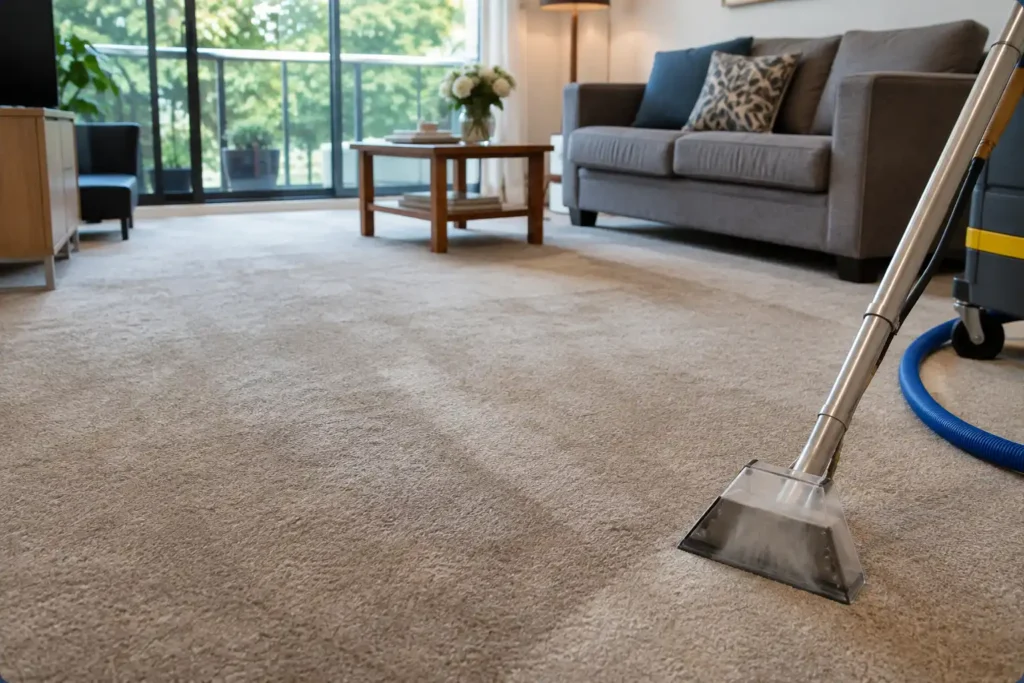
Carpet commonly takes around 2 to 6 hours to dry after suitable professional hot-water extraction, although some jobs require 6 to 12 hours or longer under less favourable conditions. The actual time depends on the carpet, moisture extraction, humidity and airflow. Wait until the carpet is ready for use before resuming normal foot traffic or replacing furniture.
You’ve had your carpets professionally cleaned, but when can you actually use the room again?
Whether you’re preparing for visitors, managing a busy family home or arranging an end-of-lease clean, knowing how long your carpet needs to dry helps you plan without unnecessary disruption.
Carpet Drying Time at a Glance
| Your Question | Quick Guidance |
| How long does carpet take to dry? | Around 2–6 hours may be achievable for suitable professional cleaning jobs; allow longer when conditions are less favourable |
| How long after steam cleaning? | Several hours, depending on extraction, carpet construction and indoor conditions |
| When can I walk on it? | Minimise foot traffic until sufficiently dry, unless your technician permits limited access |
| When can furniture go back? | Once the carpet is dry enough, or with suitable technician-approved protection |
| Does winter affect drying? | It can, especially when humidity is high and airflow is limited |
| What if it’s still wet after 12 hours? | Contact your cleaning provider for advice |
These are planning guidelines rather than fixed drying times. Your carpet cleaner should provide advice based on the treatment and conditions at your property.
How Long Does Carpet Take to Dry After Steam Cleaning?

Steam cleaning, more accurately called hot-water extraction, uses heated water and cleaning solutions where appropriate to loosen soil before extracting moisture and dirt from the carpet.
Because water is used during the process, the carpet generally needs a drying period after the cleaning equipment has been removed.
Westlink Cleaning Services’ published Sydney service guidance identifies 2 to 6 hours as a common planning range for suitable hot-water extraction work. That range is not a guarantee for every property.
For example, a relatively low-pile carpet with effective moisture extraction and good airflow may dry sooner than a thick carpet in a humid, poorly ventilated room.
For less favourable conditions, allowing 6 to 12 hours or more may be a more practical approach.
What Does Industry Guidance Say?
The Carpet and Rug Institute’s CRI 205 Residential Carpet Maintenance and Cleaning Standard provides a 6–12-hour drying range in its guidance for do-it-yourself extraction cleaning.
It also recommends improving ventilation and contacting a professional if the carpet remains wet beyond 12 hours.
Importantly, that 6–12-hour figure appears in the standard’s DIY section. It should not be presented as a guaranteed drying time for every professional carpet cleaning service.
Actual professional drying times depend on the cleaning system, moisture recovery, carpet construction and environmental conditions.
Does Dry Carpet Cleaning Take Less Time?
Low-moisture carpet cleaning generally introduces less water, so some carpets may be ready for use sooner than those treated with hot-water extraction.
However, the term dry cleaning doesn’t necessarily mean that no moisture is used.
The appropriate method depends on the carpet fibre, soil level and treatment requirements.
If you’re comparing cleaning methods, our guide to carpet dry cleaning vs steam cleaning explains the differences in more detail.
What Affects Carpet Drying Time?

Two carpets cleaned on the same day can dry at different rates, even when the same cleaning method is used.
The main factors are carpet construction, moisture extraction and the conditions inside the room.
Carpet Fibre and Thickness
Different carpet materials respond differently to moisture.
However, fibre type alone doesn’t determine drying time. Pile density, carpet backing and the amount of water remaining after cleaning are also important.
| Carpet Characteristic | Practical Drying Consideration |
| Wool carpet | Requires suitable cleaning methods and careful moisture management |
| Synthetic carpet | Drying depends on fibre properties, pile construction, backing and remaining moisture |
| Thick or dense pile | May take longer because moisture can remain deeper within the carpet |
| Low-pile carpet | May dry sooner under comparable conditions, although this isn’t guaranteed |
For homeowners, the practical difference is that a carpet can appear dry on the surface while retaining moisture deeper in its construction.
Wool carpets also require particular attention to suitable treatment and moisture management. Our guide to steam cleaning wool carpets covers those considerations separately.
Moisture Extraction During Cleaning
One of the most important factors is how much moisture remains after the cleaning process.
Hot-water extraction equipment introduces water and then removes it through suction. Effective extraction reduces the moisture left behind and supports faster drying.
However, not every section of carpet necessarily receives identical treatment.
Heavily soiled areas or persistent stains may need additional cleaning, and those sections can behave differently as they dry.
You may notice that one treated spot feels damp longer than the surrounding carpet.
That doesn’t automatically mean something has gone wrong. However, an unusually wet patch should be discussed with the cleaning provider.
Indoor Humidity and Airflow
Drying occurs as moisture evaporates from the carpet into the surrounding air.
When indoor humidity is high, evaporation can slow down because the air already contains considerable moisture.
Air movement helps carry moisture away from the carpet surface, while suitable temperature and humidity control support the drying process.
This explains why a room with good airflow may dry faster than an enclosed room, even if both carpets were cleaned using the same method.
What Westlink Checks Before Finishing a Carpet Cleaning Job
At Westlink Cleaning Services, drying considerations form part of our published carpet cleaning process rather than being treated as an unrelated task after cleaning.
Our process includes assessing carpet condition and site requirements, selecting a suitable cleaning method and reviewing the completed areas before the job is finished.
The final check and aftercare stage includes reviewing treated areas and providing customers with drying and ventilation guidance.
This matters because the same instructions aren’t equally useful for every property.
For example, a bedroom with good airflow presents different drying conditions from an enclosed apartment room. Similarly, a heavily treated stain may need more attention than a lightly soiled section of carpet.
Before your technician leaves, it’s useful to confirm:
- Whether any areas need additional drying attention.
- How to manage ventilation in the cleaned rooms.
- Whether limited walking is permitted.
- When normal room use can resume.
- Whether furniture needs protective tabs or additional waiting time.
These questions help establish realistic expectations for the particular job rather than relying on a general drying-time estimate.
How to Dry Carpet Faster After Professional Cleaning
You don’t need to apply extra cleaning products or use excessive heat to make a professionally cleaned carpet dry.
The most useful approach is to improve air circulation, manage humidity and avoid covering damp areas.
1. Improve Air Circulation
Use ceiling fans or appropriately positioned portable fans to keep air moving through the room.
Air movement helps moisture evaporate from the carpet surface.
Keep electrical equipment safely away from damp areas and follow its operating instructions.
2. Ventilate When Outdoor Conditions Are Suitable
Opening windows can help when the outside air is relatively dry and allows moisture to leave the room.
However, leaving windows open during heavy rain or highly humid conditions may not improve drying.
The aim is to remove moisture from the indoor environment, not simply bring more air inside.
3. Manage Indoor Humidity
Air conditioning or a dehumidifier can help reduce moisture in the air.
This may be particularly useful in enclosed rooms where natural ventilation is limited.
4. Keep the Carpet Uncovered
Avoid placing rugs, boxes or heavy belongings on the carpet while it is drying.
These items can restrict airflow and leave moisture beneath them.
Normal room use should resume according to the carpet’s drying condition and your technician’s aftercare instructions.
How to Dry Carpet After Cleaning in Winter
Carpet cleaning doesn’t have to be postponed until summer.
Winter can create different drying conditions, but colder weather alone doesn’t mean your carpet will remain damp all day.
The main concern is managing indoor moisture when windows are closed, and natural ventilation is limited.
Should You Open Windows in Winter?
Open windows when outdoor conditions are suitable for drying.
On a cold, wet or humid day, keeping windows closed while managing indoor humidity may be more effective.
A dehumidifier or suitable air conditioning system can help where moisture is building up indoors.
Does Heating Help Carpet Dry Faster?
Moderate indoor heating can support evaporation, particularly when combined with air circulation.
However, warm air alone isn’t enough if moisture remains trapped in the room.
Avoid placing portable heaters directly against damp carpet or using unvented gas heaters to accelerate drying.
The safest approach is controlled indoor conditions rather than intense heat.
How Long After Carpet Cleaning Can You Walk on It?
It’s generally better to minimise walking on freshly cleaned carpet until it has dried sufficiently.
Foot traffic can transfer dirt from footwear, leave temporary impressions and disturb the freshly cleaned pile.
However, limited access may be possible before the carpet is completely dry, depending on the cleaning method and your technician’s instructions.
For example, you might need to cross a cleaned hallway to reach another room.
If that access is unavoidable, ask whether brief walking is permitted and whether protective footwear is appropriate.
Take care when moving from damp carpet onto hard flooring, where footwear or shoe covers may create a slipping hazard.
When Can Children and Pets Return?
Children and pets should remain away from the treated area until the carpet is ready for normal use and any cleaning-product restrictions have been met.
This is particularly important for crawling babies and pets that lie directly on the floor.
For more detailed household precautions, read our previous guide: Is Carpet Cleaning Safe for Kids and Pets?.
How Long After Carpet Cleaning Can I Put Furniture Back?

Wait until the carpet is sufficiently dry before returning furniture, unless your technician has provided suitable protective arrangements.
Furniture can remain in contact with one section of carpet for long periods, so placing it back too early may create staining or moisture problems.
Wooden and Metal Furniture
Some wooden furniture legs can transfer colour or finish onto damp carpet.
Metal furniture legs may also cause rust staining when exposed to moisture.
Your carpet cleaner may recommend suitable protective tabs or barriers where furniture needs to be repositioned.
Heavy Furniture
Sofas, beds and cabinets can compress damp carpet fibres and restrict airflow beneath their contact points.
Avoid dragging heavy furniture over recently cleaned carpet.
Even plastic furniture, which may present less risk of colour transfer, can obstruct drying if placed back too early.
The safest time to replace furniture depends on both the carpet’s condition and the furniture material, not simply the number of hours since cleaning finished.
Why Is My Carpet Still Damp After Cleaning?
Some dampness is expected immediately after hot-water extraction.
However, a carpet that remains unusually wet, develops an unexpected odour or has isolated areas that aren’t drying normally may need further assessment.
Use the following guide to decide what to do.
| What You Notice | Recommended Action |
| Carpet feels slightly damp soon after cleaning | Maintain suitable airflow and follow the expected drying guidance |
| One spot remains wetter than the surrounding carpet | Keep the area uncovered and ask the cleaner whether it needs attention |
| The room feels humid or stuffy | Improve suitable ventilation or use humidity-control equipment |
| Carpet remains noticeably wet after 12 hours | Contact the cleaning provider for advice |
| Musty smell or suspected wet underlay | Request a professional moisture assessment |
What If the Surface Feels Dry but the Carpet Still Smells Damp?
Surface dryness doesn’t necessarily establish that the backing or underlay is dry.
If you notice a persistent musty smell or suspect deeper moisture, contact your cleaning provider rather than applying additional cleaning products.
Routine post-cleaning dampness is different from water damage caused by leaks or flooding. Saturated underlay may require specialist assessment or restoration.
Planning Carpet Cleaning Around Your Schedule in Sydney
Drying time is worth considering before you book, especially when a room needs to be used later the same day.
For Sydney homeowners and property managers, the most useful planning question isn’t just how long the cleaning appointment will take. It’s when the carpeted area needs to return to normal use.
At Westlink Cleaning Services, our published booking and assessment process considers carpet condition, access, furniture and drying requirements.
For example, an apartment resident may need to account for restricted window access, building ventilation and the availability of another room while the carpet dries.
For properties requiring carpet cleaning in Marrickville, sharing details about apartment access, furniture and preferred appointment times helps us plan the cleaning arrangements appropriately.
When requesting a quote, let us know:
- Which rooms need carpet cleaning.
- Whether the property is a house, apartment or commercial space.
- Any significant stains or heavily soiled areas.
- Whether furniture needs to be moved.
- When you need the rooms available again.
Our team can discuss a suitable approach and the drying requirements relevant to your property.
To arrange professional carpet cleaning in Sydney, contact Westlink Cleaning Services and request a quote based on your carpet’s condition and cleaning requirements.
Conclusion
How long carpet takes to dry after cleaning depends on the method, moisture extraction, carpet construction, and indoor conditions.
For suitable professional hot-water extraction work, around 2 to 6 hours may be a useful starting estimate, while other jobs may require 6 to 12 hours or longer.
Maintain suitable airflow, limit foot traffic, and confirm when furniture can safely be returned.
At Westlink Cleaning Services, we consider drying requirements as part of planning a suitable carpet cleaning service, helping Sydney customers make informed arrangements for their homes and workplaces.
Frequently Asked Questions
Can carpet dry in less than six hours after cleaning?
Yes. Some carpets can dry within a few hours when moisture extraction and indoor conditions are favourable. However, this isn’t guaranteed for every carpet or cleaning method.
Can I sleep in a room after carpet cleaning?
You can return once the room and carpet are ready for normal use and any product-specific restrictions have been met. Confirm the expected drying period before moving beds or other furniture back.
Is it normal for one part of the carpet to dry more slowly?
Yes. Areas that received additional stain treatment or have a denser pile may dry differently. If one section remains unusually wet, contact your cleaner.
Can I use a dehumidifier after steam cleaning?
Yes. A dehumidifier can help manage indoor humidity and support drying, particularly in enclosed rooms or humid weather.
Does carpet dry faster in summer than winter?
Not always. Warm, dry conditions may support faster drying, but humidity, ventilation and moisture extraction can have a greater practical effect than the season alone.
What happens if furniture is placed on damp carpet?
Some furniture may transfer colour, cause rust marks, compress the carpet pile or restrict moisture evaporation. Wait until the carpet is ready or use appropriate protection recommended by the cleaner.