

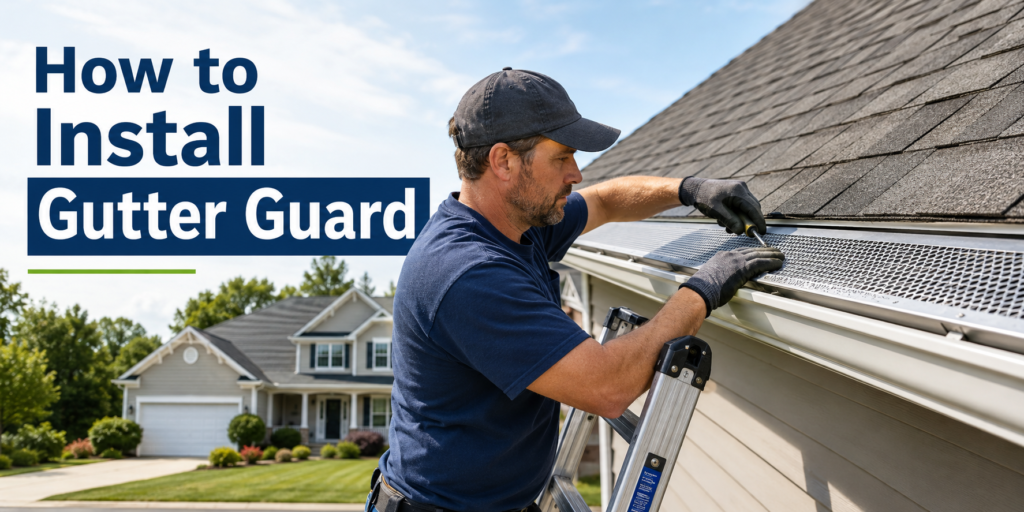
To learn how to install gutter guard, clean and inspect the gutter first, measure each run, cut the guard to fit, secure it with the fixing method made for that product, then test water flow with a hose. Mesh, screen, foam, brush, and roof-fixed guards do not install the same way. A good fit keeps debris out without blocking rainwater. Use a professional if access is high, steep, or unsafe.
This guide is for homeowners who want to judge whether gutter protection is a sensible DIY job. It explains fitting details without calling guards maintenance-free. Even after installation, regular gutter cleaning and inspection still matter.
What Is a Gutter Guard?
A gutter guard is a screen, mesh, cover, brush, or insert fitted in or over a gutter. It lets roof runoff enter while blocking leaves and other debris.
Fit matters. A loose panel can leave gaps. A guard that sits badly may catch leaves or cause water to overshoot. Fine mesh can stop small debris, yet dust may still collect. Choose a system for your roof, gutter, debris, and rainfall.
Types of Gutter Guards and How They Are Installed
Different products use different fixing methods. Check the manufacturer instructions before cutting or drilling, especially for rear-edge position, overlap, clips, and screws.
Screen Gutter Guards
Screen guards have larger openings than micro-mesh. Many snap into the front gutter lip or use clips. They block leaves, but smaller debris may pass through. Check that hidden hangers do not lift the screen.
Micro-Mesh Gutter Guards
Micro-mesh uses fine openings to block small debris. Rigid systems often use frames, clips, rails, or screws. The gutter edge must let the frame sit evenly. A bowed panel can leave a debris gap.
For fine-debris problems, compare micro-mesh gutter guards before buying.
Foam Gutter Guards
Foam guards sit inside the gutter trough. Cut them to length and press them into place without crushing them. Keep the outlet open. Leaves can still rest on top, so check the foam periodically.
Brush Gutter Guards
Brush guards sit inside the gutter with bristles upward. Join sections end to end. Keep the centre core clear of the outlet and hangers.
Reverse-Curve Gutter Guards
Reverse-curve guards use surface tension to pull water around a curved edge while debris falls away. Their slope and roof-edge position need accurate setup. Product-specific systems may suit professional installation.
What You Need Before Installing Gutter Guards
Gather the full kit before climbing. Tools depend on the guard and fixing system.
Tools
- Tape measure and marker for each gutter run.
- Tin snips or the cutting tool specified for the guard.
- Drill, screwdriver, or hex driver when screws are required.
- Gutter scoop, brush, hose, bucket, and suitable ladder.
- Ladder stabiliser or other access equipment where needed.
See these gutter cleaning tools for useful preparation equipment.
Safety Equipment
Wear gloves for sharp gutter and mesh edges, safety glasses when cutting or drilling, and non-slip footwear. Put the ladder on firm, level ground and keep three points of contact while climbing. Do not work in strong wind, rain, or on a wet roof.
Installation Materials
Keep all supplied clips, trims, rails, screws, or saddles together. Use approved outdoor hardware. Keep spare material for end cuts, corners, overlaps, and fitting errors.
Check Whether Your Gutter Guard Fits Your Gutter and Roof
Measure gutter width, then check the front lip, rear edge, hangers, roof material, and pitch. A snap-in screen may not grip every gutter profile.
Roof contact also varies. Tile, corrugated metal, and shingle-adjacent systems may need different clips or supports. Never assume the rear edge belongs under roofing.
Check hidden hangers closely.
How to Measure for Gutter Guards
Measure each straight gutter run separately. Corners, valleys, and returns change the material needed. Write each length down.
Add the runs, then allow for the overlap and cutting waste stated by the manufacturer. Check panel width too. A narrow guard may fail to reach its fixing point.
Compare your total with usable coverage, not just pack length. Overlaps reduce installed coverage.
How to Prepare Gutters Before Installing Gutter Guards

Do not cover a drainage problem. Clean, flush, inspect, and repair first. Our guide on how to clean gutters explains the cleaning process in more detail.
Remove Leaves and Debris
Scoop out leaves, twigs, mud, and roof grit. Check corners and the downspout outlet. Wet debris can pack tightly there and slow water.
Flush the Gutters
Run a hose through each gutter. Water should move toward the outlet. Pooling can signal poor pitch, sagging, or blockage.
Clear the Downspouts
Watch the outlet during the hose test. Water should leave freely. If it backs up, clear the downspout before fitting any guard. Covering a blocked pipe only hides the problem.
Inspect the Gutter System
Check seams, end caps, brackets, fascia, and gutter lips for rust, cracked sealant, loose hardware, bent edges, or separation.
Repair Problems Before Installing Guards
Tighten loose brackets and reseal leaking joints before installation. Major sagging, damaged fascia, or poor gutter alignment needs proper repair first because a guard cannot correct the drainage slope.
How to Install Gutter Guards Step by Step

These steps suit typical top-mounted screen or mesh systems. Product instructions take priority.
Set Up Your Ladder Safely
Use stable, level ground and a stabiliser where appropriate. Keep your body between the ladder rails. Move the ladder instead of stretching sideways to reach another section.
Measure the First Gutter Guard Section
Measure to the next corner, obstacle, or planned joint.
Cut the Gutter Guard to Size
Use the tool made for the material. Tin snips suit many thin metal meshes. Wear gloves and eye protection, and keep freshly cut edges away from your hands.
Position the Gutter Guard
Place the panel over the gutter opening. Align its front edge with the gutter lip and set the rear edge where the product requires. The panel should not dip or rock over hangers.
Secure the Gutter Guard
Snap, clip, or screw the guard as designed. Wrong fixing points can distort the panel, damage the gutter, or alter the water path.
Install the Next Section
Fit the next panel using the required overlap. Too little overlap leaves a gap; too much can form a ridge that catches leaves.
Cut and Fit Around Corners
Measure corners before cutting. Make clean notches or relief cuts only where the system allows them. Close visible gaps without crushing or sharply folding the mesh.
Handle Roof Valleys Carefully
Roof valleys can send a concentrated sheet of water into a small gutter area. Keep the guard secure and the water path open. Complex valley work often suits professional installation.
Finish the End Section
Measure and trim the last panel so the run finishes without an open end. Check the front edge, rear edge, joints, corners, and outlet before moving on.
How to Install Different Types of Gutter Guards
The method changes according to how the guard connects with the gutter. Use these summaries with the instructions supplied for your product.
How to Install Foam Gutter Guards
Cut clean foam to length and press it into the gutter trough. Keep the outlet clear and avoid compressing the insert so tightly that it reduces water space.
How to Install Brush Gutter Guards
Place each brush inside the clean gutter with bristles facing up. Join sections end to end and trim the last one. Keep the centre core clear of the downspout outlet.
How to Install Snap-In Screen Gutter Guards
Seat the screen into the front gutter lip, then secure the rear edge as directed. Check each panel over hidden hangers so the screen stays flat.
How to Install Screw-On Mesh Gutter Guards
Align the mesh first, then use the specified corrosion-resistant screws. Keep each fixing firm without overtightening. Excess force can bend thin mesh, rails, or gutter edges.
How to Install Micro-Mesh Gutter Guards
Set the frame evenly, join sections carefully, and close small gaps that can admit needles or seeds. If rails or roof-side fixings are required, follow the exact product layout.
How to Install Gutter Guards Around Obstacles
Common obstacles include hidden hangers, downspout outlets, mitres, corners, roof straps, and unusual fascia details. Measure first, mark the panel, then make the smallest cut needed for a clean fit.
Never cover the downspout opening. Around hangers, keep the panel level rather than forcing it over hardware. After cutting, look along the gutter lip for gaps that may not be obvious from above.
Should Gutter Guards Go Under Roof Shingles?
Not always. Some systems place a rear edge near or under the first shingle course. Others attach only to the gutter or use separate roof hardware.
Do not lift, cut, drill through, or force roof covering simply to make a generic guard fit. Poor roof contact can cause damage or affect warranty terms. Follow the guard and roofing instructions for that exact system.
How to Test Gutter Guards After Installation

When every panel is secure, run a hose down the roof above the guard. Start with moderate flow. Watch water enter the gutter and discharge through the downspout.
Check corners and valleys for overshoot, leaks, standing water, or panel movement. These areas receive concentrated runoff. A pre storm gutter cleaning check also helps remove debris before severe weather.
Common Gutter Guard Installation Mistakes
Most problems start with poor preparation or fit. Installing over dirty gutters can hide a blockage. The wrong guard size can leave edge gaps. Too little overlap lets debris through, while too much creates a ridge. Wrong screws can corrode or distort the guard. Other common faults include covering the downspout opening, forcing panels over hidden hangers, ignoring sagging gutters, and skipping the final hose test.
How to Maintain Gutter Guards After Installation
Guards reduce debris inside the trough, but leaves can still bridge across mesh and fine material can settle into openings. Check the surface after major storms and when visible debris builds up. Clear it when access is safe.
Inspect clips, screws, joins, end pieces, and downspout outlets for movement or blockage. For a broader upkeep plan, see gutter maintenance. The aim is reduced maintenance, not zero maintenance.
Can You Install Gutter Guards Yourself?
Simple foam, brush, snap-in, and basic screen systems can suit DIY work on easy-to-reach gutters. The job changes when you have a steep roof, two levels, awkward ground, damaged gutters, deep valleys, or roof-fixed mesh.
You also need to measure accurately, cut cleanly, identify drainage faults, and work safely at height. Westlink Services can assess difficult gutter conditions before protection goes on. For homeowners in Sydney, Australia, professional help may be the better option when access or repairs make the job risky.
Final Words
Before finishing, inspect the whole gutter run and test it with water. A short check can catch a loose panel or blocked outlet before rain does. Make sure the gutters and downspouts are clean and draining freely. Repair any leaks, sagging sections, or loose brackets before you finish. Check that every guard section fits the gutter and roof correctly, with no obvious gaps around joints, corners, valleys, or end sections. Clips and screws should hold the guard firmly without bending or distorting it, and downspout openings must remain clear.
Run water over the guard and confirm that it enters the gutter, moves toward the outlet, and drains through the downspout. Look for water overshoot, leaks, pooling, loose panels, or areas where debris could get underneath the guard. Gutter guards still need future inspection and cleaning, so include these checks in your regular maintenance routine.
A correct installation protects the drainage path without hiding existing faults. If access, repairs, or fitting details make the work unsafe or uncertain, Westlink Services can handle the gutter cleaning and preparation before the guard system goes on.
FAQs
Can I Install Gutter Guards on Existing Gutters?
Yes. Many products retrofit to existing gutters. Clean and inspect the gutters first, and confirm that the profile, width, and hanger layout suit the chosen guard.
Do I Need to Clean Gutters Before Installing Gutter Guards?
Yes. Remove debris and flush the gutter and downspout first. Installing over a blockage can hide poor drainage and make later cleaning harder.
What Is the Easiest Gutter Guard to Install?
Foam and brush inserts are usually simple because they sit inside the gutter and need little fastening. They still need to match your debris and drainage needs.
Do Gutter Guards Need to Be Screwed In?
No. Some drop in, snap, or clip into place. Others use screws, rails, or roof hardware. Follow the fixing method designed for your product.
Can You Install Gutter Guards Without Lifting Shingles?
Yes. Many gutter-mounted guards need no shingle lifting. If a product contacts the roof covering, follow its instructions rather than forcing the material.
How Much Should Gutter Guard Sections Overlap?
There is no universal overlap. Use the manufacturer’s stated amount. Too little leaves gaps; too much can create raised joints that trap debris.
Can Gutter Guards Cause Water to Overflow?
Yes, if they clog, sit at the wrong angle, restrict heavy runoff, or cover an existing drainage problem. Testing with a hose can expose these faults.
Can Gutter Guards Damage Shingles?
Poor fitting can. Lifting, cutting, or fastening through shingles without an approved method may cause damage. Keep roof contact specific to the product.
Do Gutter Guards Work With Hidden Hangers?
Many do, but hanger position can affect fit. Check clearance before buying and make sure panels do not bow upward where they cross the hardware.
What Tools Do I Need to Install Gutter Guards?
Typical tools include a tape measure, marker, cutting tool, gloves, ladder, and sometimes a drill or driver. Follow the product instructions for the final list.
How Do I Cut Gutter Guards?
Measure and mark first, then use a cutter suited to the material. Tin snips often work for thin metal mesh. Protect your hands and eyes.
Do Gutter Guards Still Need Cleaning?
Yes. They reduce debris inside the gutter, but leaves, dust, pollen, and small material can collect on top or around joins and outlets.
How Often Should Gutter Guards Be Inspected?
It depends on tree cover, storms, roof shape, and guard type. Inspect after severe weather and whenever you can see debris or water-flow problems.
Can I Install Gutter Guards on a Metal Roof?
Yes, if the system matches the roof profile. Corrugated and other metal roofs may require specific clips, saddles, trims, or mesh fixing details.
Should I Install Gutter Guards Myself or Hire a Professional?
DIY suits simple, low-risk jobs. Hire a professional for unsafe access, steep roofs, damaged gutters, complex valleys, or systems that need specialised roof fixing.


