

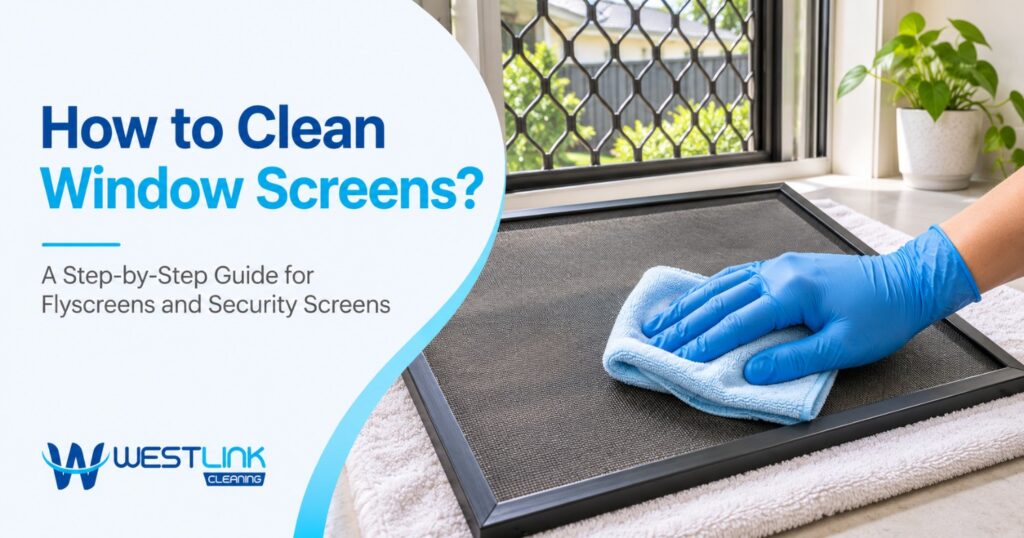
To clean window screens, first identify whether you have a removable flyscreen, fixed insect screen, retractable screen or security mesh. For a removable screen, lift off loose dust with a soft brush, wash gently using a cleaner approved for the material, rinse as directed, allow it to dry and refit it securely. For fixed screens, clean only the surfaces you can safely reach. Security screens and their frames may require model-specific products and water, so always check the manufacturer’s care guide.
Don’t forget to read our 3 window cleaning case studies from Sydney at the end of this article.
Need professional window cleaning? Request your FREE window cleaning quote today!
Choose a method for your screen
Match the screen and the access you have to the method below.
| Screen or access situation | Start here |
|---|---|
| Removable insect screen within reach | Use the intended release and wash the flyscreen. |
| Fixed insect screen within reach | Wipe the accessible mesh in place. |
| Security screen | Check the model’s care guide and glass access. |
| Unknown fitting or unsafe reach | Leave it fitted and arrange an assessment. |
Identify the screen and check your access
Flyscreens are fixed or removable insect barriers, often made from fibreglass or aluminium mesh. A security screen is designed as part of a security system and may have its own fasteners, frame finish and care instructions. You can’t reliably identify a security rating by looking at the mesh. Check the label, installation paperwork or installer. A tab or clip is a cue to look up the release instructions for that window. Leave unfamiliar fittings and window restrictors in place.
Gather gentle tools and check the cleaner
Gather a soft brush, a few microfibre cloths, a bucket and towels to protect the sill or support a removed frame. A vacuum with a soft brush attachment is useful for intact insect mesh if the maker permits it. Check which cleaner and water type suit the mesh and frame. For example, Bulleen Screens recommends a soft brush and mild soap for stubborn dirt on its flyscreens.
How to clean removable flyscreens?
Use this method for a flyscreen designed to come out, provided you can reach and support the frame safely.
Release and label the screen
1. Release the frame using its intended fittings. Follow the window maker’s directions. Hold the frame as it comes free and place it on a clean, supported surface. Photograph the orientation or label each frame if you’re doing several windows. If a clip sticks, the frame won’t move or the mesh crumbles at the edge, stop before pulling harder. Keep children away from the opening while the screen is out. Ordinary flyscreens offer no fall protection.

Brush, wash and rinse the mesh
2. Lift loose dirt from both faces. Use a soft brush around the perimeter and over the mesh to remove grit and cobwebs before they get wet.

3. Wash the mesh and frame edges. Use a soft cloth and a compatible cleaner where needed. Work with light pressure and rinse the cloth as it picks up dirt. Support the frame when turning it over.

4. Clear away cleaning residue. Use a gentle rinse if the maker allows it, or wipe with a separate cloth dampened with clean water. Check the corners for suds and keep runoff clear of flooring and electrical fittings.

Dry, refit and check the perimeter
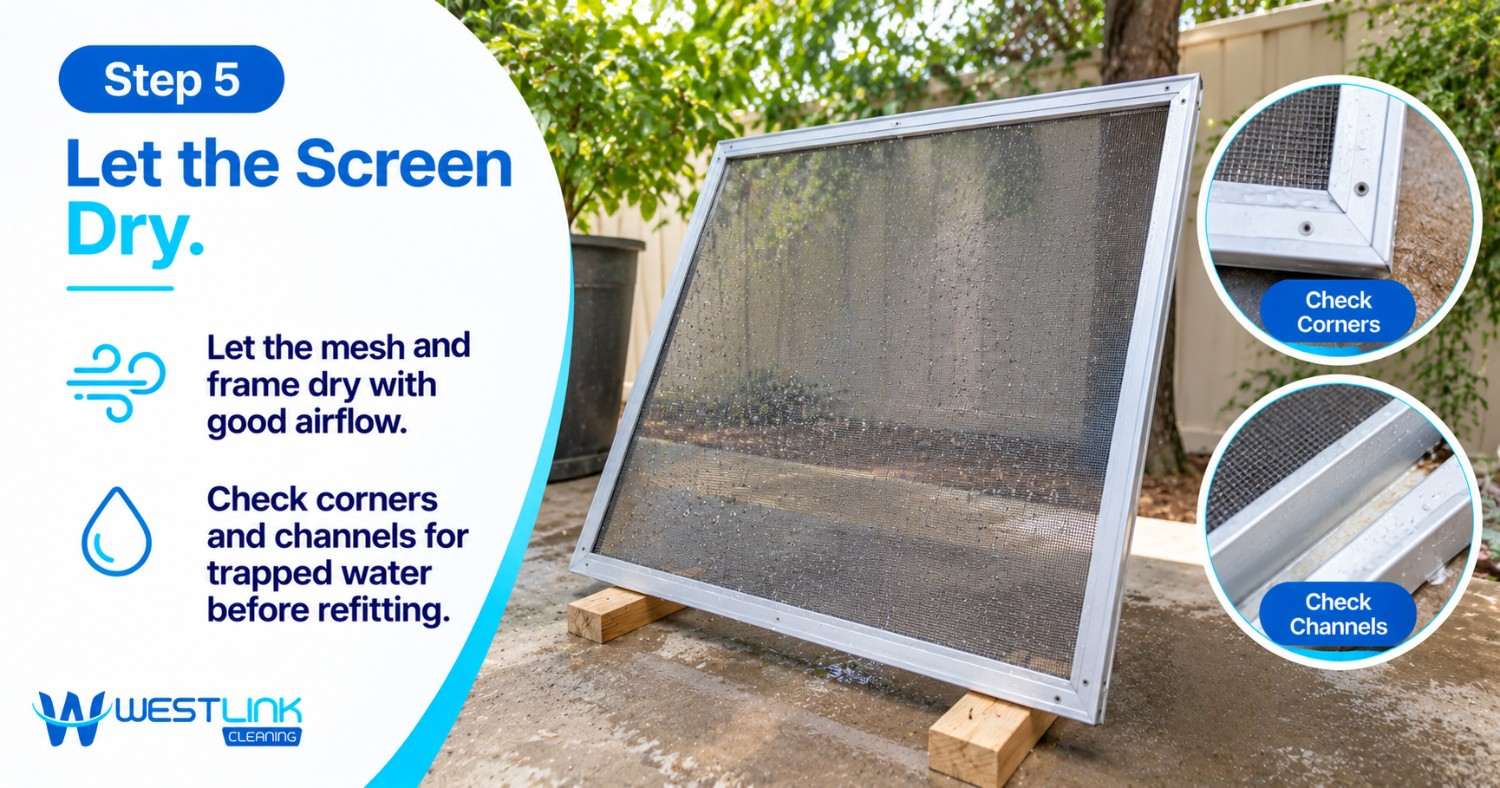
5. Let the mesh and frame dry. Keep the frame supported while it drains. Check the corners and channels for trapped water before putting it back.
6. Refit the screen in its original orientation. Use the original retainers and check that the frame sits evenly with no loose clips or gaps. If it won’t seat securely, leave the window closed and get the fitting checked.

How to clean fixed flyscreens in place?

You can clean the side of a fixed flyscreen you can safely reach. A soft brush and a lightly damp cloth are enough for routine dust and cobwebs.
Dust first and wipe with a damp cloth
- Protect the sill. Work from a stable position and put a towel under the mesh to catch drips.
- Brush away loose grit. Start at the top and collect dirt from the lower edge before wiping.
- Damp-wipe the accessible mesh and frame. Wring out the cloth so water doesn’t run down the wall or pool in the track. Use a compatible cleaner if needed.
- Wipe off residue. Use a second cloth dampened with clean water, then let the mesh dry.
Work within the side you can safely reach
In an apartment, an indoor wipe might clear the dust you can touch while leaving deposits on the outer face. Keep any window restrictor engaged and leave the far side for assessment if you can’t reach it safely. For a screen that forms part of a security system, follow the security screen method.
How to clean windows with security screens?
Clean security mesh with the tools, cleaner and water specified for its model. To clean the glass behind it, check whether the screen or window is designed to open in a way that exposes the pane. If the exterior face stays blocked, clean the surfaces you can reach and ask the installer or building manager about access.
Clean the mesh using the manufacturer’s care guide
Look up the instructions for both the mesh and frame finish. Crimsafe specifies Wash & Wax for its mesh and frame, with rinsing and drying steps in its care guide. Amplimesh allows a suitable mild detergent solution or its own screen cleaner and specifies mains water. Each guide describes which tools to use and how to finish the wash.
Use a soft, non-abrasive tool where the guide calls for one. Keep excess water away from lock hardware and leave security fasteners and restrictors in place. Ask the installer which instructions apply if you can’t identify the model.
Find a safe route to the glass behind the screen
Check which surface the opening exposes. The sash is the frame that holds the glass. Moving it can expose the inner face of the security mesh while leaving the outside face of the glass out of reach.
| What your window allows | What you can clean |
|---|---|
| A hinged or sliding screen designed to open | Use the normal release as instructed. Clean the exposed glass from a stable position and resecure the screen. |
| A fixed screen with model-approved sash access | Follow the exact window guide or ask the installer. Check which glass face the approved movement exposes before starting. |
| A fixed screen with no safe route to the exterior pane | Clean reachable surfaces only. Tell the installer or building manager which face remains blocked so they can assess access. |
For example, Jason Windows describes moving or removing the sash on certain windows to reach the inside of its security screen. Check separately which face of the pane you can reach, and keep safety devices engaged.
Once you know what you can reach, use the cleaning order for the whole window.
How to clean screens and windows in the same session?
Clean the screens before the glass. Use the time while a removable screen dries to clear the frames, tracks and sill, then finish the glass.
Clean screens first and finish with the glass
- Wash the screen using the method that suits it and let the frame and mesh dry.
- Lift loose grit from the accessible frame and tracks, then wipe the sill. Leave the drainage openings clear.
- Clean the glass you can reach with a separate cloth. Check the glazing maker’s method if the glass is coated or treated.
- Refit the dry screen and check the retainers. For a fixed screen, catch and wipe up drips before finishing the glass.
Check the mesh, the track and each glass face separately. You should be able to tell which surfaces are clean, which remain blocked and whether the screen is secure. For the glass technique, see how to clean outside windows.
When to clean again and when to arrange a repair?
Treat a new haze after washing and a torn edge as different problems. Start by checking the affected surface, then decide if another clean will help.
Check what is left before washing again
Look across the window from a different angle or check the reachable pane from indoors. See whether the mark is on the glass, at the frame edge or on the far side of the mesh. Try a small area before repeating the whole clean.
| What you see | What to check and do |
|---|---|
| Cloudy film after washing | Wipe a small, reachable patch using the approved method. If the haze clears, remove the remaining residue the same way. |
| Dirt on the far side or on the glass | Identify the affected face and use the method for that surface if you can reach it safely. |
| Torn insect mesh, a gap or a bent frame | Ask a screen repairer to check the fit. A sound frame with torn insect mesh may be suitable for re-meshing. |
| Pitting, lifting coating or loose security hardware | Pause cleaning and ask the installer to assess the finish or fitting. |
Set a routine for the actual exposure
Check ordinary flyscreens when you notice a build-up, and follow any maintenance schedule from the maker. A screen exposed to salt spray near the Sydney coast warrants closer checks than a sheltered one. At a property near building work, look for fresh grit before wiping the mesh.
Security-screen schedules can vary sharply by exposure. Crimsafe lists cleaning every six months in its mild category and every one to two weeks in its severe marine category. Check the exposure definitions and schedule for the product you have.
When to ask for professional window or screen cleaning?
An intact screen within comfortable reach is usually a DIY job. Arrange an access assessment for upper-storey exterior glass, a blocked pane or large glazing that you can’t safely reach. If the issue is a seized fitting, loose security hardware or an unfamiliar release, start with the installer.
Match the access problem to the right contact
- Installer. Ask about the window model, a damaged fitting or whether there is an approved way to reach the blocked pane.
- Strata or facilities manager. Confirm who is responsible for the exterior surfaces and who can approve access. At an office or shopfront, agree how to keep people clear of the work area.
- Window cleaner. Ask which surfaces the provider can reach and how they’ll manage access. For managed workplaces, discuss fall risk before agreeing to the work.
Confirm what the quote and the final check cover
Share the property type, number and size of windows, floor levels and visible build-up. Include photos only if you can take them safely. Access, condition and the number of surfaces all affect the quote.
Ask for the scope in writing. Check which glass faces, mesh, frames and tracks are included and whether approved removal and refitting are part of the job. For residential window cleaning, Westlink Cleaning Services includes flyscreens and tracks when they’re listed in the agreed scope. After the work, review those surfaces and confirm any exclusions.
Window cleaning in practice across Sydney by Westlink
Coastal salt, shopfront grime and industrial dust each called for a different approach.
Here’s how we cleaned a home in Avalon Beach, a shopfront in Bondi Junction and a warehouse in Wetherill Park.
Coastal window and flyscreen cleaning (Avalon Beach)

Property
A two-storey family home near Avalon Parade and Barrenjoey Road, with large living-room windows, sliding balcony doors and upper-level glazing.
Service
Interior and accessible exterior window cleaning, including balcony panels, frames, sliding-door tracks and removable flyscreens.
The Challenge
Salt spray, windblown sand and rain marks had clouded the outside glass. Fingerprints marked the living-room panes, while dust had collected in the balcony door tracks.
Our Approach
We checked the window heights, glass condition and balcony access before starting on the elevated panes. We removed salt deposits from the accessible glass, wiped the frames, cleared the tracks and cleaned the removable flyscreens. Before finishing, we inspected the glass for remaining streaks.
The Outcome
The cleaned balcony panels gave the family a clearer coastal view, and more daylight came through the living-room windows. The sliding-door tracks were clear of accumulated dust.
Shopfront window cleaning (Bondi Junction)

Property
A retail tenancy at Westfield Bondi Junction with a large glass frontage facing a steady flow of shoppers.
Service
Daily cleaning of the interior and exterior shopfront glass. The service began in January 2023.
The Challenge
Grime built up on the façade in a busy part of the centre. Foot traffic and coastal air contributed to the buildup, and streaks were easy to see across the large panes.
Our Approach
We used water-fed poles as part of the façade clean. The routine covered both faces of the glass so marks on the opposite side wouldn’t be mistaken for streaks left by the clean. Daily visits matched the rate at which the frontage picked up grime.
The Outcome
The client reported less grime and fewer visible streaks after the service began. The glass looked clearer from the shopping centre concourse.
High-window cleaning at a warehouse (Wetherill Park)

Property
A warehouse at Wetherill Park Industrial Estate in Western Sydney, with large exterior windows and high panes at a site with frequent truck movements.
Service
Monthly exterior window cleaning, with two deeper cleans a year for more persistent buildup.
The Challenge
Dust and grime accumulated on the outside panes, clouding the glass and reducing daylight inside the warehouse. Some windows were high enough to need specialist access, and the work had to fit around normal warehouse operations.
Our Approach
We scheduled the visits after hours to avoid interrupting warehouse activity and truck movements. The team used reach-and-wash poles and a cherry picker for the high windows. The deeper cleans addressed deposits that needed more attention than the regular visits.
The Outcome
The exterior panes stayed clearer under the maintenance schedule, allowing more daylight into the warehouse while keeping the cleaning outside operating hours.
Frequently asked questions
1. How do you clean flyscreens without removing them?
To clean flyscreens without removing them, gently brush both sides with a soft-bristle brush or use a vacuum with a brush attachment on low suction. Wipe accessible mesh and frame surfaces with a damp microfibre cloth, using a manufacturer-approved cleaner if needed. Remove any residue with a separate clean, damp cloth. Avoid excess water, heavy pressure and pushing against the mesh.
2. How do I know whether my flyscreen is removable?
Check the flyscreen frame for lift tabs, retaining clips, spring-loaded fittings or a removable track system. Some flyscreens lift out, while others are permanently fixed or secured with specialised fittings. Consult the window manufacturer’s removal instructions before attempting to release the frame. If the screen resists movement, has damaged fittings or requires tools you are unfamiliar with, do not force it.
3. Can I clean a retractable flyscreen?
Yes. Gently remove loose dust and debris from the retractable flyscreen mesh using a soft brush or low-suction vacuum with a brush attachment. Wipe the mesh with a soft, damp cloth and remove dirt from accessible tracks and guides. Follow the manufacturer’s instructions for cleaning the cassette and drying the screen. Never force the retracting mechanism or apply excessive water to its housing.
4. Can I use dishwashing liquid on window screens?
Diluted mild dishwashing liquid can be suitable for some window screens, but not every mesh, coating or security-screen system. Check the manufacturer’s care instructions before use. Where permitted, use a small amount in water and clean gently with a soft cloth or brush. Remove all soap residue as directed. Avoid concentrated detergents, abrasive cleaners and harsh chemicals that could damage protective finishes.
5. How do I clean salt deposits from a coastal security screen?
To remove salt deposits, gently clean the security-screen mesh and frame using fresh water and a non-abrasive cloth or brush, following the manufacturer’s instructions. Use only an approved cleaning solution and rinse away residue where permitted. Coastal screens generally require more frequent maintenance because of airborne salt exposure. Check your specific screen’s recommended cleaning intervals, especially near beaches and marine environments.
6. Why does my flyscreen still look dirty after washing?
A flyscreen may still look dirty because of leftover cleaning residue, trapped dust around the frame, deposits on the opposite side of the mesh or dirty window glass behind it. Check both sides and gently remove any remaining residue with a clean, damp cloth. If discolouration persists, inspect for corrosion, damaged coatings or deteriorating mesh rather than repeatedly scrubbing.
7. How do I clean the glass behind a fixed security screen?
Clean the glass behind a fixed security screen only where it is safely accessible using a suitable microfibre cloth or window-cleaning tool. Some security screens restrict access to the exterior glass and may require an approved access arrangement or professional cleaning. Do not remove security fittings, window restrictors or screen panels without the manufacturer’s instructions. Never lean outside an upper-storey window to reach the glass.
8. How do I remove pet hair and cobwebs from flyscreen mesh?
Use a soft-bristle brush or a vacuum with a brush attachment on low suction to gently lift pet hair, cobwebs and loose dust from the flyscreen. Work across the mesh with light pressure while supporting the frame where necessary. For stubborn debris, use a slightly damp microfibre cloth if the material permits. Avoid stiff brushes, scraping tools or pulling at trapped hair, which may stretch or tear the mesh.
9. Can tenants remove flyscreens to clean them?
Tenants may be able to remove ordinary flyscreens for cleaning if the screens are designed to be removable and the tenancy conditions allow it. Check the manufacturer’s instructions and ask the landlord or property manager before disturbing fixed fittings, security screens or window safety devices. In strata properties, additional restrictions may apply. Never remove window restrictors or compromise fall-prevention measures while cleaning.
10. How do I know whether a window screen needs cleaning or replacement?
A screen usually needs cleaning when it has accumulated dust, cobwebs, pollen or removable surface deposits but the mesh and frame remain intact. Replacement or professional repair may be necessary if you notice torn mesh, loose spline, severe corrosion, bent frames or broken retaining clips. If a security screen has damaged mesh or fittings, arrange a qualified assessment rather than attempting an unsuitable DIY repair.
Choose the method that suits your screen and work within safe reach. If you need help with a Sydney property, tell us which glass faces, screens and tracks you want assessed when you request a window cleaning quote.


