


However, a dramatic before-and-after difference does not necessarily mean a carpet has returned to its original condition.
Some discolouration comes from removable dirt, while other marks result from permanent fibre damage, fading or wear. Understanding this difference helps property owners make realistic decisions about cleaning and restoration.
At Westlink Cleaning Services, we provide professional carpet cleaning for homes and businesses across Sydney.
This collection explores 11 residential, commercial and stain-removal comparisons, explaining what visible changes can indicate, why some marks remain, and what to consider when evaluating carpet cleaning before and after photos.
Residential Carpet Cleaning Before and After Photos
Carpets in residential properties experience different types of wear depending on how each room is used.
Living rooms and hallways often develop dark traffic lanes. Bedrooms can show uneven shading beside beds and furniture, while dining areas are more likely to experience food spills and concentrated soiling.
The following comparisons illustrate common situations where professional cleaning can improve a carpet’s appearance.
1. Dining Room Carpet Cleaning Before and After
Dining room carpets often collect food particles, drink spills and dirt transferred from adjoining areas.
Frequent movement around the dining table can gradually create darker walking paths, particularly where chairs are regularly pulled out, or people enter and leave the room.
Before cleaning: The carpet shows noticeable dark traffic lanes around the dining area. These sections contrast with the lighter carpet in less frequently used spaces.
After cleaning: The affected walking paths appear lighter, and the overall carpet colour looks more consistent with the surrounding areas.
What this comparison demonstrates: Accumulated soil can make frequently used sections appear substantially darker than the rest of the carpet. Removing this soil can improve visual consistency, although permanent wear may remain.
For dining areas, the best cleaning approach depends on the carpet material, the nature of any food or beverage stains, and whether previous cleaning products have left residue.

Bedroom carpets may seem relatively clean because they experience less outdoor foot traffic than hallways or entrances.
However, narrow walking paths beside beds, wardrobes and doorways can develop concentrated soiling over time.
Before cleaning: A darker strip is visible along the frequently used walkway beside the bed, creating uneven shading across the carpet.
After cleaning: The walking path appears lighter, with less noticeable contrast between the regularly used area and the surrounding carpet.
What this comparison demonstrates: Some differences in carpet shading come from accumulated dirt, while others result from changes in the direction or condition of the carpet pile.
Cleaning can remove soil, but it cannot always reverse flattened or damaged fibres.
This distinction is particularly important when assessing older bedroom carpets, where wear and soiling may occur together.

3. Living Room Carpet Cleaning Before and After
Living rooms are among the most frequently used carpeted areas in many homes.
Foot traffic, food spills, dust and everyday activities can gradually affect both plain and patterned carpets.
Before cleaning: Several visible spots interrupt the appearance of a patterned living room carpet. Some areas look duller, making the carpet’s original pattern less distinct.
After cleaning: The spots appear less prominent, and the carpet pattern becomes easier to distinguish.
What this comparison demonstrates: Removing surface and embedded soil can improve the definition of patterned carpets, particularly where accumulated dirt has obscured lighter colours.
Not every spot will respond equally. The outcome depends on factors such as the substance involved, how long it has been present, and whether the carpet dyes have been affected.
For this reason, stain treatment should be selected according to the carpet and the type of contamination rather than assuming that one cleaning product will work for every mark.

4. Hallway Carpet Cleaning Before and After
Hallways often reveal the clearest difference between high-traffic and low-traffic carpet sections.
Because people repeatedly walk along the same narrow route, soil can become concentrated in a distinct traffic lane.
Before cleaning: A dark walking path extends through the hallway, noticeably contrasting with the carpet near the edges.
After cleaning: The central walking path appears cleaner and less distinct from the surrounding carpet.
What this comparison demonstrates: Heavy traffic can cause two different problems: soil accumulation and physical pile wear.
Professional cleaning can address removable soil, but permanently flattened fibres may continue to reflect light differently from the rest of the carpet.
A hallway can therefore be significantly cleaner even when a slight traffic pattern remains visible after treatment.

5. Pantry Area Carpet Cleaning Before and After
Carpeted areas near pantries and kitchen entrances can experience a combination of foot traffic, food residue and occasional moisture.
These conditions may create localised dark patches that become increasingly noticeable over time.
Before cleaning: Dark marks are concentrated around the pantry entrance, where people frequently walk between adjoining spaces.
After cleaning: The affected section appears more even in colour, with less prominent dark shading.
What this comparison demonstrates: Localised soil accumulation can affect a relatively small area without requiring the entire carpet to have the same level of contamination.
However, staining caused by oils, dyes or prolonged moisture exposure may require targeted assessment.
Identifying the likely source of a mark helps determine whether general carpet cleaning, specialised spot treatment or further investigation is appropriate.

Commercial Carpet Cleaning Before and After Photos
Commercial carpets often experience heavier and more consistent foot traffic than residential carpets.
Office entrances, reception areas, meeting rooms and hospitality spaces can accumulate soil across predictable walking routes.
Commercial carpet cleaning therefore involves more than addressing individual stains. It may also require managing widespread dullness and uneven carpet appearance across larger areas.
The following comparisons show common commercial carpet conditions.
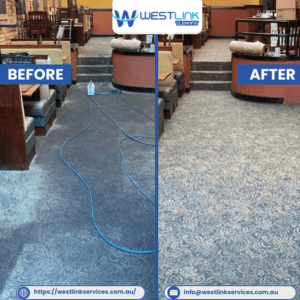
6. Restaurant Carpet Cleaning Before and After
Restaurant carpets can accumulate food particles, drink spills and dirt brought in by customers and staff.
In busy dining areas, repeated foot traffic can also make patterned carpets appear dull or uneven.
Before cleaning: The restaurant carpet shows widespread dullness, with dark shading making parts of its pattern less clearly defined.
After cleaning: The carpet pattern appears clearer, and some of the darker areas become less prominent.
What this comparison demonstrates: General soil accumulation can reduce the visual clarity of patterned commercial carpets.
Professional cleaning may improve their appearance by removing suitable contamination from the fibres.
However, food grease, strongly coloured spills and previously treated stains may respond differently from ordinary tracked-in dirt.
Restaurant carpets should also be assessed for material compatibility, expected drying conditions and the practical requirements of the premises.
7. Office Reception Carpet Cleaning Before and After
Reception areas create an important first impression for visitors, clients and employees.
Because these spaces often experience continuous foot traffic, their carpets may develop darker pathways between entrances, seating areas and reception desks.
Before cleaning: Frequently used walking areas show uneven shading and appear darker than surrounding sections.
After cleaning: The affected areas appear lighter, creating a more consistent overall carpet appearance.
What this comparison demonstrates: Traffic-related soiling can make commercial carpets look uneven even when individual stains are not particularly noticeable.
Cleaning can improve appearance where removable dirt contributes to the darker shading.
However, older carpets may retain visible wear patterns because repeated walking changes the structure and direction of the pile.

8. Meeting Room Carpet Cleaning Before and After
Meeting rooms may have lower general foot traffic than reception areas, but they can develop concentrated soiling around furniture.
Chair movement, footwear and occasional spills can contribute to uneven carpet appearance beneath tables and around seating positions.
Before cleaning: Darker patches are visible around furniture zones, creating a contrast with the more open sections of the floor.
After cleaning: The affected sections appear cleaner, reducing the difference between the furniture areas and the surrounding carpet.
What this comparison demonstrates: Carpet appearance can vary significantly within the same room.
Areas beneath chairs may be affected by a combination of accumulated soil, pressure and pile distortion.
While suitable cleaning can reduce soil-related marks, permanent changes caused by furniture pressure or abrasion may remain visible.

9. Large Commercial Carpet Cleaning Before and After
Large carpeted areas may become gradually dull without developing one clearly identifiable stain.
In these situations, the difference between clean and soiled sections can be difficult to recognise until a larger area has been treated.
Before cleaning: The carpet shows widespread dullness and uneven colouring rather than a single prominent mark.
After cleaning: The treated carpet appears more uniform, with less noticeable general discolouration.
What this comparison demonstrates: Professional carpet cleaning can improve overall appearance even when the main concern is accumulated soil rather than isolated staining.
Large commercial carpets may require different planning considerations from small residential rooms.
These can include carpet construction, cleaning equipment access, furniture placement, drying requirements and the need to minimise disruption to normal business activities.
An appropriate cleaning plan should account for these conditions rather than relying only on the appearance of the carpet.

Carpet Stain Removal Before and After Photos
A carpet may appear generally clean but still have one or two prominent stains.
Unlike widespread soil accumulation, localised staining can involve a concentrated substance that has interacted with the carpet fibres or dyes.
The success of professional stain removal depends on what caused the mark, the carpet material, previous treatment attempts and whether the discolouration is reversible.
10. Doorway Carpet Stain Removal Before and After
Doorways are common locations for localised carpet staining because outdoor soil and moisture can be transferred inside.
Repeated contact with footwear may produce irregular dark marks that differ from ordinary traffic lanes.
Before cleaning: Several uneven dark marks are visible near the doorway.
After cleaning: The affected area appears lighter, although slight discolouration may remain.
What this comparison demonstrates: A visible reduction in staining does not always mean the affected fibres have returned to their original colour.
Some marks consist mainly of removable soil. Others may involve dye changes, staining substances or damage caused by previous cleaning products.
The correct treatment depends on identifying these factors as accurately as possible.

11. Office Carpet Spot Cleaning Before and After
Individual stains can become particularly noticeable on plain commercial carpets.
Marks caused by drinks, tracked-in residue or other substances may stand out against an otherwise consistent carpet colour.
Before cleaning: A circular dark stain is visible on the office carpet, creating a clear contrast with the surrounding fibres.
After cleaning: The stain appears less prominent and blends more closely with the surrounding carpet.
What this comparison demonstrates: Targeted stain treatment may improve a localised area without requiring the same intensity of treatment across the entire room.
However, the original cause of the stain matters.
Some staining substances can be removed from carpet fibres, while others may permanently alter the material or its colour.
For more information, read our guide to common carpet stains and how experts remove them.

What Do Carpet Cleaning Before and After Photos Actually Show?
Before-and-after carpet cleaning pictures can help demonstrate visible improvements, but photographs do not tell the entire story.
A carpet may look substantially better because dirt has been removed from the fibres. In other cases, the difference may be affected by lighting, moisture, camera settings or changes in pile direction.
Understanding these limitations makes it easier to evaluate cleaning results accurately.
Lighting and Camera Position
Carpet fibres reflect light differently depending on their direction and texture.
A photograph taken from one angle may show more shading than a photograph taken from the opposite direction.
For a fair comparison, before-and-after images should ideally use similar camera positions, lighting and framing.
Carpet Drying
Moisture can temporarily change a carpet’s appearance.
Some carpets look darker immediately after cleaning and become lighter as they dry.
Comparing a wet carpet with a fully dry carpet may therefore create a misleading impression of the final result.
Where possible, photographs showing the finished result should be taken after the carpet has dried sufficiently for a fair comparison.
Partial Stain Removal
A stain becoming less visible is a meaningful improvement, but it is not necessarily complete removal.
Remaining discolouration may indicate permanent dye changes, residues or contamination that could not be safely removed.
Before-and-after photographs should not be presented as proof that every trace of a staining substance has been eliminated.
Existing Carpet Wear
Cleaning removes suitable contamination, but it does not rebuild damaged carpet fibres.
A heavily used walkway may remain visibly different from surrounding areas because of permanent pile wear.
Similarly, bleach marks and faded areas cannot normally be restored through conventional cleaning.
The most trustworthy before-and-after comparisons show realistic results rather than promising that every carpet will look brand new.
What Can Professional Carpet Cleaning Improve?
Professional carpet cleaning can address several common appearance problems, but the likely improvement depends on the underlying cause.
|
Carpet problem |
Potential cleaning result |
Important limitation |
|
Dark traffic lanes |
Reduce darkness caused by removable soil |
Permanent pile wear may remain |
|
Food and drink stains |
Remove or reduce suitable staining |
Some substances permanently affect dyes |
|
General dullness |
Improve appearance by removing accumulated soil |
Fading and physical wear cannot be reversed |
|
Mud and tracked-in dirt |
Remove suitable deposited soil |
Deeply embedded or previously treated marks may need additional attention |
|
Patterned carpet discolouration |
Improve clarity of colours and patterns |
Original colour loss cannot be corrected by ordinary cleaning |
|
Furniture-related shading |
Remove soil around furniture areas |
Pressure marks and pile distortion may persist |
|
Old stains |
Sometimes reduce visible discolouration |
Age and previous treatments can limit removal |
|
Bleach damage |
Cleaning may remove surrounding soil |
Lost dye cannot be restored through normal carpet cleaning |
|
Flattened carpet pile |
Remove accumulated dirt |
Permanently crushed fibres may not recover |
The most important distinction is between removable contamination and permanent material change.
A cleaner carpet does not necessarily look new, and an older carpet can remain visibly worn even after appropriate professional treatment.
Why Do Some Carpets Look Much Better After Cleaning Than Others?
Two carpets with similar dark marks can produce very different cleaning results.
This happens because the visible appearance of a carpet does not always reveal the underlying cause of the problem.
1. Carpet Fibre Type
Different carpet fibres respond differently to moisture, cleaning products and staining substances.
For example, wool carpets may require particular attention to cleaning chemistry, temperature and moisture management.
Synthetic carpets also vary in stain resistance and compatibility with cleaning products.
Identifying the fibre type helps determine which treatment methods are appropriate.
2. Stain Type and Age
A recent spill and an old stain may require different approaches.
Some substances remain close to the surface, while others penetrate deeper or interact with the carpet dyes.
Previous attempts to remove a stain can also affect the outcome.
Using unsuitable products may spread the stain, leave residue or cause irreversible colour changes.
3. Level of Soil Accumulation
A carpet affected mainly by removable dirt may show a noticeable improvement after suitable cleaning.
By contrast, a carpet whose darker appearance results primarily from permanent wear may show less dramatic visual change.
This is why the darkest-looking carpet does not always produce the greatest before-and-after difference.
4. Previous Cleaning Treatments
Carpets that have been cleaned previously may contain residual products or areas affected by earlier treatments.
Some residues attract additional dirt, while certain chemicals can alter dyes or fibre appearance.
Understanding what has already been used on the carpet can help avoid incompatible treatments.
5. Carpet Age and Physical Condition
Carpet age alone does not determine whether cleaning will be successful.
However, prolonged use may produce fibre abrasion, pile flattening, fading or other permanent changes.
These conditions can limit the visual improvement possible through cleaning.
Carpet Steam Cleaning Before and After: Does the Method Matter?
Yes. The cleaning method can influence both the treatment process and the resulting appearance.
Hot-water extraction, commonly referred to as carpet steam cleaning, involves applying a cleaning solution and extracting moisture and loosened soil using suitable equipment.
It can be an appropriate option for many carpets affected by accumulated dirt, provided the material and conditions are suitable.
However, hot-water extraction is not automatically the best method for every carpet.
Some materials or site conditions may require alternative cleaning approaches, different moisture levels or specialised treatment.
The choice should consider:
- Carpet fibre and construction.
- Type and level of soiling.
- Stain characteristics.
- Previous cleaning attempts.
- Moisture sensitivity.
- Expected drying conditions.
- Manufacturer care recommendations, where available.
Before-and-after results should also be accurately attributed to the cleaning method actually used.
A photograph showing a visibly improved carpet does not establish whether hot-water extraction, low-moisture cleaning or another process was responsible.
For a closer look at the differences, read our carpet dry cleaning vs steam cleaning guide.
Why Can Carpet Stains Reappear After Cleaning?
A carpet stain may become less noticeable after treatment but appear again during or after drying.
This does not always mean the cleaning process failed. Different mechanisms can produce similar-looking marks.
Wicking
Wicking can occur when remaining contamination moves towards the carpet surface as moisture evaporates.
This may make a previously treated mark visible again after drying.
The likelihood depends on factors such as the original spill, the depth of contamination and the treatment used.
Residue-Related Resoiling
Cleaning-product residue can sometimes contribute to renewed soil accumulation if it remains in the fibres.
A previously cleaned section may then become visibly darker with further use.
New Contamination
High-traffic areas may become dirty again because of everyday use.
Where a recurring mark is caused by new contamination rather than remaining residue, the appropriate response may involve both cleaning and changes to ongoing carpet maintenance.
Identifying the cause is more useful than repeatedly treating the same mark without understanding why it returns.
How Westlink Cleaning Services Assesses Carpet Cleaning Requirements
Different carpet conditions require different cleaning decisions.
At Westlink Cleaning Services, we consider the visible condition of the carpet and the circumstances surrounding the cleaning request before discussing suitable options.
Important considerations include the type of carpet, the affected area, stain characteristics, previous cleaning attempts and practical drying requirements.
For example, a dark hallway may contain both removable dirt and permanent pile wear.
Cleaning may improve the soiled section, but it may not eliminate the appearance of wear caused by years of foot traffic.
Similarly, a single prominent stain may require targeted attention rather than the same approach used for widespread carpet soiling.
By identifying these differences, we can discuss appropriate cleaning options and explain what improvements may be realistic.
Complete stain removal, restoration of faded colours and reversal of permanent fibre damage cannot be guaranteed.
Our aim is to help customers understand the condition of their carpets and make informed decisions about professional cleaning.
How to Maintain Carpet Appearance After Professional Cleaning
Professional cleaning can improve carpet appearance, but ongoing care plays an important role in keeping carpets looking their best.
A few practical habits may help reduce unnecessary soil buildup and prevent avoidable staining.
Vacuum Regularly
Regular vacuuming helps remove loose particles before they become more deeply embedded in the carpet pile.
The appropriate frequency depends on how heavily the area is used and the carpet manufacturer’s recommendations.
Address Spills Promptly
Fresh spills are often easier to manage than stains that have been left untreated.
Blotting a spill carefully can help limit its spread, but avoid aggressive rubbing or using unfamiliar chemicals.
Certain substances and carpet materials require professional advice.
Use Entrance Mats
Mats at entrances can help reduce the amount of outdoor dirt carried onto carpets.
They are especially useful in frequently used residential entrances and commercial reception areas.
Reduce Concentrated Wear
Where practical, changing furniture arrangements or varying walking patterns may help distribute wear more evenly.
This will not reverse existing fibre damage, but it may reduce continued concentration of traffic in certain areas.
Choose Appropriate Professional Maintenance
Cleaning frequency should reflect actual use, carpet condition and manufacturer guidance.
A lightly used bedroom does not necessarily require the same maintenance schedule as a busy commercial entrance.
Professional Carpet Cleaning in Sydney: Request a Quote
Are dark traffic lanes, stains or accumulated dirt affecting the appearance of your carpet?
Westlink Cleaning Services provides professional carpet cleaning in Sydney for residential and commercial properties.
Whether you are concerned about a single noticeable stain or general carpet dullness, understanding the condition of the carpet is an important starting point.
To help us assess your cleaning requirements, please provide:
- Your Sydney suburb: So we can understand your property location.
- Photos of the carpet: Include both an overall view and close-ups of problem areas.
- Approximate carpet area: Indicate the rooms or sections requiring attention.
- Details of stains or traffic marks: Explain what you know about the cause and how long the marks have been present.
- Previous cleaning attempts: Mention any products or methods already used.
With this information, our team can discuss potential cleaning options and provide a quote based on the work required.
For individual marks, you can also explore our carpet stain removal service in Sydney.
Final Thoughts:
Carpet cleaning before and after photos are useful because they show how different types of soiling and staining may respond to professional treatment.
A dark hallway can appear brighter, a patterned carpet may regain visual clarity, and isolated stains may become less noticeable.
However, the best results are not always the most dramatic photographs.
A meaningful comparison should distinguish between dirt that can be removed and damage that cleaning cannot reverse.
At Westlink Cleaning Services, we help residential and commercial customers across Sydney understand their carpet cleaning options and set realistic expectations.
If your carpet has visible stains, dark walking paths or widespread dullness, contact our team to discuss its condition and request a professional cleaning quote.
Frequently Asked Questions
Can professional carpet cleaning make an old carpet look new?
It can make a noticeable difference! If your carpet is mainly dirty, a professional clean may bring back a fresher look. But if the fibres are worn or the colour has faded, cleaning won’t fix that.
How much difference can professional carpet cleaning make?
That depends on how dirty your carpet is and what condition it’s in. Some carpets look much brighter after cleaning, while others improve only a little because of age or wear.
Can professional carpet cleaning remove all stains?
Not every stain will come out completely. Fresh stains are often easier to treat, while older or stubborn marks may only fade. It also depends on your carpet’s material and previous cleaning attempts.
Can carpet cleaning remove dark traffic lanes?
Often, yes. If those dark patches are caused by built-up dirt, professional cleaning can help. But if the carpet has become worn or flattened, some shading may still be visible.
Why does my carpet look darker after cleaning?
It might simply still be damp. Moisture can make carpet fibres appear darker, so it’s best to wait until the carpet is fully dry before judging the result.
How long does carpet take to dry after cleaning?
There’s no single drying time for every carpet. It depends on the cleaning method, carpet type and airflow in your home. Your cleaner should let you know when it’s ready to use.
Can carpet stains come back after cleaning?
Yes, sometimes they do. Leftover residue or deeper contamination can become visible again as the carpet dries. If the same stain returns, it’s worth having the cause checked.
Is steam cleaning better than other carpet cleaning methods?
Not always. Steam cleaning, also called hot-water extraction, works well for many carpets. But another method may be more suitable depending on your carpet’s material and condition.
Can I trust carpet cleaning before and after photos?
They can give you a good idea of what’s possible. Just look for photos taken from the same angle with similar lighting, so you can see the actual difference without misleading effects.
Should I clean my old carpet or replace it?
If your carpet is still in reasonable condition but looks dirty, professional cleaning is worth considering. If it’s badly worn, damaged or permanently discoloured, replacing it may make more sense.


