

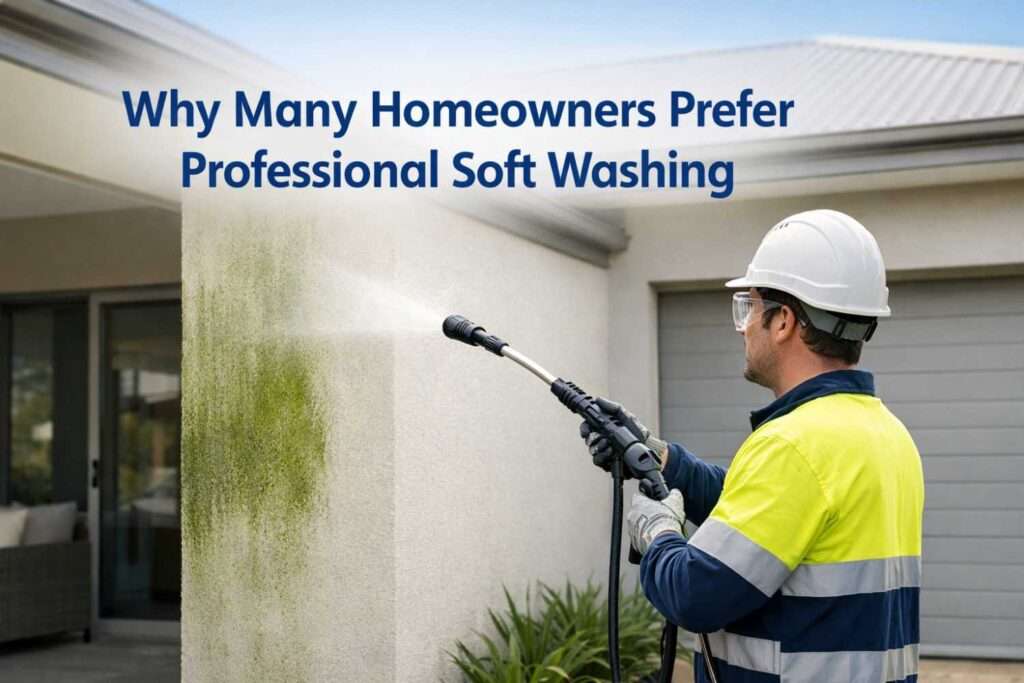
Many homeowners prefer professional soft washing because it provides a safe, long-lasting, and gentle cleaning solution for home exteriors without the damage risks associated with high-pressure methods. As an exterior cleaning specialist with more than 13 years of hands-on experience, I have helped countless property owners restore and protect their homes using this proven technique. Soft washing combines low-pressure water application (typically 100 to 500 PSI) with biodegradable cleaning solutions to eliminate algae, mould, mildew, lichen, and other organic growth at the source. This approach not only cleans surfaces thoroughly but also prevents rapid regrowth, delivering results that often last 1 to 3 years or longer depending on local climate conditions.
Key Reasons Homeowners Choose Professional Soft Washing

Homeowners choose professional soft washing because it fixes the problem without punishing the surface. Instead of blasting grime off with force, a trained technician uses low pressure and the right cleaning approach to break down organic growth and lift staining gently. That means less risk of paint damage, water being pushed behind cladding, or roughened render that looks worse after it dries. People also like the “set and forget” result, because treating algae, mould, and mildew properly helps slow regrowth, so the home stays cleaner for longer. Add in safer work at heights, plant protection, and controlled runoff, and it is an easy upgrade from DIY or aggressive pressure washing.
1. Superior surface safety

Homeowners choose professional soft washing because most exterior surfaces are not designed to handle concentrated force. High-pressure washing can remove dirt, but it can also remove what is protecting the surface.
What high pressure commonly damages
- Roofs (tile, Colorbond, coated metal): can strip protective coatings, dislodge ridge capping mortar (older roofs), loosen lichen that then blocks gutters, and force water into roof spaces through laps, cracked pointing, or around penetrations.
Read it in more detail: Surfaces That Should Not Be Soft Washed.
- Painted surfaces: can lift paint, open micro-cracks, and expose bare substrate. Then the surface weathers faster and stains return sooner.
- Stucco and render: can pit the surface, chip weak spots, and push water into hairline cracks, which can lead to bubbling or flaking later.
- Timber and weatherboards: can raise the grain, cause splintering, and drive moisture into joints.
- Vinyl siding and cladding laps: can push water behind panels, into insulation or wrap, and sometimes leave streaks that show after drying.
Why pros get safer results
- They clean using low pressure and rely on chemistry and dwell time, not force.
- They control spray angle and distance, so water is not driven into overlaps, vents, soffits, or window seals.
- They tailor the approach for older paint, weathered timber, porous surfaces, and shaded areas that dry slowly.
2. Extended cleanliness

Many homeowners get frustrated when pressure washing looks great for a week, then green growth creeps back quickly, especially on shaded walls and roofs. Soft washing is popular because it targets the biology behind the staining.
Why regrowth happens after pressure washing
- Pressure washing often removes the visible film, but spores and root-like structures can remain in pores and texture.
- In humid areas, microscopic growth starts again fast, especially on south-facing or shaded surfaces.
Why professional soft washing lasts longer
- The treatment can neutralise growth at the source, so the surface stays cleaner for longer.
- Pros apply evenly, allow proper dwell time, and rinse thoroughly, reducing the chance of streaks or residue after drying.
- They know to re-check problem zones after rinsing, such as eaves, shaded corners, and under trees.
Practical example: A roof that goes green every wet season often needs a method that slows regrowth, not just a cosmetic blast. That is a common reason homeowners shift to soft washing.
3. Eco-conscious approach

Homeowners like “eco-friendly” claims, but what matters most is how runoff is managed. A professional approach reduces harm to gardens, pets, and waterways.
What eco-conscious homeowners care about
- Plant protection: pre-wetting, covering sensitive plants, and rinsing leaves after treatment.
- Runoff direction: ensuring wash water does not flow to stormwater drains, garden beds, or neighbouring properties.
- Controlled application: treating only what needs treating, not flooding everything.
What professionals do differently
- Use purpose-made products and apply with controlled flow.
- Set up practical protections like wetting plants, moving pots, blocking flow paths, and planning rinse water.
- Avoid over-application that causes unnecessary runoff and mess.
This is especially important in suburbs with tight lots, shared driveways, strata walkways, and properties close to drains.
4. Health and allergen reduction

A home exterior can hold onto allergens and biological growth, particularly around shaded entries, patios, pergolas, and outdoor entertaining zones.
Why it matters to homeowners
- Mould and mildew can create a musty smell near doors, under eaves, and around outdoor areas.
- Pollen and grime settle on walls and outdoor surfaces and get tracked indoors.
- Families with allergies often want the outdoor environment to feel cleaner, especially where kids play.
Important note for trust: You can say it can reduce buildup of mold and pollen around the home, but avoid medical promises.
5. Expert application and safety

Even when homeowners understand the benefits, many still avoid DIY because the risk is not just chemical strength. It is the whole job setup.
Common DIY risks
- Mixing too strong and bleaching surfaces or damaging sealants.
- Poor rinsing, leaving film that dries streaky or sticky.
- Overspray onto cars, outdoor furniture, electrical fittings, and neighbouring property.
- Ladder falls and roof slip risk, especially on wet surfaces.
- Missing sections, because spray patterns do not overlap or dwell time is inconsistent.
What pros bring
- PPE, safe handling, and correct storage practices.
- A methodical workflow: small sections, controlled coverage, proper dwell time, thorough rinse, then a final check after drying.
- Experience with tricky surfaces like porous render, oxidised paint, older weatherboards, and textured finishes.
6. Long-term cost savings

This is one of the strongest homeowner motivations: it is cheaper to maintain than to repair.
Where the savings come from
- Avoiding repainting caused by lifted paint or etched render.
- Avoiding water intrusion behind cladding from aggressive pressure.
- Avoiding roof coating damage that accelerates rust or fading.
- Reducing frequency of cleaning by slowing regrowth.
- Keeping the property consistently presentable, which supports curb appeal.
You can frame it as: professional soft washing can reduce avoidable damage and extend the time between deep cleans, which lowers total upkeep costs over time.
Why Sydney’s humid coastal climate increases demand for soft washing

Sydney’s coastal humidity, warm temperatures, and shaded suburbs with tree cover create ideal conditions for algae, moss, and mould, especially in wet seasons.
Sydney-specific factors
- Humidity plus shade: slows drying, encourages growth.
- Tree cover and leaf litter: adds organic nutrients to surfaces.
- Salt air near the coast: can make grime cling and surfaces look dull faster.
- Frequent damp periods: encourages recurring green and black staining.
Result: homeowners want a method that is gentle on surfaces but strong on organic growth, and they prefer professionals because the outcome is more reliable and less risky.
Professional soft washing is not just a different cleaning style. It is a risk-managed maintenance service. The best operators tailor the approach to the surface, protect landscaping, control runoff, and rinse thoroughly so the home dries clean and even. That combination is why many homeowners prefer professional soft washing over DIY or aggressive pressure washing.
Soft Washing vs Pressure Washing

Understanding the clear differences between soft washing and pressure washing helps homeowners make informed decisions. The table below highlights the most important distinctions.
| Feature | Soft Washing | Pressure Washing |
| Pressure range | 100 to 500 PSI | 1,300 to 4,000+ PSI |
| Primary cleaning agent | Cleaning solutions + low-pressure rinse | High-force water |
| Surface safety | Excellent for roofs, siding, paint, vinyl | Risky for roofs, paint, softer materials |
| Longevity of results | 1 to 3 years or more | 6 to 12 months typically |
| Damage risk | Very low | Moderate to high |
| Best for | Organic growth (algae, mould, mildew) | Inorganic dirt, grease, concrete |
| Water usage | Lower | Higher |
| Environmental impact | Lower with biodegradable solutions | Higher potential for runoff pollution |
Soft washing is the preferred choice for most residential exteriors, especially in areas prone to biological growth.
Top Benefits of Professional Soft Washing

Here are more than 10 compelling benefits that explain its growing popularity:
- Protects fragile surfaces from damage
- Kills mould, algae, and mildew at the root level
- Extends time between cleanings
- Improves curb appeal
- Removes allergens and supports healthier outdoor living areas
- Saves time compared to labour-intensive DIY
- Helps prevent costly repairs from unchecked growth
- Uses eco-friendly, biodegradable cleaning agents
- Prepares surfaces well for repainting or resealing
- Can help reduce heat absorption by removing dark roof algae
- Increases property value through a well-maintained appearance
- Aligns with many manufacturer warranties that discourage high-pressure cleaning
These benefits are especially noticeable because humid coastal climates can cause organic growth to return much faster without proper treatment.
Why Choose Professional Over DIY Soft Washing

While DIY soft washing kits are available, most homeowners achieve far better and safer results by hiring professionals. Here’s why:
- Professionals use commercial-grade pumps, measured dilution, and specialised nozzles that deliver consistent coverage.
- They understand how different surfaces react to chemical strength and dwell time.
- Runoff management and plant protection are standard practice, reducing liability and environmental risk.
- Trained technicians follow safety protocols, wear appropriate PPE, and use safer working-at-heights practices.
- DIY attempts often cause streaking, plant burn, incomplete cleaning, or surface damage from incorrect pressure or mixing.
- The upfront cost of professional service is often offset by longer-lasting results and avoided repair expenses.
Environmental and Safety Considerations

Modern professional soft washing emphasises environmental responsibility. Technicians use biodegradable, phosphate-free solutions that break down naturally. They apply only the necessary amount of product, allow proper dwell time, and rinse carefully to minimise runoff.
Many services now use surfactant-enhanced formulas that can reduce the required concentration of certain agents, which lowers overall environmental load. Professionals also follow local discharge rules and may use collection systems or neutralisers when needed.
From a safety perspective, low-pressure application reduces the risk of injury from high-pressure equipment. Proper chemical handling and protective equipment help protect technicians and the homeowner’s family, pets, and landscaping. See safe work guidelines.
Common Mistakes Homeowners Make (and How Pros Avoid Them)

- Using too much pressure (thinking “more force = cleaner”), which damages surfaces. Pros stay in a low-pressure range.
- Incorrect dilution (too weak or too strong), causing poor results or plant and surface damage. Professionals measure precisely.
- Skipping plant and surface protection, leading to burns or staining. Pros pre-wet and cover sensitive areas.
- Poor timing (cleaning in harsh sun or rain), causing streaking or wash-off. Pros choose better conditions.
- Inadequate dwell time, rushing the job so the treatment cannot work fully. Professionals time the process carefully.
Avoiding these pitfalls is one of the biggest advantages of hiring experienced professionals.
Conclusion
Professional soft washing delivers strong safety, longevity, and environmental responsibility for exterior cleaning. It protects your biggest investment while maintaining a clean, healthier home environment. Whether you live in a dry climate or a humid coastal area like Sydney, where mould and algae thrive, the gentle yet effective nature of soft washing makes it a preferred method for many homeowners.
If you want long-lasting results without risking damage to your property, contact a reputable professional soft washing service in your area today. A single professional treatment can transform your home’s appearance and help protect it for years to come.
FAQs
1. What is professional soft washing?
Ans. Professional soft washing is a low-pressure cleaning technique that uses specialised biodegradable solutions to remove dirt, algae, mould, and mildew from home exteriors. The method relies on cleaning action rather than force, making it safer for most surfaces.
2. How does soft washing differ from pressure washing?
Ans. Soft washing applies cleaning solutions at low pressure (often under 500 PSI) to treat contaminants, while pressure washing uses high force (often 1,300+ PSI) to blast away surface dirt. Soft washing often lasts longer and is typically safer for roofs and siding.
3. Is soft washing safe for roofs and painted surfaces?
Ans. Yes. When performed by trained professionals, soft washing is one of the safer methods for roofs, painted siding, vinyl, and stucco because it avoids the damage that high pressure can cause.
4. What chemicals are used in soft washing?
Ans. Typical solutions may include diluted sodium hypochlorite, surfactants to help coverage, and other cleaning agents, all mixed and applied carefully.
5. How long do soft washing results last?
Ans. Results commonly last 1 to 3 years, sometimes longer with good maintenance. In humid or shaded areas, annual or biennial treatments are common.
6. Is soft washing environmentally friendly?
Ans. It can be. Modern professional soft washing uses biodegradable products, lower water volumes, and careful runoff management to reduce environmental impact.
7. How much does professional soft washing cost?
Ans. Pricing varies by home size, condition, access, and location. Many services offer free estimates.
8. Can I do soft washing myself (DIY)?
Ans. DIY kits exist, but many homeowners get inconsistent results or risk plant and surface damage. Professional training and equipment usually produce safer, more consistent outcomes.
9. Why choose a professional soft washing service?
Ans. Professionals bring experience, correct application, safety protocols, and environmental practices that deliver better results with less risk.
10. How often should I have my home soft washed?
Ans. Most homes benefit every 1 to 3 years. In humid coastal climates or shaded properties, annual treatments can be common.


