

Windows can look reasonably clean from across a room while still carrying dust, water spots, fingerprints and a thin layer of grime. A closer look—or a comparison after proper cleaning—often reveals the difference.
Before and after window cleaning shows how removing surface contamination can improve glass clarity, reduce streaks and make windows easier to see through. However, the result depends on the glass condition, the type of deposits and the cleaning work performed.
Below are ten Sydney property scenarios that illustrate different window-cleaning challenges, followed by practical advice on achievable results, professional methods, costs and maintenance.
Note: The ten examples are illustrative situations based on property types and cleaning challenges relevant to Sydney. They are not presented as completed Westlink projects or genuine before-and-after photographs.
Want results like these for your property? Tell us your Sydney suburb, property type and the windows you need cleaned. Westlink can review your requirements and provide a tailored quote —>> https://westlinkservices.com.au/get-a-quote/
10 Before and After Window Cleaning Examples Across Sydney
Not every dirty window needs the same cleaning approach. A coastal apartment may have deposits associated with sea air, while a busy shopfront may be covered in fingerprints and wiping marks. Older residential windows can also require different precautions from modern commercial glazing.
These ten examples show what to inspect before cleaning, what an appropriate service may involve, and what a realistic after-cleaning result should look like.
1. Bondi — Coastal Apartment Window Cleaning Before and After

Balcony glass on an exposed Bondi apartment can accumulate surface film, dried water marks and airborne deposits. These may become particularly noticeable when sunlight passes through the glass or the outdoor view appears slightly hazy.
Before: Imagine a sliding balcony door with visible spotting, dull patches and grime around its edges. A quick wipe might remove fingerprints but leave widespread film behind.
Cleaning approach: The glass condition and balcony access should be assessed first. Suitable washing and drying methods can remove ordinary surface contamination without unnecessarily disturbing nearby finishes.
Expected after: A more transparent pane, fewer visible streaks and a clearer outdoor view. Persistent mineral deposits or damage may remain.
What homeowners can learn: Coastal exposure can influence window maintenance, but not every cloudy mark is removable salt residue. The actual cause matters when selecting a treatment.
2. Newtown — Older Terrace-House Windows Before and After Cleaning

Traditional terrace homes can have older window frames, narrow access areas and detailed edges where dirt accumulates.
Before: Dust and grime may collect around the glass, painted frames and sills. The centre of the pane may appear acceptable while darker buildup remains around its boundaries.
Cleaning approach: A suitable service starts by checking the frame material, existing finish and glass condition. Loose grit should be addressed before wiping the pane, and fragile surfaces should be treated carefully.
Expected after: Cleaner glass, improved visibility and neater edges where frame and sill detailing are included.
What homeowners can learn: More aggressive scrubbing is not necessarily better. Older windows require methods compatible with their materials, especially where paint, timber or existing glass damage is involved.
Professional window cleaning also does not repair deteriorating frames or damaged glazing.
3. Castle Hill — Double-Storey House Window Cleaning Before and After

Upper-storey windows often remain dirty for longer because they are difficult to reach during ordinary household maintenance.
Before: A double-storey house may have relatively clean ground-floor windows but visible dust, rain residue or streaks on the upper level. The difference becomes noticeable when viewing the exterior as a whole.
Cleaning approach: Access must be assessed before work begins. Depending on the building and site conditions, appropriate equipment may allow some exterior windows to be cleaned from ground level. Other areas may require a different safe-access arrangement.
Expected after: Reduced surface grime and a more consistent appearance between serviced upper- and lower-level windows.
What homeowners can learn: Property height affects more than cleaning time. Window position, access and safe working arrangements are important parts of the service.
Avoid leaning from elevated windows or improvising ladder arrangements to reach difficult glass.
4. Bankstown — Family Home Sliding Windows, Tracks and Flyscreens Before and After

Family homes commonly have high-contact glass areas, including sliding doors leading to gardens, patios and outdoor living spaces.
Before: Fingerprints and smears may appear on lower glass panels, while dust and debris accumulate in sliding tracks. Flyscreens can also collect visible dirt.
Cleaning approach: The cleaner should confirm whether the service covers the glass alone or includes frames, sills, tracks and flyscreens. Different components require different levels of attention.
Expected after: Clearer sliding-door glass and, where included, cleaner tracks and screens.
What homeowners can learn: A clean windowpane is not the same as a fully detailed window assembly.
When comparing quotes, ask whether track cleaning, flyscreen washing and frame detailing are included. A lower-priced glass-only service may not provide the finish you expected around the entire window.
5. Surry Hills — Retail Shopfront Glass Cleaning Before and After
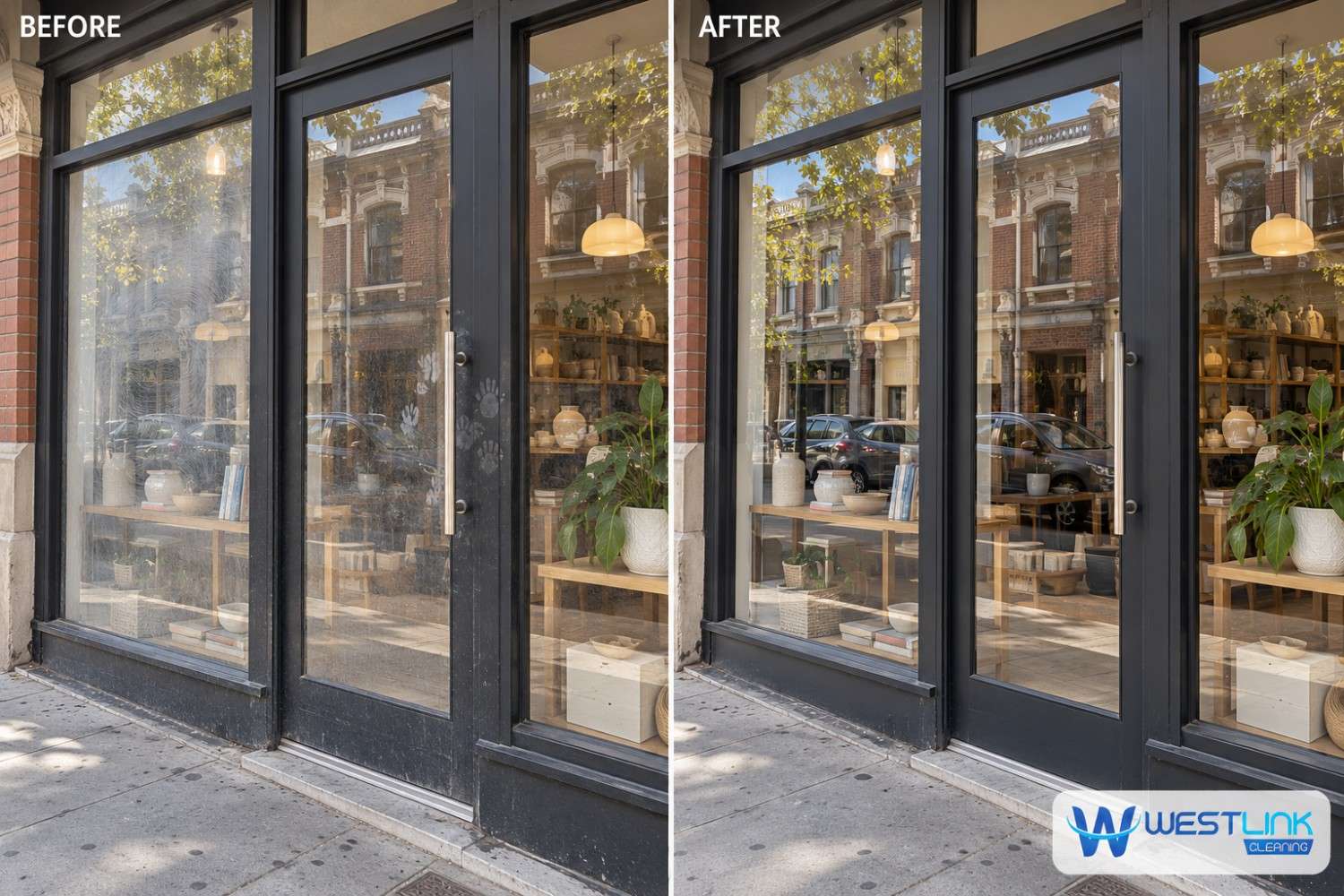
Retail entrances experience frequent contact. Fingerprints, smears and repeated spot-cleaning can gradually create an uneven appearance across the glass.
Before: A Surry Hills shopfront may have marks around door handles, streaks on display glazing and surface grime on street-facing panels.
Cleaning approach: Professional cleaning should address the agreed panes and doors systematically. The cleaner must consider customer access, operating hours and the surrounding shopfront materials.
Expected after: Fewer fingerprints, less visible residue and a more consistent finish across adjacent panels.
What business owners can learn: Regularly wiping high-contact areas is useful, but it does not necessarily replace a thorough clean of the entire glass frontage.
A suitable maintenance schedule should reflect how frequently the glass is touched and how quickly contamination returns.
6. Parramatta CBD — Office Window and Glass Partition Cleaning Before and After

Meeting rooms, reception areas and modern office interiors often contain substantial areas of glass.
Before: Fingerprints, wiping marks and light surface film may be visible on internal partitions. Artificial lighting can make some streaks more noticeable from particular angles.
Cleaning approach: A commercial cleaning plan should identify the glass surfaces included, appropriate products and suitable access times. Work may need to be coordinated around meetings or occupied areas.
Expected after: Cleaner partition glass, fewer touch marks and a more uniform appearance across serviced surfaces.
What business owners can learn: Good office glass cleaning requires attention to viewing angles and surrounding surfaces, not just the centre of each pane.
Internal glass partitions and external building windows may require different service arrangements, so both should be listed clearly in the cleaning scope.
7. Alexandria — Commercial Showroom or Warehouse Windows Before and After

Commercial properties with large exterior windows can develop visible surface film from their surroundings.
Before: A showroom near a busy road, loading area or active worksite might experience dust buildup, spotting or grime on its display glass.
Cleaning approach: The surface should be inspected before treatment. Ordinary dust and removable grime may respond to routine cleaning, while certain construction residues or stubborn deposits require separate assessment.
Expected after: Reduced surface contamination and clearer display glazing where routine cleaning is suitable.
What business owners can learn: The appearance of a deposit does not always reveal its composition.
Paint, cement-related contamination and other adhered materials should not automatically be scraped away. Inappropriate tools or abrasive particles can scratch glass.
A professional assessment helps establish whether standard cleaning is sufficient or specialist work is needed.
8. Cronulla — Coastal Café or Restaurant Window Cleaning Before and After

A coastal café may experience two different sources of window contamination: outdoor environmental exposure and frequent customer contact.
Before: Street-facing windows could show surface film and water spotting, while entrance doors collect fingerprints and smudges throughout the trading day.
Cleaning approach: The service should account for both types of contamination, the surfaces being cleaned and the venue’s operating requirements.
Expected after: Cleaner exterior panes, reduced contact marks and a more consistent appearance across the included glazing.
What hospitality businesses can learn: Coastal exposure and customer contact are separate maintenance considerations.
A café may need frequent touch-point cleaning between more comprehensive professional services. The appropriate frequency depends on the actual condition of the glass, customer activity and the standard of presentation the business wants to maintain.
9. Chatswood — Strata Apartment Balcony and Common-Area Glass Before and After

Apartment buildings often have several different categories of glazing, including private windows, balcony doors, balustrades and common-area entrances.
Before: Accessible balcony glass may show water spotting and dust, while shared entrance glazing accumulates fingerprints and routine surface grime.
Cleaning approach: A strata service should establish which areas are authorised for cleaning, how they can be accessed and who is responsible for arranging the work.
Expected after: Cleaner glass within the agreed areas, with visible improvements documented where appropriate.
What strata managers can learn: Window-cleaning scope is not determined solely by what appears dirty.
Common-property responsibilities, private areas, resident access and building arrangements may affect what can be serviced. A written scope helps prevent disputes about excluded glazing.
10. Sydney CBD — Commercial Building Entrance and Large-Panel Glass Before and After

Large commercial entrances can reveal uneven cleaning more clearly than smaller residential windows because several panels are viewed together.
Before: Adjacent glass panels may show different levels of dust, fingerprints and streaking. Some marks become more noticeable under reflected light or evening illumination.
Cleaning approach: The agreed entrance and lobby glazing should be cleaned with methods appropriate to its condition and accessibility. Inspection should consider the finish across the whole serviced area.
Expected after: Reduced streaking and a more consistent appearance between adjacent panels.
What facility managers can learn: Quality control should examine the complete frontage, not just one close-up section.
Large commercial glazing also requires coordination with building operations. Elevated exterior façades are a separate access consideration and should not automatically be assumed to form part of an entrance-cleaning service.
Want to improve the appearance of your own windows?
Westlink Cleaning Services can assess your property requirements and provide a quote based on the window areas, condition and access involved. A description of the problem, along with photographs where available, can help clarify the service needed.
What Do Window Cleaning Before-and-After Photos Actually Prove?
Genuine window cleaning before and after photos can demonstrate the removal of visible surface dirt, smears and some deposits from the same glass area. They cannot establish that permanent damage has been repaired, prove the condition of hidden components or guarantee how long the glass will remain clean.
Visible Improvements You Should Look For In Window Cleaning

A high-quality result is more than an attractive reflection.
Look for:
- Glass clarity: Less visible film and fewer removable marks.
- Streak reduction: No obvious long wiping lines or detergent residue across serviced panes.
- Consistent appearance: Adjacent panes look similarly clean where included.
- Edge detailing: Less dirt around the boundaries of the glass.
- Surrounding components: Frames, sills and tracks look cleaner if those areas were part of the service.
Inspect from more than one angle. A pane may look clear when viewed straight on but reveal streaks in side lighting.
How to Judge Whether Before-and-After Photos Are Genuine?
A reliable comparison shows the same glass surface before and after cleaning.
Check that the images have:
- Comparable camera angles and framing.
- The same visible window boundaries.
- Reasonably similar lighting.
- Clear Before and After labels.
- Information about the surface and work performed.
A photograph taken in harsh sunlight should not be compared uncritically with another taken in soft shade. Lighting and reflections can exaggerate or conceal marks.
Edited images, unrelated stock photographs and digitally simulated results should never be represented as proof of a completed customer job.
What Photos Cannot Tell You About the Glass?
Even convincing photographs have limits.
They cannot demonstrate whether an insulated-glass seal is functioning, whether scratches appear under different lighting, or whether every window in a building was cleaned.
Nor can one image establish that the glass will remain spotless for a particular period.
For commercial or strata work, photographs should support—not replace—a clear description of the completed scope.
What Causes Dirty Windows in Different Parts of Sydney?
Sydney windows become dirty through a combination of environmental exposure, building characteristics and everyday use. Coastal properties, roadside premises and indoor office partitions can accumulate different types of contamination, so the same cleaning method is not automatically suitable for every surface.
Coastal Exposure and Salt-Related Glass Residue
Windows close to the coastline may experience airborne salt-related deposits, especially where glazing faces exposed conditions.
These deposits can combine with dust and dried water marks, leaving a dull surface film.
Routine cleaning may remove ordinary surface contamination. However, persistent spotting should be assessed before assuming that additional wiping will solve it.
Actual exposure matters more than the suburb name. A sheltered window several streets inland may face different conditions from an ocean-facing balcony.
Roadside and Commercial Glass Contamination
Roadside windows can collect airborne particles and grime. Customer-facing glass also receives fingerprints, skin oils and repeated wiping marks.
These sources produce different patterns:
- Airborne contamination often appears as broader surface film.
- Fingerprints cluster around frequently touched areas.
- Poor wiping or drying can leave visible lines and smears.
Cleaning should respond to the condition observed on the pane.
Dust, Fingerprints and Buildup Around Residential Windows
Indoor windows collect fingerprints, household dust and everyday contact marks. Sliding-door tracks and sills can accumulate loose debris, while flyscreens trap particles on their mesh.
The surrounding components should be assessed separately from the glass.
A clean pane may still look unfinished beside a dusty track, but a glass-only service should not be mistaken for a complete frame-and-screen clean.
Which Window Stains Can Professional Cleaning Remove?
Professional window cleaning can remove many common surface contaminants, including dust, fingerprints, oily smears and ordinary grime. Persistent mineral deposits may need specialist assessment. Scratches, etched glass, cracks and failed glazing seals are not repaired by routine washing.
| Visible problem | Likely category | Appropriate next step |
|---|---|---|
| Fingerprints and ordinary dust | Removable surface contamination | Routine cleaning |
| Wiping streaks and detergent residue | Surface-cleaning issue | Suitable washing and finishing |
| Persistent white spotting | Possible mineral deposits | Assess whether specialist treatment is suitable |
| Fine scratches | Physical glass damage | Seek glazing advice |
| Cloudiness trapped between panes | Possible insulated-glass seal problem | Glazing assessment |
| Paint or cement-related residue | Specialist contamination | Identify material before removal |
Marks That Usually Respond to Routine Cleaning
Most everyday surface contamination can be addressed using suitable tools and cleaning solutions.
A proper process removes loose grime, washes the glass and deals with remaining water or cleaning residue.
The condition of the pane still matters. Heavy abrasive particles should not be rubbed across glass carelessly.
Marks That May Need Specialist Treatment
Mineral staining, some adhesives and construction residues can be more difficult to remove than ordinary dust.
Treatment depends on the material, glass condition and any special surface coatings.
Strong chemicals and aggressive scraping are not automatically appropriate. Some products or techniques can cause permanent damage when used on unsuitable glazing.
Follow the glass manufacturer’s care instructions and seek specialist advice where the deposit is uncertain.
Problems Routine Window Cleaning Cannot Repair
Cleaning does not reverse glass etching, remove deep scratches or repair cracks.
Cloudiness trapped inside a sealed double-glazed unit is also different from residue on an accessible surface.
If cleaning leaves an unexplained mark, the next step should be identifying the cause—not repeatedly applying stronger products.
How Does Westlink Plan a Professional Window Cleaning Job?
Westlink Cleaning Services describes a property-specific approach to residential window cleaning, with the work planned around the window layout, condition, access and agreed scope.
A practical cleaning process can be understood in three stages.
Step 1 — Assess the Glass, Contamination and Access
Before cleaning begins, the included windows and requested extras should be identified.
The assessment considers:
- Window quantity and location.
- Interior and exterior access.
- Visible contamination.
- Existing damage.
- Frames, tracks and flyscreens.
- Any areas requiring specialist arrangements.
The objective is to establish what work is suitable and what result the customer can reasonably expect.
Step 2 — Prepare and Clean the Agreed Windows
Cleaning methods depend on the glass and site conditions.
Accessible windows may be cleaned using suitable applicators and squeegees. Certain exterior glazing may be suitable for a water-fed pole and purified-water method, provided the equipment and access conditions are appropriate.
Loose grit must be handled carefully to reduce scratching risk.
Interior cleaning also requires attention to furnishings, floors and nearby finishes.
Step 3 — Detail, Inspect and Confirm the Result
Once the agreed glass has been cleaned, the finish should be checked for remaining streaks, smears and missed areas.
Frame, sill and track detailing should be assessed against the actual booking, rather than assumed to be part of every service.
Persistent staining or existing damage should be distinguished from incomplete cleaning.
A final inspection helps establish whether the agreed areas have been addressed.
What Is Included in a Window Cleaning Service, and What Affects the Cost?
Window-cleaning prices in Sydney depend mainly on the property, number and size of windows, access requirements, condition of the glass and agreed work. Two properties with similar floor areas may need very different services.
Interior and Exterior Glass Versus Additional Detailing
A quotation should identify whether the work includes:
- Exterior windows.
- Interior windows.
- Sliding glass doors.
- Frames and sills.
- Tracks and channels.
- Flyscreens.
- Balcony or common-area glazing.
- Specialist staining or additional access arrangements.
Not every item is automatically included.
Ask for clarification before booking if detailed tracks, screens or frames are important to the result you want.
What Influences Window Cleaning Prices in Sydney?
| Cost factor | Why it matters |
|---|---|
| Number and size of panes | Determines the amount of glass to clean |
| Property height | Influences access planning |
| Interior and exterior scope | Changes the work required |
| Glass condition | Heavy contamination may need additional assessment |
| Tracks and flyscreens | Add separate cleaning tasks |
| Commercial operations | May affect scheduling and site access |
| Specialist treatment | May require a separate quotation |
An accurate quote should explain what is included and identify relevant exclusions.
Published indicative rates are not substitutes for assessing the actual property.
How Long Does Professional Window Cleaning Take?
There is no single reliable duration for every window-cleaning job.
A small property with accessible, lightly soiled glass will generally require less work than a large multi-storey building with difficult access and extensive detailing.
Time also depends on the number of cleaners, contamination severity, site preparation and the agreed scope.
How to Prepare Before Your Window Cleaner Arrives?
A little preparation can make the appointment easier.
- Move fragile items away from windows where requested.
- Confirm gate, room or balcony access.
- Secure pets appropriately.
- Identify damaged or difficult-to-open windows.
- Tell the cleaner about stubborn stains.
- Confirm commercial or strata access arrangements.
If cleaning is planned for both sides of the glass, clarify whether someone needs to be present.
DIY or Professional Window Cleaning: Which Is More Suitable?
DIY cleaning is often practical for safely accessible windows with light surface dirt. Professional assistance becomes more appropriate when access is difficult, contamination requires specialist assessment, or the job involves extensive commercial glazing.
When DIY Cleaning Can Work Well?
For an easily reached window, suitable non-abrasive materials and a careful cleaning technique may be enough.
Use products compatible with the glass and its coatings. Remove loose dirt carefully, avoid abrasive tools and dry the surface appropriately.
A simple household clean can address fresh fingerprints and minor smears without requiring a professional visit.
When Professional Assistance Is Worth Considering?
Consider professional help for:
- Upper-storey or restricted-access windows.
- Extensive shopfront or office glazing.
- Unidentified persistent deposits.
- Sensitive or specialist glass.
- Multi-property or strata cleaning.
- Jobs requiring coordinated site access.
The decision should reflect risk and complexity, not simply whether the glass looks dirty.
Why Working at Height Requires Proper Safety Planning
Falls can cause serious injuries, and window cleaning should never rely on unsafe improvised access.
SafeWork NSW’s working-at-heights guidance explains the importance of eliminating or controlling fall risks in workplaces.
For homeowners, the practical lesson is straightforward: do not lean out of elevated windows, stand on unstable furniture or attempt difficult exterior work beyond your safe capabilities.
How Long Will Windows Stay Clean After Professional Cleaning?
There is no guaranteed period during which professionally cleaned windows remain spotless. Results depend on exposure, contact frequency, weather, nearby activities and how the glass is maintained.
Why Cleaning Frequency Depends on Location and Use?
Coastal glazing exposed to airborne deposits may need different attention from sheltered household windows.
A shopfront entrance touched by customers throughout the day may develop visible marks faster than a rarely opened upstairs bedroom window.
Nearby construction, road exposure and regular use can also influence maintenance requirements.
Inspect the actual condition of the glass rather than relying entirely on a fixed calendar.
How to Maintain Cleaner Windows Between Services?
Simple practices can help preserve the finished appearance:
- Remove fresh fingerprints using suitable products.
- Use clean, non-abrasive cloths.
- Avoid aggressive scraping.
- Follow the glass manufacturer’s care instructions.
- Monitor recurring water spotting.
- Keep surrounding surfaces maintained where practical.
Avoid applying unfamiliar coatings or chemicals simply because they promise longer-lasting cleanliness.
What to Do If Streaks or Cloudiness Appear Again?
First, identify which side of the pane is affected.
If the mark is accessible, determine whether it is new contamination or residue remaining after cleaning. Photograph the area under suitable lighting. Read our detailed Window Cleaning without streaks.
If the surface was included in a recent professional service, contact the provider and explain the concern.
Cloudiness between sealed panes, persistent scratches or suspected coating damage should be assessed separately from routine cleaning quality.
How to Choose a Window Cleaning Service for Your Sydney Property?
A suitable window-cleaning company should understand the property’s requirements, explain the service scope and plan safe access where necessary. Authentic results, clear communication and transparent quotations are more useful decision factors than broad claims about being the best.
What to Check Before Booking a Window Cleaner?
Ask prospective providers:
- Have you handled properties with similar glazing and access?
- What exactly is included?
- How will difficult windows be reached safely?
- Are specialist stains assessed separately?
- What insurance is appropriate to the proposed work?
- Can you show genuine examples of completed cleaning?
- How are concerns about the final result handled?
A clear answer to these questions is more valuable than an impressive photograph without context.
What Westlink Can Show About Its Window Cleaning Work?
Westlink Cleaning Services publishes information about residential window cleaning across Sydney and describes quotations based on property requirements, glass condition, requested areas and access.
The business also provides commercial cleaning services. Customers should confirm the appropriate service scope for their property before booking.
For an informed comparison, ask to see relevant completed-work photographs and clarify which services were included.
How to Request a Quote for Your Home or Business?
Providing useful details helps a cleaning company assess the job.
Include:
- Your Sydney suburb.
- Property type.
- Approximate number of windows.
- Number of storeys.
- Interior, exterior or both-side requirements.
- Any difficult-access windows.
- Visible stains or existing damage.
- Photographs where available.
You can explore Westlink’s professional window cleaning services in Sydney to review the service and request a property-specific quotation.
Frequently Asked Questions
1. How can I tell if my window has hard-water stains or permanent etching?
Hard-water stains are mineral deposits that may respond to specialised cleaning. Permanent etching is damage to the glass surface that cleaning cannot remove. If marks remain after appropriate cleaning, seek a professional assessment.
2. Why do windows look clean from one angle but streaky in sunlight?
Direct sunlight highlights streaks, smudges and cleaning residue that may be invisible from other angles. Using suitable cleaning products, clean water and proper drying techniques helps achieve a clearer finish.
3. Does professional window cleaning include frames, tracks and flyscreens?
Not always. Standard window cleaning may cover glass only, while frames, tracks and flyscreens may cost extra. Always confirm the exact inclusions when requesting a quote.
4. Can a water-fed pole clean second-storey windows?
Yes. Water-fed poles can clean many second-storey windows safely from ground level using purified water. Suitability depends on window height, accessibility, surrounding obstacles and equipment limitations.
5. Can scratched or coated glass be cleaned normally?
Scratched glass can be cleaned carefully, but cleaning will not remove scratches. Coated glass, including some Low-E products, requires manufacturer-approved methods to prevent damage from abrasive tools or unsuitable chemicals.
6. What should a good before-and-after comparison show?
A reliable comparison should show the same window from a similar angle and under comparable lighting conditions. It should clearly demonstrate the cleaning results without misleading editing or exaggerated claims.
7. How much does professional window cleaning cost in Sydney?
Indicative Sydney prices range from $150–$250+ for small apartments, $180–$350+ for single-storey homes and $330–$550+ for double-storey homes. Costs vary with window numbers, condition, access and cleaning requirements. See our Sydney window cleaning pricing guide.
8. Who arranges inaccessible apartment window cleaning in NSW?
Apartment owners generally arrange cleaning for accessible windows. Where exterior windows cannot be reached safely, the owners corporation may be responsible. Check your strata by-laws and contact your strata manager before arranging cleaning.
9. What should I do if marks remain after a professional clean?
Ask your window cleaner to inspect the remaining marks against the agreed cleaning scope. Some stains require specialist treatment, while scratches, etching and other permanent glass damage cannot be removed through standard cleaning.
10. Should windows be cleaned before or after renovations?
Schedule the final window clean after renovation work is completed to remove dust and construction residue. Protect glass during building work, and use specialist post-construction cleaning where paint, cement or adhesive deposits require careful removal.
See What Professional Window Cleaning Could Do for Your Property
The most useful before-and-after comparison is one that reflects your actual glass condition and the work required to clean it.
Ordinary grime can often be removed through suitable professional cleaning, while persistent deposits and existing damage may need separate assessment.
Westlink Cleaning Services can review your Sydney property requirements and discuss a suitable service scope. Share your suburb, window details, access concerns and photographs of difficult areas to request a tailored quotation.


