
Prepare your property for pressure cleaning by moving loose items, protecting plants and electrical fixtures, closing windows and doors, identifying cracks, loose paint, and fragile finishes, and telling the contractor about stains, drainage, pets, and access limits before work starts.
This preparation improves access, reduces water-intrusion risk, protects delicate materials, helps the contractor choose the right pressure or soft-wash method, and lowers the chance of runoff, debris, or surface damage. The key steps are to clear the work area, protect sensitive surfaces, inspect weak points, and share site-specific risks before cleaning begins.
Before pressure cleaning starts, remove movable items, protect vulnerable areas, close openings, inspect damaged surfaces, and tell the contractor about stains, drainage, pets, and access issues.
What does property preparation mean before pressure cleaning?
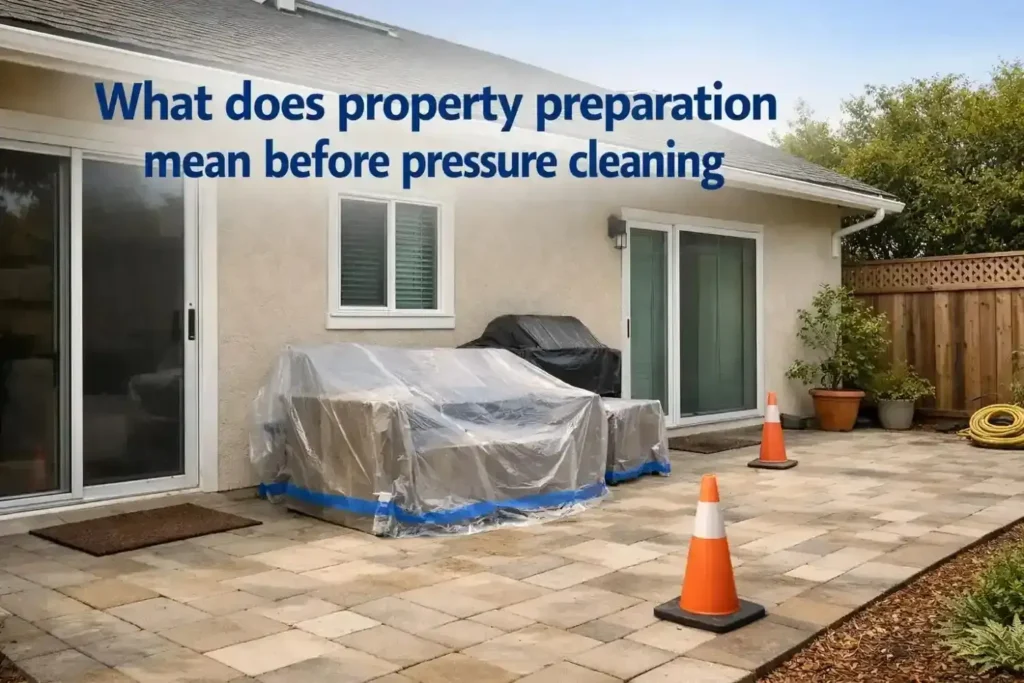
Property preparation means making the site safe, accessible, and suitable for the correct cleaning method before water, detergent, or equipment is used.
In practice, that means removing obstacles, protecting sensitive materials, checking openings, identifying weak surfaces, and planning for runoff, access, and safety.
For a pressure cleaning job, preparation is not just a basic cleanup step. It helps separate normal wash areas from fragile surfaces, damaged zones, and areas that may need soft washing or repairs first.
Pressure cleaning preparation includes clearing the work area, protecting delicate surfaces, closing windows and doors, and checking for cracks, loose paint, and other site risks before cleaning begins.
Why preparation matters before pressure cleaning
Preparation matters because pressure cleaning combines water, force, chemicals, and surface condition. If the property has open gaps, loose paint, weak mortar, failed sealants, exposed electrical points, or delicate finishes, the risk of water intrusion and surface damage increases.
Preparation also affects job quality. A clear and inspected site helps the contractor focus on stain removal, runoff control, and surface protection instead of finding problems after the cleaning has already started.
It also helps prevent avoidable issues with drainage, overspray, debris movement, and unsafe access.
What should you remove from the work area?
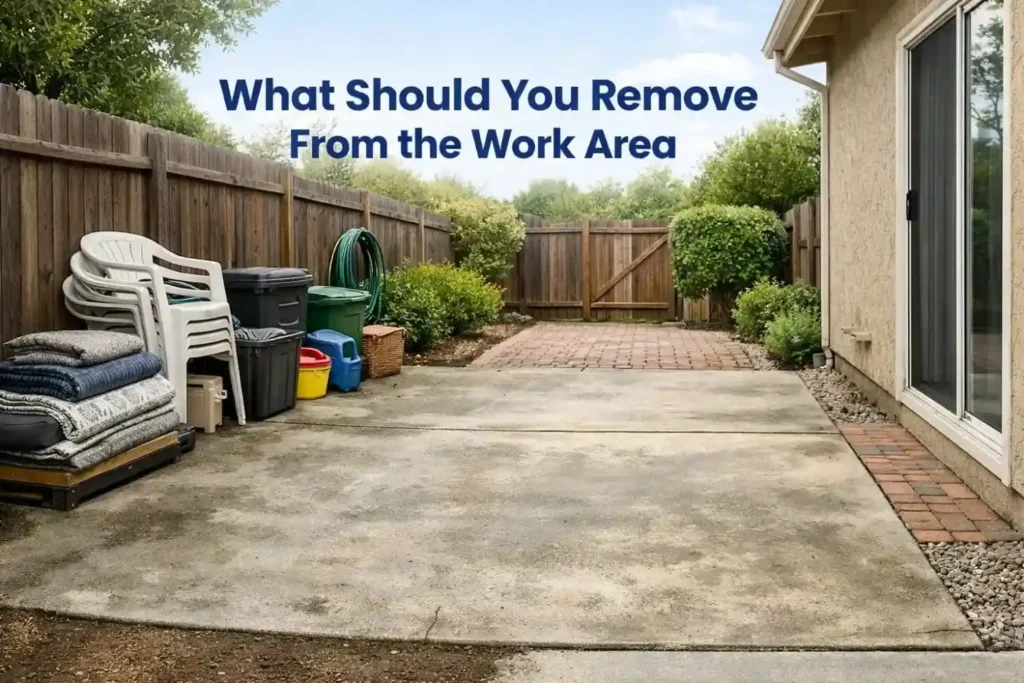
You should remove anything that can block access, tip over, get soaked, crack, stain, or be marked by overspray.
Common items include furniture, planters, rugs, toys, bikes, grills, bins, hoses, portable tools, and vehicles parked near the work zone.
1. Furniture, decor, and portable items
Move lightweight furniture, pots, decor, hoses, tools, and outdoor accessories away from the spray path.
If something cannot be moved, tell the contractor before work starts so the cleaning path can be adjusted.
2. Vehicles and access paths
Move vehicles away from driveways, paths, garages, and side access areas where hoses and cleaning equipment need room.
Clear access helps the crew work more safely and clean more evenly.
3. Pets, children, and bystanders
Keep pets, children, and visitors away from the work area before setup starts and until the surface is rinsed and safe.
Wet surfaces, hoses, debris, and high-pressure spray all increase risk.
What should you cover or protect?
You should protect anything that can be damaged by water intrusion, chemical contact, overspray, runoff, or direct pressure.
That often includes plants, outdoor electrical points, lights, cameras, speakers, door hardware, painted trims, screens, and fragile glazing.
1. Plants, grass, and landscaping
Protect nearby plants and landscaping, especially if they sit close to the cleaning zone.
This matters more when detergents, bleach-based products, or masonry cleaners may be used.
2. Windows, doors, vents, and openings
Close and latch all windows and doors before cleaning begins.
If a frame, sill, vent, or seal already leaks, report it before the job starts. Pressurised water can enter weak points more easily than normal rain.
3. Electrical outlets, lighting, and outdoor fixtures
Identify outdoor outlets, switches, lights, cameras, extension leads, and other fittings before setup begins.
These areas need extra care because water and electricity create added risk.
4. Fragile finishes, loose paint, and failed joints
Do not treat damaged surfaces as normal wash surfaces.
Peeling paint, cracked render, loose mortar, rotten timber, failed caulk, and open joints can worsen under pressure or let water into the building envelope.
What should you inspect before the contractor arrives?

Inspect the property for condition, not just dirt.
The most useful pre-cleaning inspection looks for weak surfaces, water-entry points, damaged coatings, unstable pavers, stain sources, and drainage direction.
1. Cracks, rot, weak mortar, and unstable surfaces
Look for cracks in concrete, masonry, tile, or render. Check for timber rot, loose boards, unstable pavers, failed sealants, and weak mortar joints.
These issues can become worse when pressure and water are applied.
2. Stains and contamination sources
Identify the type of stain before expecting a result.
Oil, grease, rust, algae, mould, paint residue, food spills, and efflorescence do not respond the same way. Stain type affects the treatment, dwell time, and cleaning method.
What should you tell the pressure cleaning contractor before work starts?
Tell the contractor about anything that affects access, risk, or cleaning method.
That includes leaking windows, cracked glass, old paint, delicate stone, composite decking, fiber cement siding, blocked access, shared driveways, drainage limits, storm drains, pets, and oil-stained areas.
Also explain the goal of the job. General washing, stain removal, pre-paint cleaning, and pre-sealing cleaning are different scopes and may need different methods.
Surface-specific preparation before pressure cleaning
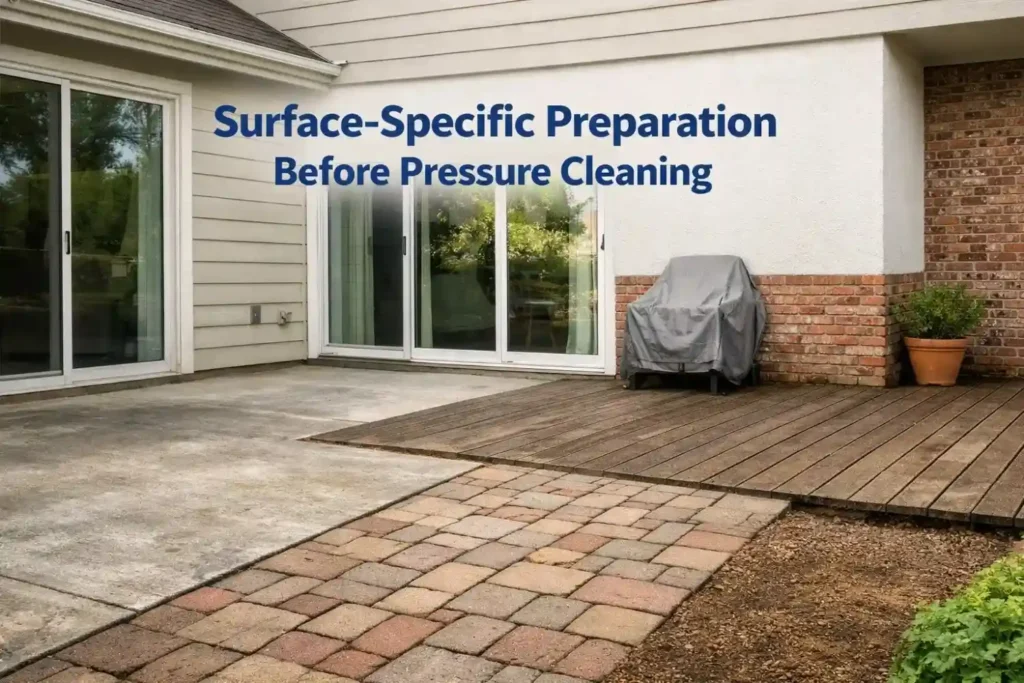
Not every surface should be prepared the same way. Surface type affects pressure tolerance, moisture risk, and the need for soft washing, trial cleaning, or repairs.
1. Concrete driveways, paths, and patios
Concrete usually handles more pressure than delicate claddings, but it still needs preparation.
Sweep first, identify oil or chemical staining, and note where dirty water will flow. If the area is heavily contaminated, dry cleanup may be needed before washing.
2. Pavers, brick, stone, and mortar joints
Check pavers and masonry for loose jointing material, cracked edges, fragile faces, sealers, and old repairs.
These surfaces can be damaged by aggressive cleaning, especially if the joints are already weak.
3. Timber decking and composite decking
Inspect timber decking for lifted grain, rot, protruding fasteners, soft boards, and failing coatings.
Composite decking needs extra care because manufacturer limits vary. The key preparation step is to identify the product first before choosing the cleaning method.
4. Painted surfaces, render, siding, and fences
Check painted surfaces for adhesion failure, peeling areas, open cracks, and weathered sections.
If the paint is already failing, cleaning may remove more coating or allow moisture behind the finish.
5. Fiber cement siding
Fibre cement siding should be flagged before work starts because it often needs a gentler method than standard pressure cleaning.
This is important for method selection and damage prevention.
6. Windows, roofs, and other delicate zones
Windows, glazed doors, roof edges, and similar delicate areas should be identified early.
These surfaces may need exclusion from the cleaning scope or a lower-pressure method instead of direct high-pressure washing.
7. Pool surrounds and slip-sensitive areas
Pool surrounds need extra checking for drainage, slip risk, chemical sensitivity, and surface type.
If the area includes natural stone, decorative coatings, or old grout, the contractor should know before work starts.
When should repairs happen before cleaning?
Repairs should happen before cleaning when the defect can worsen under pressure or allow water into the property.
Examples include failed seals, cracked glazing, rotten trim, unstable pavers, loose cladding, deteriorated mortar, and peeling paint on older surfaces.
Common mistakes before pressure cleaning
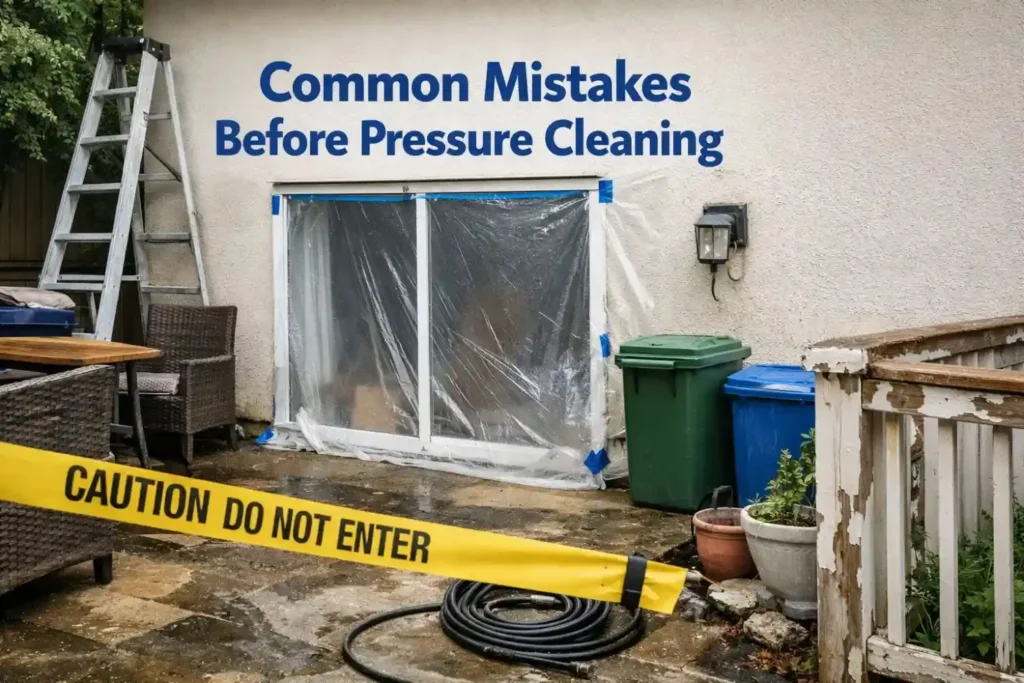
The first mistake is assuming every surface can be cleaned the same way.
Concrete, brick, composite decking, painted timber, fibre cement siding, windows, and roof materials do not have the same pressure tolerance or moisture risk.
The second mistake is skipping inspection.
Loose paint, cracked mortar, failed caulk, rotten timber, and weak joints should be identified before the machine starts.
The third mistake is ignoring runoff and access.
Wash water, hose routes, electrical points, pets, and blocked work areas should all be considered before setup begins.
Comparison table
| Surface or condition | What to do before cleaning | Why it matters | Preferred caution |
| Concrete driveway or path | Sweep debris, identify oil stains, check runoff path | Improves stain treatment and reduces dirty runoff | Dry cleanup may be needed first |
| Brick, pavers, or mortar joints | Check for loose joints, fragile edges, and old repairs | Aggressive cleaning can damage mortar and surface faces | Start with the gentlest effective method |
| Fiber cement siding | Identify material before choosing the method | High pressure may damage the surface | Use a gentler cleaning approach |
| Composite decking | Confirm brand and condition | Pressure limits vary by product | Check manufacturer care guidance |
| Windows and glazed doors | Close openings and note weak seals | Direct pressure can force water into weak points | Exclude from high-pressure scope if needed |
| Painted old surfaces | Check age and coating condition | Failing paint may worsen during cleaning | Assess before pressure is applied |
| Asphalt shingle roof | Separate roof from hard-surface cleaning scope | High pressure may damage the surface | Use roof-safe cleaning methods |
| Outdoor outlets and lighting | Identify and protect before setup | Water plus power creates extra risk | Keep connections dry and controlled |
Step-by-step preparation checklist
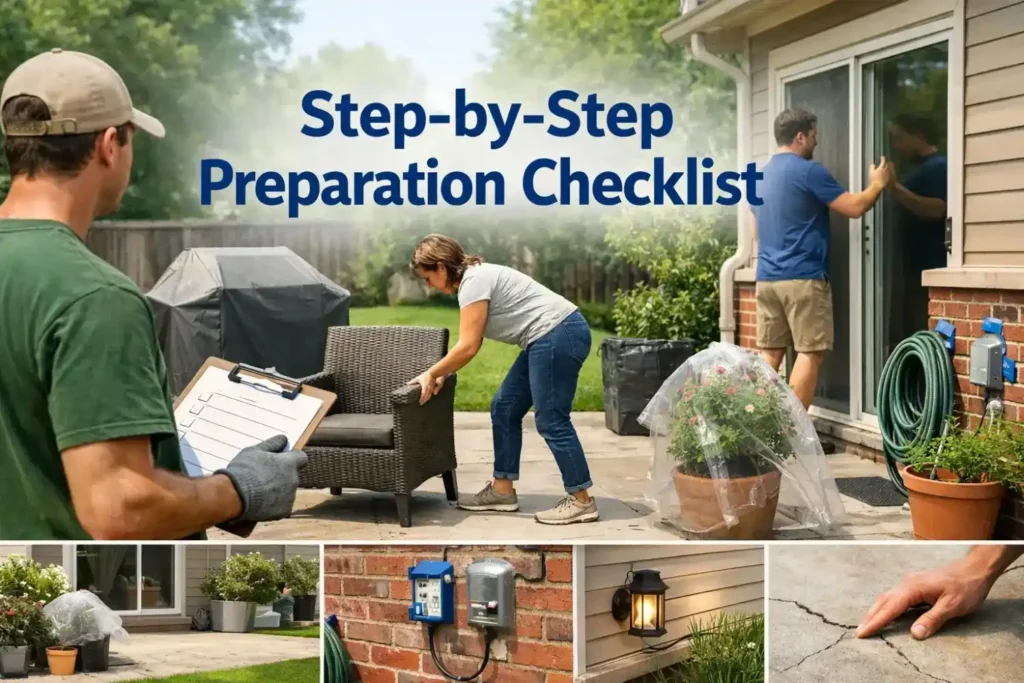
- Walk the property and define the cleaning zone.
- Move furniture, decor, toys, bins, planters, hoses, and portable items.
- Move vehicles and clear access paths.
- Close windows, doors, vents, and other openings.
- Protect plants, delicate finishes, and nearby surfaces.
- Identify outdoor outlets, lights, cameras, and electrical fittings.
- Inspect for cracks, loose paint, unstable pavers, weak mortar, and failed caulk.
- Flag special risks such as old paint, delicate stone, fibre cement siding, composite decking, windows, and roof areas.
- Tell the contractor about stains, drainage limits, storm drains, pets, and access restrictions.
- Keep children, pets, and bystanders away until the job is complete and the surface is safe.
Conclusion
Preparing your property for pressure cleaning is a practical risk-control step. It improves access, protects delicate materials, reduces water and runoff problems, and helps the contractor choose the safest method for each surface.
The simplest rule is this: move what can move, protect what can be damaged, inspect what looks weak, and disclose what the contractor cannot see at first glance. That gives the cleaning process a safer, smoother, and more accurate start.
FAQs
1. Do I need to move outdoor furniture before pressure cleaning?
Ans. Yes. Move furniture, pots, rugs, toys, and other portable items out of the spray zone so the crew can work safely and clean evenly.
2. Should I cover plants before pressure cleaning?
Ans. Yes, especially if plants sit close to the cleaning area or cleaning chemicals may be used.
3. Do windows and doors need to be closed?
Ans. Yes. Close and latch windows and doors before cleaning starts, and report any weak seals or leaks.
4. Should I tell the contractor about cracks or loose paint?
Ans. Yes. Cracks, loose paint, failed caulk, and weak joints can worsen under pressure or allow water into the structure.
5. Can pressure cleaning damage electrical fixtures?
Ans. Yes, if the area is not prepared properly. Outdoor electrical points need to be identified and protected before work begins.
6. Do I need to mention old paint on the property?
Ans. Yes. Older painted surfaces may need extra caution, especially if the coating is deteriorated.
7. Is pressure cleaning safe for all surfaces?
Ans. No. Some surfaces need lower pressure, soft washing, or exclusion from the scope.
8. Do I need to control runoff before pressure cleaning?
Ans. In many cases, yes. Runoff can carry dirt, chemicals, and debris into unwanted areas.
9. Should stains be identified before the job?
Ans. Yes. Different stains need different cleaning methods, so early identification improves planning.
10. When is soft washing better than pressure cleaning?
Ans. Soft washing is better on fragile, painted, weathered, or moisture-sensitive surfaces where high pressure may cause damage.