

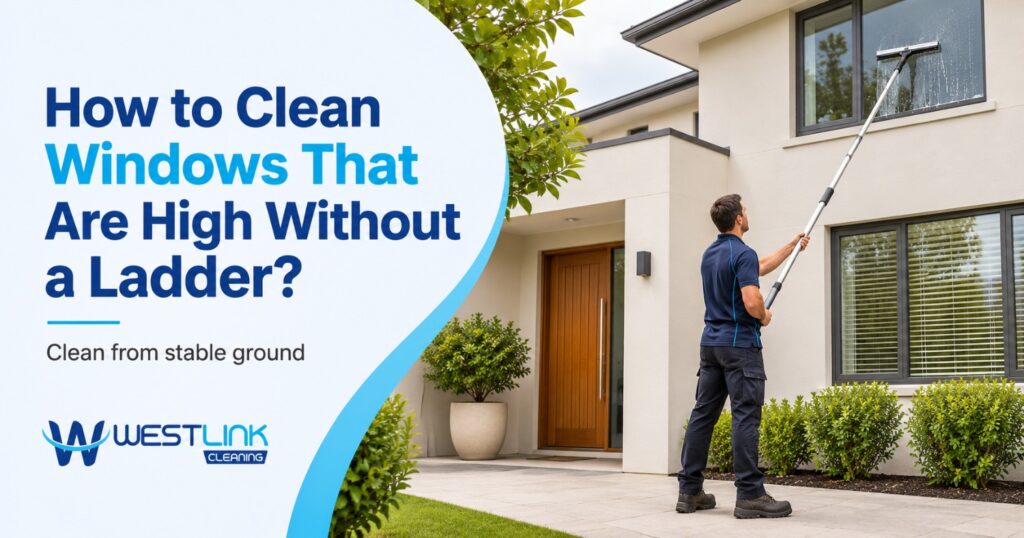
The safest way to clean high windows without a ladder is to use a telescopic window-cleaning pole with a soft washer and squeegee, allowing you to clean exterior glass while keeping both feet on stable ground. Start by removing loose dirt, apply a mild window-cleaning solution, and use the squeegee to remove water from top to bottom for a streak-free finish.
For second-storey windows, a water-fed pole system using purified water may be a better option, particularly for large or difficult-to-reach glass panels. However, not every high window is suitable for DIY cleaning. If you cannot comfortably reach the entire window, control the equipment safely, or avoid nearby powerlines and other hazards, hire a professional window cleaner rather than attempting unsafe access.
This guide explains the best tools, step-by-step cleaning methods, common mistakes, and when to choose professional high-window cleaning in Sydney.
Need professional help? Request a FREE window cleaning quote today!
Can you reach the window safely from the ground or indoors?
Check each pane separately. Work from the ground if you can stand securely and guide the tool across the whole pane. Indoors, work from the room floor on high interior glass or a window designed to bring the outside face within reach.
Match the method to the window and what’s underneath it
| What you can see from a safe position | What to do |
|---|---|
| Clear, level ground and an unobstructed path to the whole outside pane | Use a pole if you can guide the head into both top corners. |
| High interior glass or a sash designed to swing in and expose the outer face | Clean from the room floor. Use the window as designed and leave its safety devices in place. |
| An awning, roof or steep garden blocks access to house glass | Ask a professional to assess access. |
| A fixed or restricted apartment window is beyond safe reach | Ask the strata or building manager whether it’s covered by the building’s exterior clean. |
Picture two windows on the same storey. A level patio lets you get close to one pane. An awning under the other can force you farther back, making the head harder to control. The pole’s advertised length alone tells you little about that angle.
Stop when the pole, footing or surroundings make the job unsafe
Stop before raising a pole or spraying water if an overhead powerline or the cable supplying your home is near the work area, or you’re unsure how close the tool or spray could get.
Stop the DIY clean if:
- The ground is uneven or slippery, or you can’t control the pole at the required reach or in gusts.
- You can’t keep the walkway below clear of people.
- Reaching the glass would take a ladder, roof access, leaning out, reaching over a balcony railing or altering a window restrictor.
For difficult house glass, call a professional. For apartment glass, check with the building first.
How to clean outside windows that are high with a telescopic pole?
Once a pane passes the access check, work on one window at a time. Wash with a soft sleeve and remove the water with a rubber squeegee if the glass maker allows both.
Choose a washer, squeegee and solution that suit the glass
Check which face has a coating or film and follow the maker’s care instructions when choosing tools and cleaner.
For the manual method, gather:
- A telescopic pole you can control at the required reach.
- A compatible soft washer sleeve and a clean rubber squeegee head.
- A bucket, clean water and a cleaner suitable for your glass.
- A clean microfibre cloth for edges you can reach safely.
A manual pole carries the washer and squeegee in turn. A water-fed pole supplies a brush that washes and rinses. Tap water can leave mineral spots as it dries. Purified-water systems remove dissolved minerals from the supply.
Remove loose grit, wash the glass and squeegee it dry

- Set up in calm conditions. Choose cool, shaded glass so the wash solution stays wet long enough to remove it. Stand on stable ground and extend the pole only as far as you can control it across the pane.
- Loosen grit before washing. Use clean water and a soft, compatible head to lift loose dust and grit before wiping the pane. Clear loose debris from the upper frame if you can reach it safely. Otherwise, dirty runoff can spoil the glass after you’ve cleaned it.
- Wash one pane from top to bottom. Apply the compatible solution with the washer sleeve and work down the pane. Wash the corners and squeegee before the solution dries.
- Squeegee from the top in overlapping passes. Keep the rubber blade in contact with the glass. Lower the tool to wipe the blade between passes and use microfibre on any edges you can safely reach. Let the pane dry, then check for lines, drips or spots from a safe position.
Follow your window maker’s instructions if they specify a different method.
What to do when high windows still look streaky or cloudy?
Wait until the glass dries, then look at where the mark starts and whether it follows the blade. Those clues can help you decide if another wash is worthwhile.
Use the mark’s location and timing to choose the next step
| What you see | Possible cause | What to do next |
|---|---|---|
| Lines that follow the squeegee | Dirt on the blade, damaged rubber or wash solution drying too quickly | Check the blade. Try one safely reachable area again with a clean blade on cool glass. |
| Drips that start under the frame | Dirty water running down after the wash | Clear loose debris from the reachable frame before your next pass. |
| White dots that stay after washing | Mineral deposits | Check the glass care guide before trying another product. Ask a cleaner to assess persistent spots. |
| Cloudiness that appears to sit between the panes | Moisture inside the double-glazed unit is one possibility | Ask a glazier or building manager to assess it. Washing reaches only the exposed faces. |
Protect coatings and adjust cleaning to the property
Keep razor blades, abrasive pads and unapproved chemicals away from the glass. If you’re unsure which face is coated or filmed, ask the installer or glass supplier before changing products.
An exposed coastal window in Sydney can collect salt residue while a sheltered pane may mainly collect dust. Check how quickly buildup returns and follow any building cleaning schedule.
Who arranges exterior window cleaning in a Sydney high-rise apartment?
Start with your property manager if you rent, or your strata or building manager if you own the apartment. NSW Government guidance generally lists window cleaning as the owner’s responsibility and makes an exception for inaccessible windows. Ask how your scheme handles the particular pane.
Check which panes are covered and when the building cleans them
Before arranging a separate visit, ask about the exact pane and who has authority to book the work.
- Identify the window. Give your unit number and the room or side of the building. A photo taken from inside can help the manager locate it.
- Confirm what’s covered. Ask whether the building’s exterior clean includes that pane.
- Ask what happens next. Check the next scheduled date and who can approve separate work if needed.
If responsibility is unclear, ask for the scheme’s registered by-laws and strata plan.
Explain what a building-arranged clean may involve
With rope access, specialists reach the glass on suspended ropes. A building maintenance unit provides a suspended working platform attached to the building. The building manager and contractor choose a method suited to the site.
Authorised building managers can enquire about building-level high-rise window cleaning.
What affects the cost of professional high-window cleaning in Sydney?
The cost depends on how many panes need cleaning, their size and condition, and how the cleaner can reach them. An awning or narrow side path can change the access needed. The price also depends on which glass faces and extras you include in the quote.
Compare access, glass condition and what the quote includes
Two houses with the same number of storeys can need different access equipment. Compare which panes and glass faces are included, and ask about frames, tracks and flyscreens. Point out persistent spots so the cleaner can tell you if they need a separate assessment. Westlink Cleaning Services provides property-specific written quotes for double-storey window cleaning in Greater Sydney.
Send the details needed to assess your high windows

To help the cleaner understand the job, send:
- Your suburb, property type and number of storeys.
- An approximate pane count and which faces you want cleaned.
- Any obstacles, plus one wide photo taken from a safe position.
- Any known coating or film details.
A photo helps show the layout. The cleaner may still need to see the property to confirm access. Agree on the panes and extras before the visit, follow the access instructions on the day, and ask about any panes the cleaner had to skip or marks that need separate attention.
FAQs
1. How do I know whether a telescopic pole can reach my upstairs windows?
Check the height of your upstairs windows against the telescopic pole’s usable working reach, not just its maximum extended length. You should be able to clean the entire glass surface, including the top corners, while standing on firm, level ground. Consider the pole’s working angle, nearby obstacles and how easily you can control the cleaning head. If the pole becomes unstable, requires excessive stretching or cannot safely reach the entire window, use a professional window-cleaning service instead.
2. Is a water-fed pole better than a squeegee for high windows?
A water-fed pole is often more practical for high exterior windows because it uses a soft brush and purified water to clean and rinse glass from the ground. The purified water contains very low levels of dissolved minerals, allowing properly rinsed windows to air-dry with minimal spotting. A traditional squeegee removes cleaning solution directly and offers greater control over finishing and stubborn residue. The better method depends on the window’s height, accessibility, dirt buildup and glass coating. Always follow the glass manufacturer’s cleaning instructions.
3. Can I clean fixed second-storey windows from inside?
You can clean the interior surface of a fixed second-storey window, but its exterior surface generally cannot be accessed from inside because fixed windows do not open. Unlike some tilt-in or reversible windows, ordinary fixed glazing has no mechanism for bringing the outside glass within reach. For exterior cleaning, a suitable telescopic or water-fed pole may work from safe ground level. If the glass remains inaccessible, hire a professional. Never lean out of another window or attempt to remove fixed glazing to clean it.
4. Can a telescopic window cleaner scratch glass?
Yes. A telescopic window cleaner can scratch glass if dirt, sand or other abrasive particles become trapped in the cleaning head. Damaged squeegee blades, unsuitable brushes and excessive pressure can also damage certain glass surfaces or coatings. Before cleaning, rinse away loose debris, inspect the equipment and use a clean, soft washer designed for the glass type. Avoid abrasive pads and metal scrapers. For coated or tinted windows, check the manufacturer’s instructions before using a telescopic cleaning tool.
5. How do I clean high windows with Low-E or tinted glass?
First, identify whether the window has a Low-E coating, applied tint film or factory-tinted glass, as each may have different cleaning requirements. Use a mild, manufacturer-approved cleaning solution and a clean, non-abrasive cloth or suitable soft applicator. Avoid harsh chemicals, abrasive pads and metal scrapers. Some exposed Low-E coatings must not be cleaned with a squeegee, while applied window films generally require ammonia-free cleaners and gentle handling. Always follow the glazing or film manufacturer’s care instructions before cleaning elevated windows.
6. How can I tell whether cloudy double glazing needs cleaning or repair?
Check whether the cloudiness is on an accessible glass surface or trapped between the two panes. Surface dirt, water spots and condensation can usually be removed with appropriate cleaning or wiping. However, persistent fogging, moisture droplets or cloudy marks between the sealed panes often indicate a failed insulating glass unit (IGU) seal. Cleaning the outside glass will not resolve this problem. A qualified glazier can assess the unit and determine whether the sealed glass needs replacement, often without replacing the entire window frame.
Check access one pane at a time. If an upstairs house window is beyond your safe reach, request a quote for high windows in Sydney. Send your suburb, number of storeys and a wide photo taken from a safe position.


