

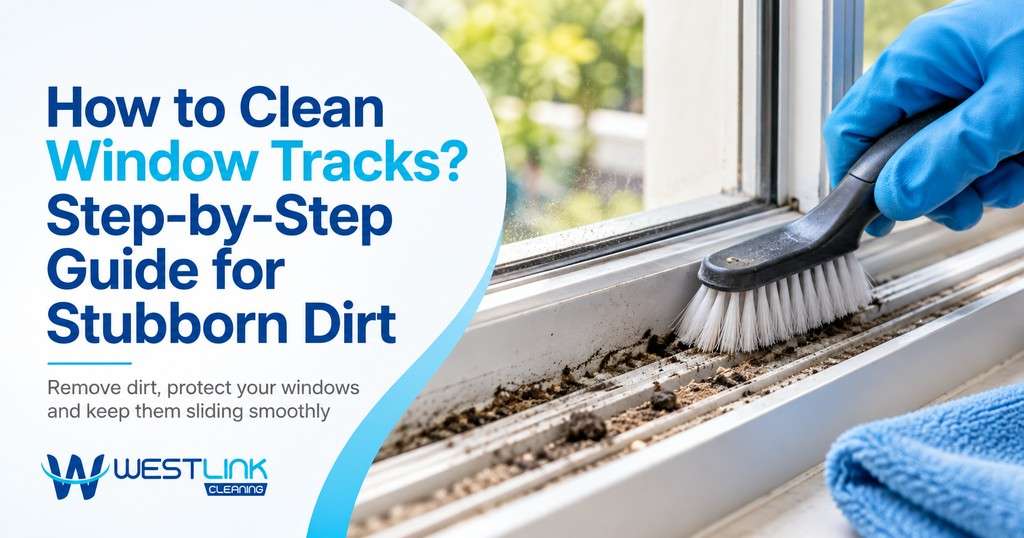
Dirty window tracks can be frustrating. Dust, sand, dead insects and sticky grime collect in narrow grooves that an ordinary cloth cannot reach. Knowing how to clean window tracks properly makes the job easier and helps you avoid damaging the window.
The best starting method is to vacuum loose debris, loosen stubborn dirt with a soft brush, and wipe the channels with a small amount of mild, manufacturer-approved cleaning solution. Finish by removing residue, drying the tracks and checking the drainage openings. For ordinary dust and grime, this dry-first method is usually more practical than soaking the tracks or using harsh chemicals.
Request a FREE window cleaning quote: https://westlinkservices.com.au/get-a-quote/
Quick cleaning method:
- Open the window and prepare the area.
- Vacuum loose dust, grit and debris.
- Apply a suitable mild cleaning solution.
- Gently brush and remove stubborn grime.
- Wipe away residue and dry the tracks.
- Inspect drainage openings and check window movement.
The method works for many accessible sliding window tracks, but cleaning products and maintenance requirements vary between aluminium, uPVC and timber frames.
What Do You Need to Clean Window Tracks?
You do not need expensive equipment to clean most window tracks. A vacuum cleaner, soft brush and microfibre cloth can handle ordinary household dirt. Specialist tools are useful for narrow grooves, but they are optional rather than essential.
Essential Tools and Cleaning Supplies
Gather the following items before starting:
| Cleaning tool | What it does |
|---|---|
| Vacuum cleaner with crevice attachment | Removes loose dust, sand, insects and other debris |
| Soft-bristle toothbrush or detailing brush | Loosens dirt in narrow grooves and corners |
| Microfibre cloth | Wipes away grime, cleaning solution and moisture |
| Mild, pH-neutral detergent | Helps loosen stubborn residue where compatible with the frame finish |
| Clean, warm water | Used sparingly for controlled damp cleaning |
| Soft sponge | Cleans accessible channels and flat sections |
| Cotton swabs | Reach small corners that a cloth cannot easily access |
Gloves and a small container for collected debris may also help.
A narrow detailing brush can make cleaning awkward grooves easier, but a soft toothbrush is often sufficient. Avoid wire brushes, steel wool and abrasive scouring pads, particularly on finished aluminium.
A steam cleaner is not necessary for routine window track maintenance.
How to Prepare the Window Before Cleaning?
Open the window far enough to reach the channel comfortably. Move curtains, blinds and nearby belongings away from the area.
Check the track for visible damage, loose seals and drainage openings. If the flyscreen is designed for easy removal, take it out carefully and place it somewhere safe.
There is no need to dismantle the sliding window panel for ordinary cleaning. Some windows have heavy or awkward components, and forcing them out can damage the mechanism or cause injury.
For upper-storey windows, work only from a safely accessible position inside the property.
Once the track is accessible, start by removing dry debris before applying any cleaning solution.
How to Clean Window Tracks Step by Step?

The most effective approach for ordinary accumulated dirt is to clean in stages: remove loose particles first, soften remaining grime, then wipe and dry the channels.
This six-step process is suitable for many accessible sliding window tracks, provided you follow the manufacturer’s instructions for the frame finish and hardware.
Steps 1–2: Remove Loose Dirt and Debris
1. Open the window and expose the track.
Slide the window open to access as much of the channel as possible. Remove an accessible flyscreen if its design allows safe removal.
Look along the grooves for sand, dust, dead insects and compacted dirt. Check whether there are any loose components or visibly damaged seals.
Avoid forcing a window that is already difficult to move. A badly scraping panel may have a mechanical problem that requires attention before cleaning.
2. Vacuum the loose dirt.
Fit a narrow crevice attachment to your vacuum cleaner and move it slowly along the track.
Pay particular attention to the corners and the areas where the sliding panel meets the frame.
For compacted dust, use a soft toothbrush to loosen the material, then vacuum again. Work gently along the grooves rather than pushing the brush into seals or hardware.
Why clean dry first?
Adding water to accumulated dust can create muddy residue that spreads into corners. Vacuuming removes much of the debris before it becomes harder to collect.
This approach is intended for ordinary dust and dirt, not suspected mould. If you notice possible mould growth, do not dry-brush the affected area.
Steps 3–4: Loosen and Remove Stubborn Grime
3. Apply a suitable mild cleaning solution.
After removing loose particles, dampen a microfibre cloth or soft sponge with warm water and a small amount of manufacturer-compatible detergent.
For many aluminium finishes, mild pH-neutral detergent is an appropriate starting option, but always check the window manufacturer’s maintenance recommendations.
Apply the solution using the cloth rather than pouring water directly into the channel.
The track should be lightly damp, not flooded. Excess water can carry grime into inaccessible areas or reach components that are difficult to dry.
Allow stubborn residue to soften for the contact time permitted by the product instructions. Do not leave a cleaning solution on the finish longer than recommended.
4. Brush the grooves and lift out the dirt.
Use a soft toothbrush or narrow detailing brush to work gently along the grooves.
For corners, wrap a microfibre cloth around a suitable non-metal cleaning tool, or use a cotton swab to remove loosened grime.
Clean one small section at a time. This makes it easier to see whether you are removing dirt or merely spreading it around.
Wipe away the loosened material with a sponge or cloth. Rinse the cloth regularly so you are not transferring grime back onto the track.
If a deposit does not loosen with gentle cleaning, stop before scraping or applying stronger chemicals. Hardened paint, construction residue and deteriorated coatings may need a different treatment.
Steps 5–6: Dry the Tracks and Check the Result
5. Remove the remaining cleaning solution and dry the track.
Use a clean, lightly damp cloth to remove detergent residue. Follow with a dry microfibre cloth, paying attention to corners and accessible recesses.
Do not leave pools of water in the channel.
Drying helps prevent leftover cleaning solution from attracting further dirt and allows you to inspect the finish more clearly.
6. Inspect drainage openings and test the window.
Look for small drainage openings or weep holes in the window assembly. These allow water to escape from certain window designs.
Remove any visible loose debris from accessible openings without forcing tools inside or altering the drainage system.
Finally, slide the window gently to check its operation.
A satisfactory result should include:
- No significant loose grit or accumulated grime in the accessible channel.
- No obvious detergent residue or excess moisture.
- Visibly clear, accessible drainage openings.
- Normal window movement without forcing the panel.
A window does not need to look brand new to be properly cleaned. Permanent staining, damaged finishes and worn hardware are separate issues.
Australian manufacturer A&L Windows recommends regularly vacuuming sliding tracks and keeping drainage holes clear as part of window maintenance.
If the track is clean but the window remains difficult to move, investigate the sliding mechanism rather than repeatedly applying cleaning products.
How Do You Clean Aluminium Window Tracks Without Damaging Them?
The safest way to clean aluminium window tracks is to use a soft, non-abrasive tool and the mildest cleaner approved for the surface finish.
Aluminium window frames may have anodised or powder-coated finishes. These protective surfaces do not always respond to cleaning chemicals in the same way.
Cleaning Powder-Coated and Anodised Aluminium Tracks
Powder coating is a protective coating applied to the aluminium. Anodising changes the metal’s surface through an electrochemical process to create a protective finish.
For routine cleaning, begin with gentle vacuuming, followed by a soft cloth and suitable mild detergent.
Avoid assuming that products marketed as aluminium cleaners are suitable for every aluminium window.
| Frame finish | Recommended starting approach | Important precaution |
|---|---|---|
| Powder-coated aluminium | Warm water, compatible mild detergent and soft cloth | Avoid solvents, abrasive pads and caustic cleaners unless the manufacturer explicitly approves a product |
| Anodised aluminium | Mild detergent and non-abrasive cleaning | Additional treatments depend on manufacturer instructions |
| Aluminium with damaged coating | Gentle surface cleaning only | Do not attempt aggressive polishing or chemical restoration |
A&L Windows’ product-care guidance recommends warm water with non-abrasive pH-neutral detergent. It warns against solvents on powder-coated finishes while allowing carefully selected solvent treatments for some anodised finishes when ordinary cleaning is unsuccessful.
That distinction matters. A chemical suitable for one aluminium finish may be inappropriate for another.
How Cleaning Differs for uPVC and Timber Window Tracks?
uPVC tracks generally benefit from gentle, non-abrasive cleaning using products compatible with the plastic surface and adjacent seals.
Timber windows require greater care with moisture. Use a lightly damp cloth, avoid soaking joints, and inspect the paint or protective coating for deterioration.
Do not assume the same solvent or stain-removal treatment is suitable for aluminium, uPVC and timber.
What if the Aluminium Looks Stained After Cleaning?
Marks remaining after ordinary cleaning may not be surface dirt.
Possible explanations include mineral deposits, corrosion, scratches, coating deterioration or permanent discolouration.
Inspect the finish before attempting another treatment. Repeated hard scrubbing may make cosmetic damage worse without removing the mark.
For persistent staining or suspected coating damage, consult the window manufacturer or an appropriate restoration specialist.
What Is the Best Way to Clean Window Tracks With Stubborn Dirt?
The best way to clean window tracks depends on the material trapped inside them. Loose sand requires a different approach from sticky residue, while suspected mould or corrosion needs more careful assessment.
Start with the least aggressive suitable method and increase cleaning effort only when necessary.
For Dry Dust, Sand and Loose Debris
A vacuum cleaner and soft-bristle brush are usually the most practical starting tools.
Move the vacuum nozzle along the channel, then brush remaining particles away from tight corners. Repeat until the loose material has been removed.
This method is particularly useful for window tracks exposed to ordinary household dust, windblown grit or debris entering from outdoor areas.
It also avoids introducing unnecessary moisture.
For Hardened Dirt and Sticky Residue
Begin by removing surrounding loose particles.
Apply a small amount of compatible mild detergent with a damp cloth, allowing the residue to soften according to the product instructions.
Gently work over the deposit with a soft brush. Lift the loosened material out rather than pushing it along the track.
Avoid using sharp metal objects to scrape hardened material from finished aluminium.
Paint splashes, adhesive, mortar and construction residue may require specialist removal because the substance and surface finish determine which treatment is safe.
Are Cut Sponges, Specialist Brushes or Steam Cleaners Better?
No single tool is best for every window track.
| Cleaning method | Best suited to | Main limitation |
|---|---|---|
| Vacuum and soft brush | Loose dust, grit and routine maintenance | May not remove sticky deposits |
| Narrow detailing brush | Grooves, corners and compacted dirt | Loosened material must still be collected |
| Cut sponge | Straight, accessible channels | May not fit irregular track profiles |
| Handheld steam cleaner | Selected surfaces where heat and moisture are approved | Can be unsuitable for nearby seals, finishes and glazing |
A cut sponge can be useful when its shape matches the channel. However, narrow or irregular grooves may still require a detailing brush.
Steam cleaners can loosen some deposits, but steam should not be treated as the universal best method. Heat and excess moisture can create problems for certain window components.
Architectural Window Systems cautions against exposing glass to extreme temperature changes and provides separate maintenance guidance for different materials.
For most ordinary dirt, start with vacuuming and gentle damp wiping before considering specialised equipment.
What if You Find Black Deposits or Suspected Mould?
Black material inside window tracks may be dirt, staining or suspected mould. Appearance alone cannot confirm the cause.
Check for recurring moisture, condensation, leaks or damp seals.
If mould is suspected, do not use the ordinary dry-brushing method. NSW Government mould guidance warns that dry brushing can release spores into the air.
Address the moisture source and follow appropriate mould-cleaning guidance. Widespread growth, recurring contamination or associated water damage warrants professional assessment.
Why Are Window Tracks Still Sticking, Dirty or Wet After Cleaning?
A clean track will not necessarily fix a damaged window mechanism or drainage defect.
If the problem continues after visible dirt has been removed, the next step is to identify the likely cause rather than applying stronger cleaning products.
Why Is the Window Still Difficult to Slide?
Start by checking whether grit remains in the sliding channel.
If the rail is clear but the window still sticks, possible causes include worn rollers, poor alignment or damage to the sliding mechanism.
Listen for scraping noises and watch whether the panel catches at the same point each time.
Do not force a window that scrapes heavily. Continued use may damage the rail or rollers.
A window repair specialist can assess the mechanism when cleaning does not restore normal operation.
Why Does Water Collect Inside Window Tracks?
Many sliding window designs contain drainage openings, sometimes called weep holes, that help water escape from the frame.
Dust, leaves and other debris can obstruct accessible drainage slots.
Inspect the visible openings and gently remove loose material without pushing it deeper into the assembly.
However, not every instance of standing water results from dirt. Failed seals, drainage faults and installation problems may also contribute.
If water repeatedly accumulates or enters the room, have the window assessed.
When Do Window Tracks Need Repair Instead of Cleaning?
Use the following guide to decide what to do next.
| Problem | Possible explanation | Appropriate next step |
|---|---|---|
| Loose grit and dirt | Ordinary debris accumulation | Vacuum and clean |
| Window scrapes after cleaning | Roller, rail or alignment problem | Window repair assessment |
| Water remains in the channel | Blocked or faulty drainage | Inspect accessible openings; seek assessment if persistent |
| Broken or loose seals | Deterioration or damage | Appropriate repair specialist |
| Aluminium remains discoloured | Possible finish damage or persistent deposit | Manufacturer or restoration advice |
| Repeated interior leaks | Water ingress or assembly defect | Professional investigation |
Cleaning is useful when dirt is the problem. Repairs are necessary when the underlying component has failed.
What Mistakes Should You Avoid When Cleaning Window Tracks?
The most common avoidable problems come from using unsuitable chemicals, abrasive tools or excessive moisture.
Using Harsh Chemicals or Abrasive Tools
Strong acidic or caustic cleaners can damage some window finishes. Metal scrapers and hard scouring pads can scratch coated aluminium.
Vinegar-and-baking-soda cleaning hacks are popular, but they are not automatically more effective or compatible with every material.
Use the mildest suitable cleaner and check manufacturer instructions before trying stronger products.
Never mix household cleaning chemicals. Some combinations can release dangerous fumes. Healthdirect advises following product-label safety instructions and avoiding chemical mixing.
Using Too Much Water, Heat or Pressure
Pouring water into the track can carry dirt into hidden channels and make drying difficult.
Avoid directing a pressure washer or strong water stream into window assemblies.
Steam cleaning also requires caution because heat and moisture may affect seals, finishes or adjacent glass.
A lightly damp cloth generally provides better control for routine cleaning.
Removing Window Panels or Applying the Wrong Lubricant
Sliding panels are not all designed for easy removal. Trying to lift out a heavy panel without appropriate instructions can cause damage or injury.
Lubrication is another area where the window manufacturer’s guidance matters.
Some products specify particular lubricants or maintenance intervals, while others have different hardware requirements.
Do not apply household oil or silicone spray indiscriminately to every window track.
How Often Should You Clean Window Tracks in Sydney?

Window track cleaning frequency depends on environmental exposure, window use and manufacturer recommendations.
A sheltered residential window may accumulate dirt slowly, while a coastal window or frequently used shopfront can require more attention.
A Practical Cleaning Schedule for Homes and Apartments
For ordinary maintenance, inspect tracks regularly and vacuum loose debris whenever buildup becomes visible.
Use the following as an exposure-based guide rather than a universal rule:
| Window environment | Practical maintenance approach |
|---|---|
| Sheltered residential window | Regular checks and cleaning when dust accumulates |
| Urban window exposed to traffic dust | More frequent inspections and light vacuuming |
| Coastal or salt-exposed window | Follow the manufacturer’s more frequent cleaning requirements |
| Frequently used commercial window | Schedule checks according to dirt buildup and operation |
For example, A&L recommends cleaning its aluminium windows at least every six months in city environments, every three months in rural environments and monthly in coastal environments.
These intervals apply to the manufacturer’s specified products and general window maintenance. They are not a mandatory schedule for every window track in Sydney.
Why Coastal and High-Exposure Locations May Need More Attention?
Airborne salt, dust and pollution can settle on window frames and channels.
A coastal apartment may need more frequent attention to salt deposits, while a window beside a busy road may accumulate more fine dust.
Sheltered window sections can also hold deposits because rainfall does not naturally wash them away.
Inspect the actual condition of the windows rather than assuming every property in a suburb needs an identical cleaning schedule.
Window Track Cleaning for Offices, Shops and Rental Properties
Commercial windows and shopfronts may experience frequent opening, closing and exposure to street-level dust.
Property managers can include accessible tracks, drainage openings and window operation in routine inspection checklists.
For rental properties, track cleaning may also form part of preparation before a final inspection.
The appropriate schedule depends on property use, window condition and applicable maintenance requirements.
How Can You Keep Window Tracks Cleaner for Longer?
Keeping window tracks clean is easier when loose debris is removed before it becomes compacted.
Keep Flyscreens, Window Sills and Surrounding Areas Clean
Dust often collects on flyscreens and nearby sills before entering the track.
Clean safely removable flyscreens when necessary, wipe surrounding surfaces and vacuum channels before dirt becomes firmly packed.
Check the tracks after renovation work, gardening or unusually dusty weather.
Check Drainage Openings and Window Components Regularly
Inspect accessible drainage slots for obvious obstructions.
Watch for scraping, unexpected resistance, damaged seals or moisture that repeatedly returns.
These signs may indicate maintenance needs beyond ordinary dirt removal.
Use a Simple Ongoing Maintenance Checklist
- Inspect accessible tracks for dirt and damage.
- Vacuum loose debris when needed.
- Wipe stubborn residue with a suitable mild cleaner.
- Remove leftover cleaning solution and moisture.
- Check visible drainage openings.
- Test window movement without forcing it.
- Arrange further assessment if a problem persists.
Regular light cleaning reduces the need for repeated heavy scrubbing and makes developing problems easier to notice.
When Should You Hire a Professional Window Cleaning Service in Sydney?
Professional window track cleaning is worth considering when the buildup is extensive, there are many windows to clean, or access creates a safety concern.
Routine dirt in an accessible residential window is often manageable with basic DIY equipment. Professional help becomes more useful when the work is difficult, time-consuming or unsuitable for safe household cleaning.
Signs That Professional Cleaning May Be the Better Option
Consider professional cleaning when:
- Multiple windows have heavily compacted dirt.
- Tracks have difficult-to-reach channels.
- Windows are located at heights that cannot be accessed safely.
- A commercial property requires recurring cleaning.
- An end-of-lease or post-renovation clean involves substantial detailing.
- The necessary cleaning exceeds your available equipment or safe access.
Persistent leaks, damaged rollers and defective tracks may require a window repair specialist rather than a cleaning company.
What Does Professional Window Track Cleaning Include?
The exact inclusions depend on the company and the agreed service.
A window-cleaning service may cover accessible track vacuuming, surface grime removal, frames, sills and flyscreens.
However, deep track cleaning is not automatically included in every standard glass-cleaning booking.
For Sydney properties, Westlink Cleaning Services offers Professional Window Cleaning with the option to include window tracks, channels, frames and sills when they are part of the confirmed service scope.
This distinction matters if the main concern is accumulated dirt inside the rails rather than marks on the glass.
How Much Does Professional Window Track Cleaning Cost?
There is no single price that applies to every window-track cleaning job.
Quotes generally depend on:
- The number and size of windows.
- The amount and type of accumulated dirt.
- Property height and safe access requirements.
- Whether flyscreens need attention.
- Whether tracks are cleaned alongside glass and frames.
- Any specialist cleaning or additional assessment required.
A quote for window-glass cleaning should not be assumed to include detailed track cleaning.
For a more useful estimate, describe the condition of the tracks and request a clearly itemised scope.
What Should You Check Before Booking?
Confirm which components are included, whether there are additional charges for heavy buildup, and how inaccessible windows will be handled.
For apartments, also check any relevant access arrangements and strata responsibilities.
According to the NSW Government’s strata maintenance guidance, routine window cleaning and common-property window repairs can involve different responsibilities. Check the strata plan and by-laws when ownership or repair obligations are unclear.
A good service decision starts with identifying whether the problem needs cleaning, specialist restoration or mechanical repair.
Frequently Asked Questions
Can You Clean Window Tracks Without Removing the Window?
Yes. Many sliding window tracks can be cleaned while the window remains installed.
Use a vacuum crevice attachment, soft toothbrush and narrow cloth to access the visible channels. Move the window only as far as it can safely travel. Deeply concealed areas may need specialist access, but removing the panel is usually unnecessary for routine surface cleaning.
Should You Clean Flyscreens Before Cleaning Window Tracks?
Cleaning an accessible flyscreen before the final track clean can prevent loose screen dust from falling into freshly cleaned channels.
Remove the screen only when its design allows safe removal. If it cannot be removed easily, clean accessible areas carefully and avoid forcing the frame or clips.
Can You Use Baking Soda and Vinegar to Clean Window Tracks?
Baking soda and vinegar are common household cleaning ingredients, but mixing them does not automatically create a better window-track cleaner.
Their reaction produces fizzing while neutralising much of their acidity and alkalinity. Vinegar may also be unsuitable for some metal finishes.
For routine cleaning, choose a mild product approved for the window material rather than relying on an unverified cleaning hack.
Is a Steam Cleaner Safe for Aluminium Window Tracks?
Steam cleaning is not universally safe for aluminium window assemblies.
Although aluminium itself tolerates heat, nearby seals, coatings, hardware and glass may have different limitations. Steam can also introduce moisture into hard-to-dry areas.
Use a steam cleaner only when the manufacturer confirms that the particular window assembly is compatible with the treatment.
Can You Use Bleach to Clean Window Tracks?
Bleach is generally unnecessary for ordinary dust, sand and surface grime.
Its suitability depends on the material, finish and reason for cleaning. It can also create chemical hazards when mixed with incompatible products.
Do not use bleach as a default aluminium track cleaner. For suspected mould, follow appropriate mould-removal guidance and address the moisture source.
Is It Safe to Use a Metal Scraper on Hardened Dirt?
Metal scrapers can scratch anodised or powder-coated aluminium finishes and damage adjacent components.
Start with a suitable mild cleaning solution and soft brush. If hardened paint, sealant or construction material remains attached, identify the substance and seek material-specific advice rather than using greater force.
Should You Lubricate Window Tracks After Cleaning?
Not every window track requires the same lubrication treatment.
Some manufacturers recommend specific products for particular sliding mechanisms, while other components have different maintenance instructions.
Clean and dry the track first, then follow the manufacturer’s guidance for the exact lubricant, application location and maintenance interval. Avoid spraying general-purpose oil into every channel.
How Long Does It Take to Clean a Window Track?
Cleaning time depends on the track length, dirt buildup, accessibility and whether the grime is loose or hardened.
An accessible channel containing ordinary dust usually requires less work than several tracks with compacted debris and sticky residue.
Cleaning should continue until the accessible surfaces are properly cleared, rather than being rushed to meet an arbitrary time estimate.
Are Window Tracks Included in an End-of-Lease Clean?
Window tracks may be included in an end-of-lease cleaning package, but this depends on the agreed service scope.
In NSW, tenants are generally expected to leave a rental property reasonably clean, allowing for fair wear and tear and its original condition.
Check the entry condition report and confirm whether the cleaning company includes tracks, frames and flyscreens.
Who Is Responsible for Window Track Cleaning in a Strata Apartment?
Responsibility depends on the applicable strata arrangements, whether the task is routine cleaning or repair, and whether the window can be accessed safely.
Routine accessible cleaning may fall to the owner or occupant, while common-property repairs can be the responsibility of the owners corporation.
Check the strata plan, by-laws and tenancy agreement. Tenants should raise repair concerns with their landlord or property manager.
Clean window tracks do not require an elaborate cleaning routine. For ordinary dirt, start with vacuuming, use a suitable gentle cleaner, remove residue and dry the channels. Inspect the window afterwards so that drainage or mechanical defects are not mistaken for remaining dirt.
If you have multiple heavily soiled tracks or windows that are difficult to access safely, Westlink Cleaning Services can help you explore suitable cleaning options in Sydney. Request a quote that specifically includes the tracks and channels you need cleaned.


