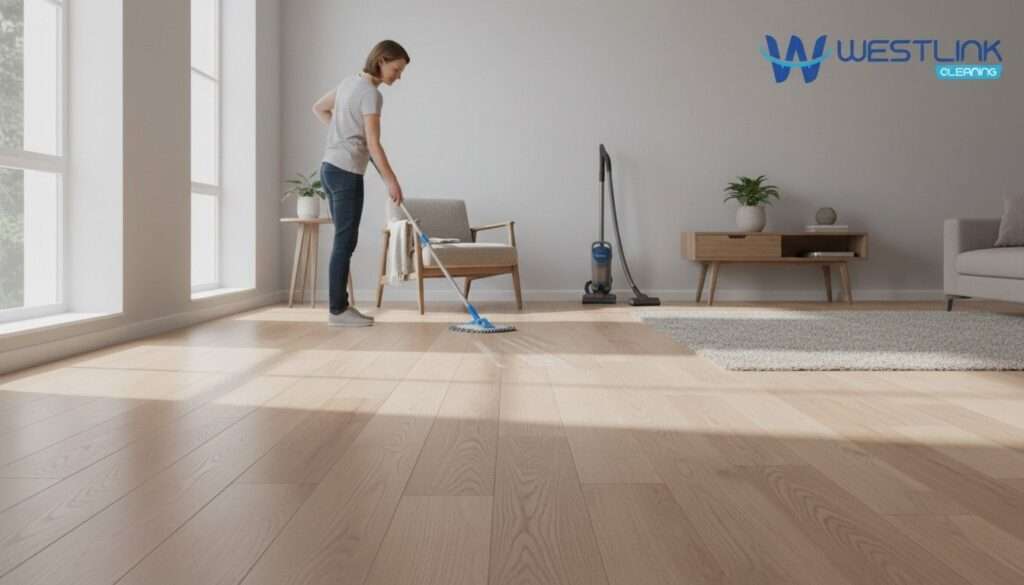
Clean hardwood floors by vacuuming or dust mopping first, then using a slightly damp microfiber mop with a hardwood-safe cleaner, and drying any leftover moisture immediately. Avoid wet mops, steam mops, vinegar, bleach, ammonia, and abrasive tools.
Hardwood floors should be cleaned with a dry-first, low-moisture method. That method removes grit, lifts light residue, and reduces avoidable finish damage. Wood is hygroscopic, which means it absorbs and releases moisture. When moisture changes, wood can change dimensions. Purdue Extension notes that even a 6% moisture content change can produce measurable dimensional movement in wood, and Oklahoma State University explains that wood changes dimension as humidity and moisture conditions change.
In homes, offices, rental properties, and other traffic-heavy interiors, hardwood floors collect more than visible dust. Common contaminants include grit, crumbs, pet hair, tracked-in soil, food residue, and cleaner residue. If grit stays on the floor, it gets walked into the finish. If excess liquid stays on the floor, it can affect the coating and the wood below it.
What is the best way to clean hardwood floors?
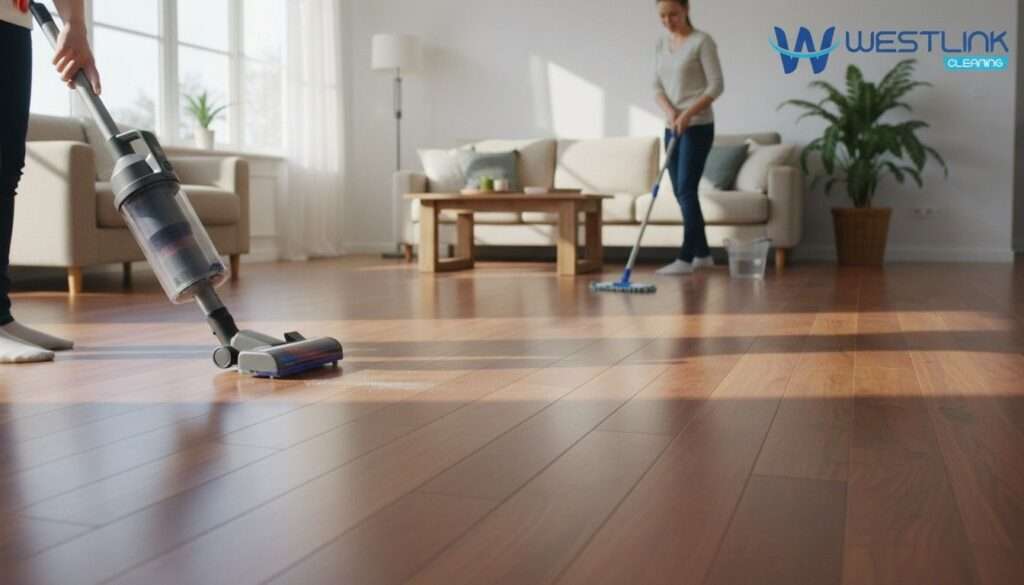
The best method is to remove dry soil first, then clean with very light moisture and a hardwood-safe cleaner. The National Wood Flooring Association advises sweeping, dust-mopping, or vacuuming with the bare-floor setting; wiping spills with a dry or slightly damp cloth; and avoiding wet mops and steam mops. Shaw Floors gives the same basic sequence: remove dirt and grit, dry mop or spot clean, and keep moisture controlled.
The reason is moisture control. Wood fibers absorb water. Purdue Extension and Oklahoma State University both explain that wood changes dimensions as moisture levels change. That is why a floor can look sound but still react badly when water reaches board edges, joints, worn finish areas, or open grain.
What do you need before cleaning hardwood floors?
You need five basic tools: a soft broom or dust mop, a vacuum with a hard-floor setting, a clean microfibre mop, dry microfibre cloths, and a hardwood-safe cleaner. NWFA recommends sweeping, dust mopping, or vacuuming with the bare-floor setting. Shaw also recommends regular sweeping or vacuuming to remove dirt and grit. For damp cleaning, manufacturer guidance commonly points to hardwood-specific or neutral-pH cleaners rather than general household products.
Do not substitute unsuitable products. Armstrong’s care guide says not to use ammonia-based cleaners, wax-based products, detergents, bleach, oil soaps, abrasive cleaning soaps, or acidic materials such as vinegar. Mercier also warns against wax, household detergent, concentrated wood cleaner, oil-based soap, steam cleaners, and water-vinegar mixtures for prefinished floors.
How do you clean hardwood floors step by step?
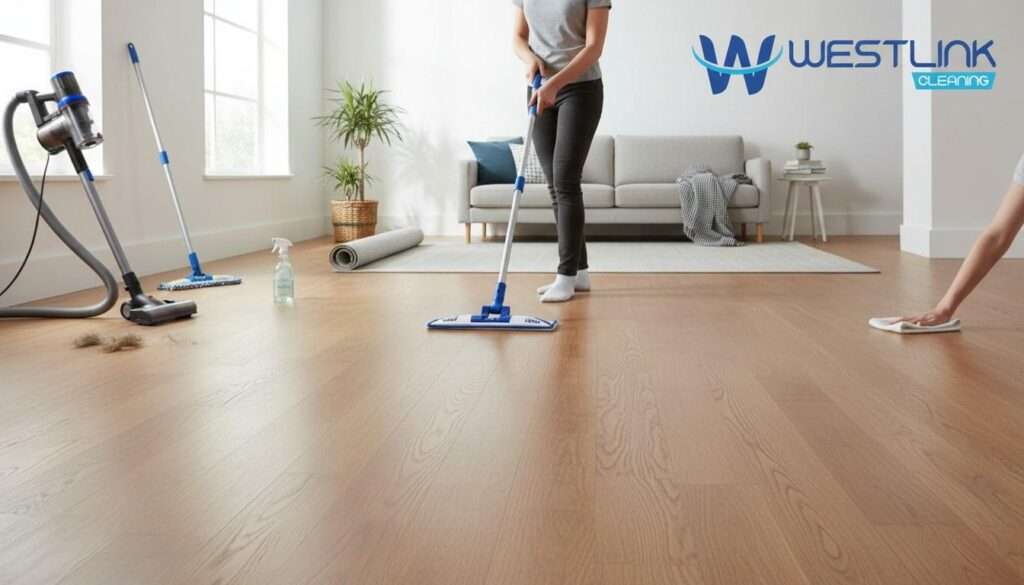
Follow a four-step sequence: remove grit, treat spots, mop lightly, and dry fast. That sequence matches the main risk pattern in hardwood maintenance. Dry soil scratches finishes. Excess liquid increases moisture risk. Residue leaves haze and streaking.
Step 1: Remove dust, grit, and loose debris first
Remove loose soil before any damp cleaning starts. Vacuuming or dust mopping first stops grit from being dragged across the finish. NOFMA states that vacuuming removes surface dust and dirt before it gets walked into the finish. Shaw says to sweep or vacuum regularly to remove dirt and grit.
Focus on high-load areas such as entry points, hallways, kitchen perimeters, dining spaces, and furniture edges. These areas usually collect the highest concentration of abrasive particles, including sand, crumbs, and tracked-in dirt.
Step 2: Clean spills and sticky spots before mopping
Treat localised marks before you clean the full floor. Shaw advises wiping spills immediately with a soft cloth. NWFA also says spills should be cleaned immediately with a dry or slightly damp cloth.
Use a clean microfibre cloth with a small amount of hardwood-safe cleaner. Wipe gently. Do not flood the area. If residue does not release on the first pass, repeat with controlled product use rather than aggressive scrubbing. That protects the finish and reduces streaking.
Step 3: Mop with very light moisture only
Use a barely damp microfibre mop, not a wet mop. NWFA says wet mops and steam mops damage the finish and the wood over time. NOFMA states that even small amounts of water can deteriorate finishes and warp the wood below. Mercier adds that large amounts of liquid and saturated mops should never be used on wood floors.
Spray cleaner onto the mop pad or use a controlled spray system. Do not pour liquid onto the floor. Use small sections. Change dirty pads as needed. A correctly cleaned hardwood floor should look refreshed, not visibly wet. Hardwood care guides commonly recommend neutral-pH or hardwood-specific cleaners for this stage.
Step 4: Dry the floor properly after cleaning
Dry any remaining moisture quickly. Mercier warns that water absorbed by wood fibres can alter board dimensions, cause discoloration, and contribute to problems between boards. Shaw also stresses immediate spill response and moisture control.
Use a dry microfibre cloth for damp edges, corners, and traffic lanes. The floor should feel dry soon after cleaning. If it stays wet, too much liquid was used.
Cleaning sequence table
| Task | Correct method | Moisture level | Main reason |
| Dry soil removal | Soft broom, dust mop, or vacuum on bare-floor setting | 0% added moisture | Removes grit before it scratches the finish |
| Spot cleaning | Microfibre cloth with hardwood-safe cleaner | Very low | Stops spills and sticky marks from spreading |
| Routine mop clean | Slightly damp microfibre mop | Low | Cleans residue without saturating wood |
| Dry-down | Dry cloth or airflow | 0% added moisture | Reduces moisture exposure and streaks |
| Prevention | Walk-off mats, felt pads, quick spill response | 0% added moisture | Reduces grit, moisture, and scratch pressure |
What should you avoid when cleaning hardwood floors?
Avoid wet mops, steam mops, bleach, ammonia, wax-based products, oil soaps, abrasive cleaners, and vinegar-based cleaning. NWFA says not to use wet mops or steam mops. Shaw says not to use wet mops, steam mops, harsh chemicals, ammonia, or abrasive cleaners. Armstrong’s guide also excludes bleach, detergents, oil soaps, and acidic materials like vinegar.
Avoid these products because they create three common problems: finish damage, residue, and moisture stress. Mercier states that unsuitable cleaners can discolour the finish, leave a greasy film, and make later maintenance harder. Its guide also says vinegar-water mixes are not recommended for prefinished wood flooring because of their effect on the finish.
How often should hardwood floors be cleaned?
Dry cleaning should be frequent, and damp cleaning should be need-based. NOFMA says hardwood floors should be vacuumed or dust mopped weekly or more often if needed. Shaw recommends regular sweeping or vacuuming. Mercier states that cleaning frequency depends on how quickly abrasives accumulate on the floor.
A practical schedule depends on use level. Low-traffic rooms may only need weekly dry maintenance. High-traffic rooms may need dry maintenance several times per week. Kitchens, entries, pet zones, and dining areas usually need the fastest response because they collect grit, drips, and food residue first.
How do you clean hardwood floors in high-traffic areas?
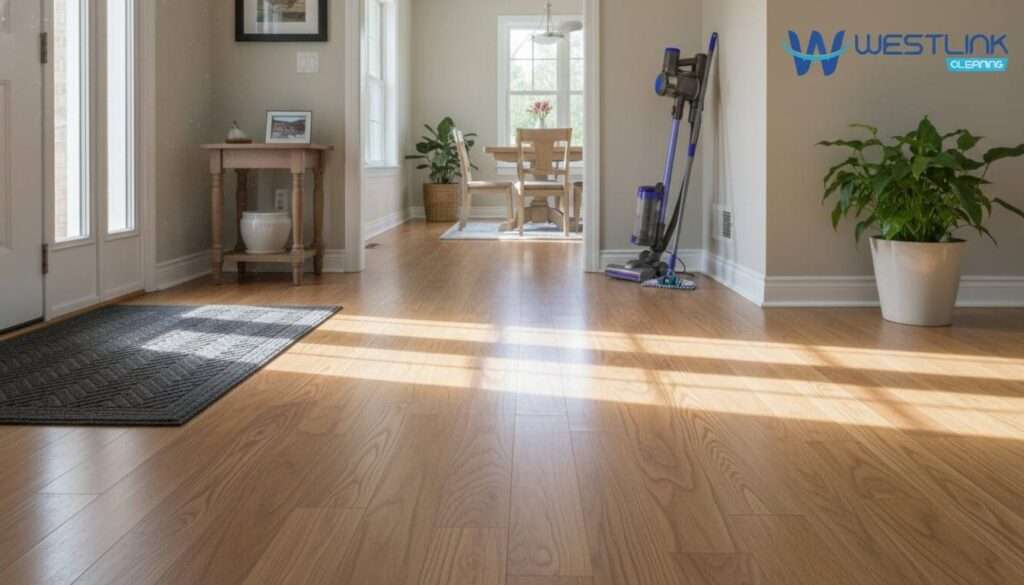
Increase dry soil removal and reduce moisture exposure. High-traffic zones collect more abrasives, and abrasives are what shorten finish life. Shaw recommends walk-off mats at entrances to trap dirt and moisture. Armstrong also recommends maintaining indoor relative humidity between 35% and 55% and controlling moisture in the environment.
Use entrance mats, vacuum regularly, wipe marks early, and keep furniture legs protected with felt pads. Examples include front doors, corridors, dining chairs, and living room traffic lanes. If these zones still look dull after correct cleaning, the problem may be wear in the coating rather than loose dirt alone. That is a maintenance diagnosis issue, not a basic mopping issue.
How do you clean hardwood floors with pets or children in the home?
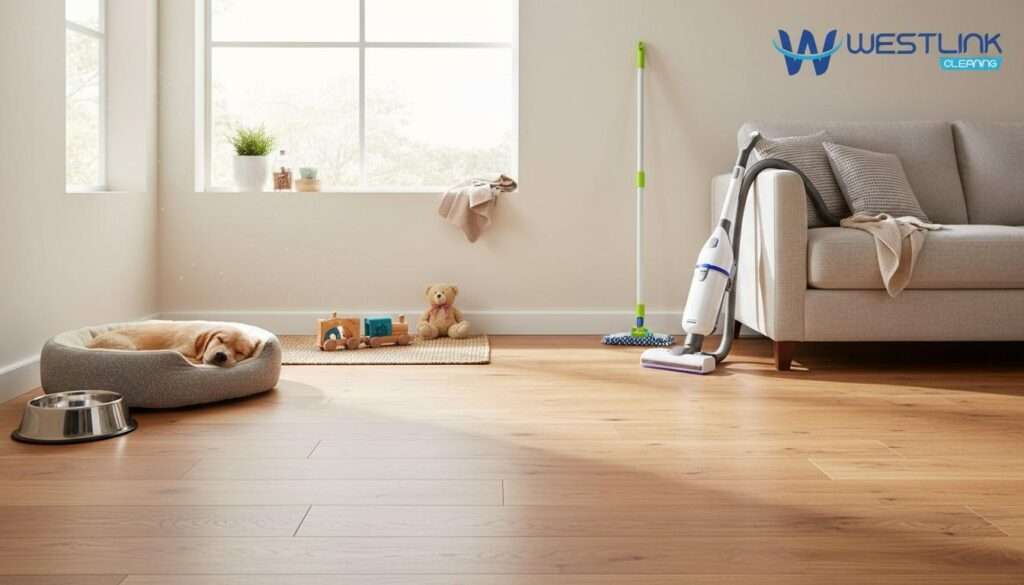
Use the same low-moisture method, but shorten the cleaning interval in mess-prone zones. Shaw specifically warns against letting pet nails grow too long, which helps reduce scratch pressure. Immediate spill cleaning is also part of standard hardwood care guidance.
Focus on water-bowl areas, feeding zones, play zones, doorways, and furniture resting areas. Typical contaminants include pet hair, paw moisture, food spills, tracked-in dirt, and drink splashes. Remove loose debris first, then treat local marks, then mop lightly only where needed.
Why do some hardwood floors still look dull after cleaning?
A floor can stay dull if the problem is residue, finish wear, or moisture-related change rather than loose dirt. Mercier warns that unsuitable cleaners can leave a greasy film and make the floor difficult to maintain. Armstrong and Shaw both warn against waxes, harsh chemicals, and abrasive products that can affect appearance and finish performance.
If correct cleaning no longer changes the result, the floor may have embedded residue, uneven traffic wear, or finish deterioration. That means the issue has moved beyond routine surface maintenance.
When is DIY hardwood floor cleaning not enough?
DIY cleaning is not enough when the floor stays cloudy, sticky, patchy, or visibly worn after correct low-moisture cleaning. Routine cleaning removes loose dirt and light residue. It does not correct coating wear, long-term build-up, moisture-related distortion, or finish failure. Wood science sources show that moisture change can produce dimensional movement, and flooring care guides show that unsuitable products can leave films or damage finishes.
Typical examples include older floors, end-of-lease floors, rental floors, heavy-use offices, and family homes with long-term product build-up. In these cases, the next step is floor-specific assessment, not stronger household chemicals.
When is professional hardwood floor cleaning and floor care useful?
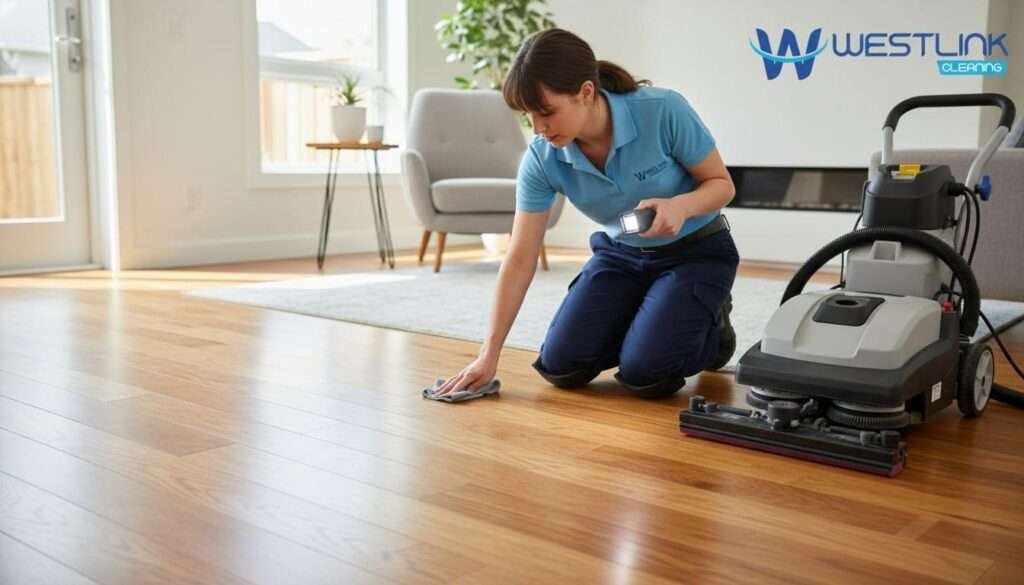
Professional floor care is useful when the floor needs controlled corrective cleaning, not just routine mopping. That may include residue removal, finish-safe deep cleaning, traffic-lane treatment, or assessment of wear patterns. The correct service depends on the floor type, finish type, moisture condition, and use pattern.
For property owners who want a safer process, professional care reduces trial-and-error cleaning with unsuitable products. At Westlink Cleaning Services, hardwood floor care should be based on floor condition, finish type, traffic level, and the actual contamination present. That keeps the service relevant to the floor rather than applying a generic cleaning method.
What simple habits help hardwood floors last longer?
Use preventive controls every day. Shaw recommends walk-off mats at entrances, felt pads under furniture, quick spill cleaning, and regular removal of dirt and grit. Armstrong recommends keeping indoor humidity between 35% and 55% to reduce shrinkage, gaps, cupping, and peaking.
Useful habits include entrance mats, quick spill response, soft furniture protection, nail control for pets, and frequent dry maintenance. Examples include door mats at entry points, felt pads under dining chairs, and prompt wiping near kitchens and pet bowls. These habits reduce scratch load, reduce moisture exposure, and reduce the need for aggressive cleaning.
Comparison: routine cleaning vs problem correction
| Situation | What it usually needs | What it does not need first |
| Light dust and grit | Vacuuming or dust mopping | Flood mopping |
| Small spill or food mark | Prompt spot cleaning with a soft cloth | Abrasive scrubbing |
| General weekly maintenance | Slightly damp microfibre mop and hardwood-safe cleaner | Steam cleaning |
| Sticky film or repeated haze | Product review and corrective residue removal | More household detergent |
| Patchy dullness in traffic lanes | Wear assessment and floor-specific treatment | Extra water or vinegar |
Conclusion
The correct way to clean hardwood floors is to remove dry dirt first, clean with very light moisture, use a hardwood-safe cleaner, and dry remaining moisture quickly. That method aligns with major wood-floor care guidance and with wood-moisture science. It reduces scratch risk, lowers finish stress, and limits avoidable moisture exposure.
If the floor still looks dull, patchy, sticky, or difficult to maintain after correct cleaning, the issue may be residue, wear, or finish damage rather than surface dirt. In that situation, professional floor care is the more suitable next step.
FAQs
Can you use water to clean hardwood floors?
Yes, but only in very small amounts. NWFA and NOFMA both support slightly damp cleaning only, not wet mopping.
Is vinegar safe for hardwood floors?
Vinegar is not the safest long-term option for finished hardwood floors. Mercier and Armstrong both advise against vinegar-based cleaning for hardwood finishes.
Can you steam clean hardwood floors?
No, steam mops are generally not recommended for hardwood floors. NWFA, Shaw, and Mercier all warn against steam cleaning on wood floors.
What is the best mop for hardwood floors?
A clean microfibre mop is the standard safe option for routine hardwood maintenance. Hardwood care guidance commonly pairs microfibre mops with hardwood-safe or neutral-pH cleaners.
Why does my hardwood floor look streaky after mopping?
Streaks usually mean too much product, too much moisture, or residue left on the surface. Manufacturer guidance warns that unsuitable cleaners can leave film and that excess liquid should be avoided.
When should I call a professional for hardwood floor cleaning?
Call a professional when correct low-moisture cleaning no longer improves the floor. That usually points to wear, residue build-up, or finish-related problems rather than routine dirt alone.