

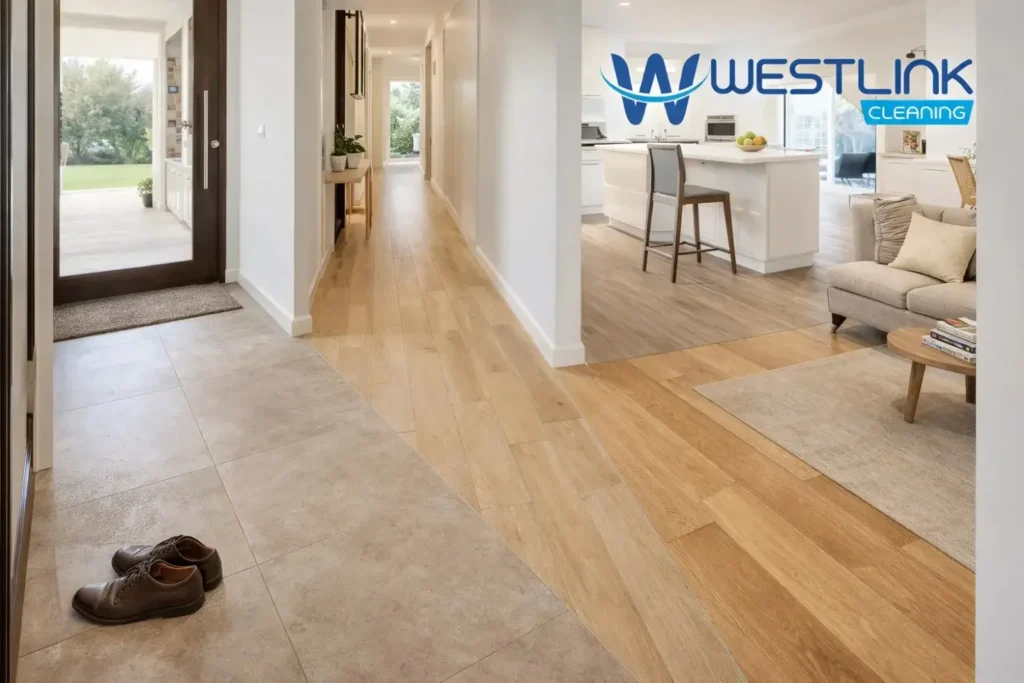
You choose the best flooring for high-traffic areas by matching the material to the real conditions in the room, not just the appearance. The right floor depends on daily wear, moisture, cleaning frequency, comfort, noise, slip risk, and long-term maintenance. In busy areas, slip safety is also a practical factor, especially where wet shoes, frequent mopping, or spills are part of daily use. Safe Work Australia notes that polished, wet, or greasy floors can increase slip risk.
A floor that looks good in a showroom can still fail in a busy entryway, kitchen, hallway, or commercial corridor. Some spaces deal with grit from shoes. Others face spills and constant mopping. Some need better comfort underfoot or quieter walking. That is why the best flooring for one busy room may be the wrong choice for another.
Why Does Flooring Choice Matter More in High-Traffic Areas?
High-traffic areas place more pressure on flooring than low-use rooms. Repeated foot traffic creates visible wear lines, dragged furniture can mark the surface, outside dirt can scratch the finish, and moisture can damage the wrong material very quickly.
The real goal is not only to choose a durable floor. It is to choose a floor that handles the main stress in that space. A hallway needs abrasion resistance. A kitchen needs easier cleaning and better moisture handling. A retail or office corridor may also need stronger long-term performance under constant use.
What Are the Best Flooring Types for High-Traffic Areas?
Several flooring types perform well in high-traffic areas, but they do so for different reasons. Some are stronger against moisture. Some are easier to maintain. Some feel more comfortable in busy homes. The best choice depends on where the floor will be used and what kind of wear it will face. The flooring characteristics guidance from WorkSafe Queensland is also useful because it shows how different materials suit different conditions.

| Flooring Type | Durability | Moisture Handling | Cleaning Ease | Comfort | Best For |
| Porcelain tile | Very high | Very high | Easy | Low | Entryways, kitchens, hallways, retail |
| Rigid vinyl | High | High | Easy | Medium to high | Busy homes, family areas, kitchens |
| Laminate | High in dry rooms | Medium to low | Easy | Medium | Hallways, living rooms, dining areas |
| Engineered timber | Medium to high | Medium | Moderate | High | Selected dry living spaces |
| Rubber flooring | Very high | High | Easy | High | Offices, schools, healthcare, corridors |
| Polished concrete | Very high | Medium to high | Easy | Low | Commercial and industrial spaces |
| Epoxy flooring | Very high | High | Easy | Low | Utility areas, garages, service zones |
1. Porcelain Tile
Porcelain tile is one of the strongest flooring options for high-traffic areas because it resists wear, moisture, and repeated cleaning very well. It is a strong choice for entryways, kitchens, hallways, bathrooms, and many commercial spaces.
Its main trade-offs are comfort and noise. It can feel hard underfoot, and it usually sounds louder than softer materials. Even so, it remains one of the safest choices where moisture and heavy wear appear together.
2. Rigid Vinyl Flooring
Rigid vinyl is one of the most practical flooring choices for busy homes. It handles daily wear well, cleans easily, and usually feels softer and quieter than tile. That makes it highly suitable for kitchens, hallways, living rooms, and homes with children or pets.
Vinyl is often chosen when the goal is to balance durability, moisture resistance, comfort, and lower maintenance without moving into harder commercial-style flooring.
3. Laminate Flooring
Laminate works best in dry high-traffic areas. It performs well in hallways, dining spaces, and active living rooms where repeated foot traffic matters more than repeated wet use.
It is usually a weaker choice for wet entryways, bathrooms, or spaces where spills and moisture are frequent. In the right dry setting, though, it can provide a durable and attractive surface with easier day-to-day care.
4. Engineered Timber
Engineered timber can still work in selected high-traffic areas, but it needs more careful placement. It is better suited to dry busy living spaces where warmth, appearance, and a more natural finish matter.
It is usually not the most practical option for spaces with heavy dirt, frequent wet cleaning, or high pet traffic. It makes more sense when appearance is important and the conditions are controlled.
5. Rubber, Polished Concrete, and Epoxy
Rubber flooring performs very well in busy commercial settings because it combines durability, easier maintenance, lower noise, and better comfort underfoot. It is common in schools, offices, healthcare settings, and corridors.
Polished concrete is highly durable and suits modern commercial and industrial interiors where strength and lower maintenance matter more than softness.
Epoxy flooring is a strong option for utility zones, service areas, workshops, and garages because it creates a sealed, easy-clean surface designed for heavy use.
What Factors Matter Before Choosing Flooring?
The best flooring decision comes from matching the material to the room’s real demands. Several factors matter more than style alone.

1. Wear Resistance
High-traffic flooring must handle repeated use without showing damage too quickly. Hallways, entryways, and public-use areas usually need stronger wear resistance than quiet bedrooms or low-use rooms.
2. Moisture Resistance
Moisture is one of the biggest reasons flooring fails in busy spaces. Entryways face wet shoes. Kitchens face spills. Bathrooms face repeated humidity and water exposure. If moisture is present, the flooring choice becomes much narrower.
3. Cleaning and Maintenance
A busy space usually needs more frequent cleaning. That means the floor should not only resist wear, but also stay practical to maintain. Some floors need only basic sweeping and mopping. Others need more careful products, sealing, refinishing, or tighter moisture control.
4. Comfort and Noise
Harder surfaces may perform well, but they can also feel cold, loud, or tiring underfoot. This matters more in homes, family living areas, and places where people stand or walk for long periods.
5. Slip Safety
Durability alone is not enough. A floor can be strong and still be unsafe if it becomes slippery in wet or busy conditions. Slip safety matters especially in kitchens, entryways, public spaces, and work environments.
6. Repair Practicality
Some flooring types are easier to patch, replace, or repair than others. That affects long-term cost and convenience once local damage appears. In active homes and commercial spaces, repair practicality should be considered from the start.
Which Flooring Works Best in Each High-Traffic Room?
The best flooring depends on the type of room because each area creates a different pattern of wear

1. Entryways
Porcelain tile or durable rigid vinyl is usually best for entryways because entryways deal with grit, moisture, and concentrated wear close to the door.
2. Hallways
Porcelain tile, rigid vinyl, or good-quality laminate is usually best for hallways because hallways create repeated walking lines and visible wear over time.
3. Kitchens
Porcelain tile or waterproof vinyl is usually best for kitchens because kitchens combine spills, chair movement, daily cleaning, and regular foot traffic.
4. Busy Living Rooms
Vinyl, laminate, or engineered timber is usually best for busy living rooms because these spaces need a balance of durability, comfort, appearance, and quieter walking.
5. Offices and Corridors
Rubber flooring, heavy-duty vinyl, porcelain tile, and other commercial-grade surfaces are usually best for offices and corridors because they handle repeated use, regular cleaning, and operational pressure more effectively.
6. Retail Spaces
Porcelain tile, heavy-duty vinyl, and other commercial-grade hard surfaces are usually best for retail because they need to maintain appearance under public traffic and frequent cleaning.
What Mistakes Do People Make When Choosing Flooring for High-Traffic Areas?

The most common mistake is choosing flooring by appearance first and performance second. A floor may look premium in a display sample and still be the wrong fit for a wet, abrasive, or heavily used room.
Another common mistake is treating all high-traffic areas the same. A dry hallway and a wet entryway do not create the same kind of wear. A family kitchen and a commercial corridor also need different performance qualities. The strongest flooring decision starts with room conditions, not trend or surface style.
How Do You Choose the Best Flooring Step by Step?
A simple decision process works best.

- Identify the main traffic type in the room.
- Identify the biggest damage risk, such as scratches, moisture, dents, or slip risk.
- Decide how much cleaning and maintenance you can realistically manage.
- Think about comfort, noise, and how the room is used every day.
- Shortlist the flooring materials that fit those conditions.
- Choose the finish and style after the technical fit is clear.
This process reduces the chance of choosing a floor that looks right at installation but performs badly after daily use begins.
Conclusion
The best flooring for high-traffic areas is the flooring that matches the real use of the space. Porcelain tile is one of the strongest choices for hard wear and moisture. Rigid vinyl is one of the most practical choices for busy homes. Laminate works well in dry active rooms. Rubber, polished concrete, and epoxy make more sense where commercial durability matters more than softness or warmth.
The strongest buying approach is simple. Start with traffic, moisture, cleaning pressure, comfort, slip safety, and repair needs. Then choose the material that fits those conditions. Style should come last, not first. That is how you choose flooring that not only looks good when installed, but also continues to perform well under daily use.
FAQs About Flooring for High-Traffic Areas
1. What is the most durable flooring for high-traffic areas?
Ans. Porcelain tile is one of the most durable flooring options for high-traffic areas, especially where moisture is also present. In tougher commercial settings, polished concrete and epoxy can also perform very well.
2. Is vinyl better than tile for busy homes?
Ans. Vinyl is often better than tile for busy homes when comfort, quieter walking, and everyday practicality matter more. Tile is usually stronger for moisture and harder wear.
3. Is laminate good for high-traffic family areas?
Ans. Laminate can work well in high-traffic family areas if the space stays mostly dry. It is usually less suitable where wet shoes, spills, or repeated moisture are common.
4. Is engineered timber too delicate for busy rooms?
Ans. Not always. Engineered timber can still work in selected dry busy spaces, but it usually needs more care than vinyl or tile. It is better for rooms where appearance matters and conditions are more controlled.
5. What flooring handles pets well?
Ans. Vinyl and porcelain usually handle pets well because they are easier to clean and generally cope better with daily dirt, hair, and regular mess than more sensitive materials.
6. What flooring is easiest to maintain?
Ans. Porcelain, vinyl, rubber, and other easy-clean hard surfaces are usually the easiest to maintain. Floors that need sealing, refinishing, or stricter moisture control usually require more effort over time.
7. Is carpet a bad option for high-traffic areas?
Ans. Carpet is usually a weaker option for very busy areas than hard flooring because it holds more dirt and shows wear differently. In some spaces, carpet tiles can still work where sound control and sectional replacement matter.
8. What flooring is best for commercial corridors?
Ans. Rubber, heavy-duty vinyl, porcelain, and other commercial-grade surfaces are usually best for commercial corridors because they balance durability, maintenance, and practical long-term use.
9. Should kitchens and hallways use the same flooring?
Ans. They can use the same flooring if the material handles both abrasion and moisture well. Porcelain tile and durable vinyl are often the safest shared options.
10. Is the best flooring always the hardest flooring?
Ans. No. The best flooring is not always the hardest flooring. A very hard floor can still be the wrong choice if it is too noisy, too slippery, too cold, or too uncomfortable for the way the room is used.


