

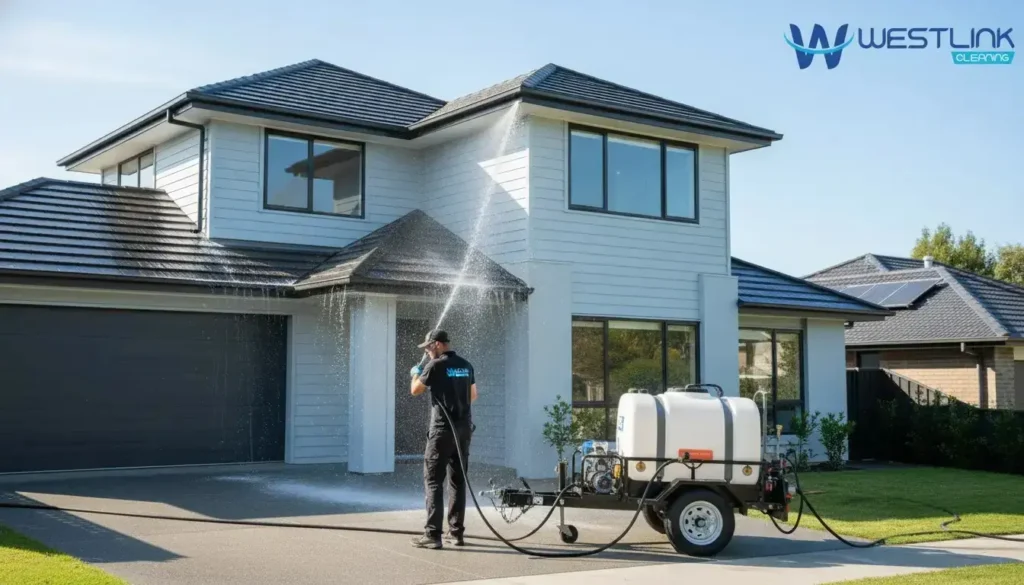
Soft washing extends the life of roofs and exterior paint by removing algae, moss, mould, lichen, dirt, and salt with low pressure, which helps clean delicate surfaces without the damage risk linked to aggressive pressure washing. Roofs and painted exteriors do not wear out from age alone. They also deteriorate faster when moisture, biological growth, and surface residue stay on the surface for long periods.
That is why the cleaning method matters. A harsh wash can create avoidable damage, while the right low-pressure cleaning process helps remove contamination without putting unnecessary stress on shingles, coatings, or painted finishes. For surfaces that need treatment and control rather than force, soft washing is often the better maintenance option.
What Is Soft Washing?

Soft washing is a low-pressure exterior cleaning method that uses a suitable treatment solution and gentle rinsing instead of strong water force. It is designed for surfaces that need to be cleaned carefully, including roofs, painted walls, render, weatherboards, coated metal, trims, and other delicate exterior finishes.
This matters because organic growth is not the same as loose dirt. Algae, mould, moss, and lichen attach to the surface and often keep spreading if they are only rinsed off lightly. A proper soft wash is meant to treat the growth and clean the surface with less risk of surface damage. For a more detailed explanation of the method, see this guide on when soft washing is best for roof cleaning.
Why Does Soft Washing Help Roofs Last Longer?

Soft washing helps roofs last longer because it removes harmful buildup without stripping or stressing the roof’s outer protective layer. Roof surfaces are exposed to rain, dust, spores, debris, and changing weather conditions every day. When algae, moss, and grime remain in place, the roof stays dirtier, holds moisture longer, and becomes harder to maintain properly.
This is especially important on roofs with a protective outer surface, such as asphalt shingles, painted metal, coated panels, and roof tiles. When the roof is cleaned too aggressively, the outer layer can be disturbed. That can reduce the surface protection the roof depends on and make it more vulnerable to faster wear.
Soft washing supports roof life in practical ways:
- removes black streaks and organic staining before they become heavier
- reduces moss and grime that can trap debris and moisture
- avoids the force that can damage fragile roof finishes
- helps keep the roof easier to inspect and maintain over time
A roof that is cleaned correctly is not only better looking. It is also easier to manage before small issues become expensive ones.
Why Does Soft Washing Help Exterior Paint Last Longer?

Soft washing helps exterior paint last longer by removing contaminants before they stain the finish, support mold growth, or add stress to the paint film. Exterior paint is not only decorative. It also acts as a protective layer for the surface underneath. When mould, dirt, salt, pollution film, and organic residue remain on painted exteriors, the finish becomes harder to maintain and may age faster.
This is where low-pressure cleaning becomes valuable. Soft washing removes buildup without the rough treatment that can mark, weaken, or dull the paint surface. In many cases, a painted exterior looks tired because it is dirty, not because it has fully failed. Correct cleaning can improve the surface and help delay unnecessary repainting.
Soft washing helps painted exteriors by:
- removing mould, mildew, and grime before staining deepens
- reducing the need for harsh scrubbing
- helping the finish stay cleaner between repainting cycles
- making it easier to tell the difference between surface dirt and true paint failure
If the paint is still sound, cleaning can be a smart maintenance step before larger coating problems develop. For official information on mould and moisture, the EPA mould and moisture guide is a useful reference.
How Do Algae, Moss, Mould, and Grime Shorten Surface Life?
Algae, moss, mould, and grime shorten surface life because they are active surface problems, not harmless stains. They change the condition of the surface while they remain there. On roofs, algae causes black streaking and moss can build up in damp sections. On painted exteriors, mould and residue can remain in shaded or sheltered areas and become harder to remove over time.
This buildup creates a maintenance problem in two ways. First, it affects the appearance of the roof or wall. Second, it keeps the surface in a dirtier and often wetter condition, which makes the finish harder to preserve. The longer contamination is left in place, the more likely it is that cleaning becomes harder, patchier, or more risky later.
That is why soft washing is best viewed as preventative maintenance, not just cosmetic cleaning. Public health guidance also explains why moisture control matters when mould is present. See the CDC mould guidance for general background.
Why Is Soft Washing Better Than Pressure Washing for Roofs and Painted Exteriors?
Soft washing is usually better than pressure washing for roofs and painted exteriors because delicate surfaces need controlled cleaning, not force. Pressure washing can be useful on some hard exterior surfaces, but roofs and painted finishes usually need a gentler approach.
Here is the practical difference:
| Cleaning method | Main cleaning action | Best suited to | Main risk |
| Soft washing | Treatment plus low-pressure rinse | Roofs, painted walls, render, coated metal, trims | Wrong solution or poor runoff control |
| Pressure washing | High-force water impact | Some concrete, pavers, and harder outdoor surfaces | Surface damage on shingles, coatings, paint, and delicate finishes |
The right question is not which method feels stronger. The right question is which method cleans the surface while protecting the material. For roofs and painted exteriors, that answer is often soft washing. For harder exterior surfaces, readers can browse the full range of cleaning services to compare methods.
Which Roofs and Painted Surfaces Benefit Most From Soft Washing?
The surfaces that benefit most from soft washing are the ones that can be damaged by aggressive cleaning or that commonly collect biological growth and staining. These usually include:
- asphalt shingle roofs
- tiled roofs
- slate roofs
- painted metal roofs
- coated roof panels
- painted weatherboards
- render and painted masonry
- fibre cement cladding
- soffits, fascias, and trims
- fences, gates, and garage doors
These surfaces have one thing in common. Their outer finish matters. If the top layer is damaged during cleaning, the surface may not perform or look the way it should afterwards.
What Signs Show That a Roof or Painted Exterior Needs Soft Washing?
The main signs are visible contamination, uneven staining, and surface dullness that rain or light rinsing does not remove. Common warning signs include:
- black streaks on roof shingles
- green patches on damp roof sections
- moss around shaded edges
- lichen spots on tiles
- mould marks on painted walls
- grime under gutters and eaves
- chalky-looking painted areas
- dirt film on sheltered exterior walls
- stains that return quickly after basic washing
These signs matter because they usually show that the surface is holding contamination rather than just looking dusty. The earlier the buildup is removed correctly, the better the chance of preserving the finish underneath.
What Does a Proper Soft Washing Process Usually Involve?

A proper soft washing process starts with inspection and surface matching before any treatment is applied. The method should match the material, the contamination level, and the condition of the surface.
A typical process includes:
- inspecting the roof or painted exterior
- identifying algae, mould, moss, lichen, dirt, or salt buildup
- checking whether the surface is still sound or already failing
- protecting nearby plants and surrounding areas
- applying a suitable treatment solution
- allowing enough dwell time for the buildup to break down
- rinsing gently and evenly
- reviewing whether cleaning is enough or whether repair is also needed
This order matters because good exterior cleaning should remove contamination without creating new problems.
How Often Should Roofs and Painted Exteriors Be Soft Washed?
The right cleaning interval depends on climate, shade, moisture, tree cover, exposure, and visible buildup. There is no single schedule that suits every property. Some surfaces stay cleaner for longer because rain washes them naturally. Others collect dirt, spores, moss, and staining faster because they are shaded, sheltered, or exposed to more surface contamination.
A practical approach is to inspect the roof and painted exterior at least once a year and clean earlier if black streaks, mould, moss, or visible residue begin to build up. The goal is not to clean on a rigid timetable. The goal is to remove buildup before it becomes established enough to shorten the life of the surface. General mould prevention advice from the NSW Government also supports early moisture control.
Can Soft Washing Fix Peeling Paint or Roof Damage?
No, soft washing cannot fix peeling paint, cracked tiles, lifted shingles, rotten trim, or failed coatings. Soft washing is a cleaning and maintenance method. It is not a repair method.
This distinction is important. A surface can look dirty and still be sound, which means cleaning may be enough. But if the paint is already flaking or bubbling, or if the roof has material failure, cleaning will not solve the underlying problem. In those cases, repair, restoration, or repainting may be needed after the surface is cleaned.
When Should You Stop DIY Cleaning and Hire a Professional?

You should stop DIY cleaning when height, roof condition, slipperiness, or chemical handling create a safety or damage risk. This is especially true when the property is multi-storey, the roof is steep, the buildup is heavy, or the surface finish looks fragile.
Professional help is the safer option when:
- the roof is steep or difficult to access
- the shingles, tiles, or coating look weathered
- moss, lichen, or mould buildup is heavy
- nearby plants and outdoor areas need careful runoff control
- you are unsure which treatment is safe for the surface
- the paint is already chalky, peeling, or blistering
A professional approach is not only about convenience. It is also about protecting the surface from avoidable damage.
Final Answer
Yes, soft washing can extend the life of roofs and exterior paint when it is used correctly and before contamination causes deeper wear. It does this by removing algae, mould, moss, lichen, dirt, and residue without the unnecessary force that can damage shingles, granules, paint films, or coated surfaces.
In simple terms, soft washing helps protect the surface by cleaning it in a way that supports the material instead of stressing it. If your roof or painted exterior already shows black streaks, mould, moss, or visible surface buildup, early cleaning is often the smarter option than waiting until the finish looks badly affected.
Frequently Asked Questions
1. What is soft washing?
Ans. Soft washing is a low-pressure cleaning method that uses treatment solutions and gentle rinsing instead of strong water force.
2. How does soft washing help roofs last longer?
Ans. It removes algae, moss, and grime without damaging the roof’s outer surface.
3. How does soft washing help exterior paint last longer?
Ans. It removes mold, dirt, and residue before they stain or stress the paint film.
4. Is soft washing better than pressure washing for roofs?
Ans. Yes. It is usually safer for roofs because it cleans without harsh force.
5. Is soft washing safe for painted exterior surfaces?
Ans. Yes, when the method and solution match the surface and paint condition.
6. Can soft washing remove black roof streaks?
Ans. Yes. It is often used to remove black streaks caused by algae and other buildup.
7. What signs show that a roof needs soft washing?
Ans. Common signs include black streaks, moss, lichen, green patches, and visible grime.
8. What signs show that painted exterior walls need soft washing?
Ans. Look for mold marks, dirt film, dull patches, and stains under gutters or eaves.
9. How often should roofs and painted exteriors be soft washed?
Ans. It depends on moisture, shade, and buildup, but yearly inspection is a practical guide.
10. Can soft washing fix peeling paint or roof damage?
Ans. No. It cleans the surface, but it does not repair damaged paint or roofing materials.


