

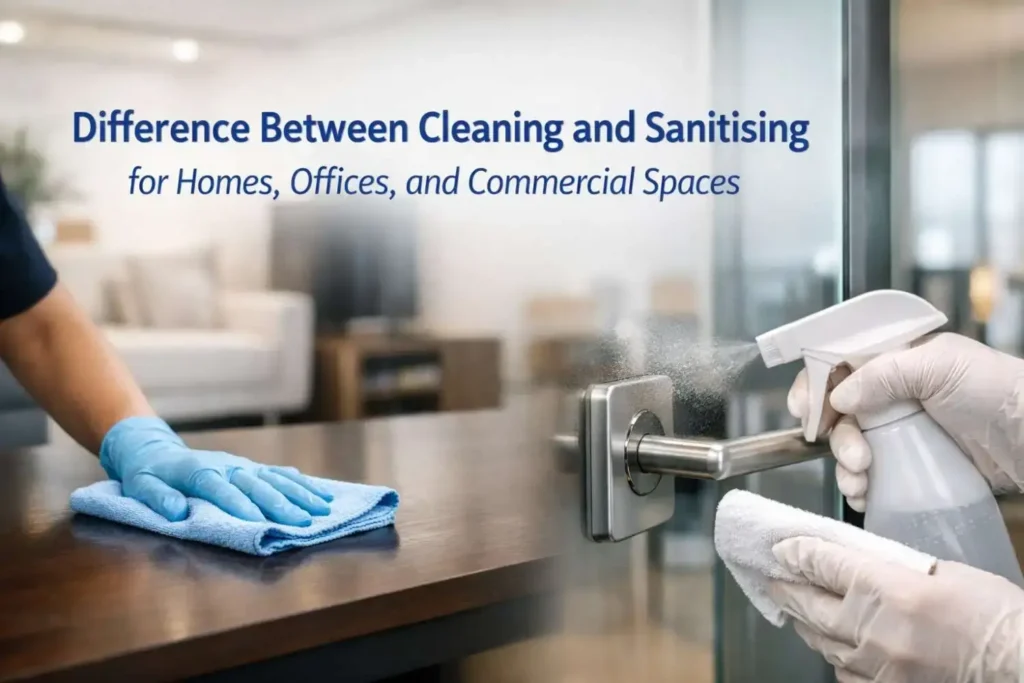
Cleaning removes visible dirt, grease, dust, and residue from surfaces. Sanitising reduces germs on cleaned surfaces to a safer level. Cleaning is the first step. Sanitising is the second step when higher hygiene control is needed.
This difference matters because homes, offices, strata buildings, commercial sites, and commercial kitchens do not need the same cleaning scope. A house usually needs routine soil removal, bathroom cleaning, kitchen cleaning, and surface resetting. An office usually needs workstation cleaning, washroom cleaning, kitchen cleaning, floor care, and high-touch surface attention. A strata building usually needs common-area cleaning, lift cleaning, entry cleaning, stair rail cleaning, and waste-point cleaning. A commercial kitchen needs a stricter clean-then-sanitise sequence for food-contact surfaces.
What is the difference between cleaning and sanitising?
Cleaning removes soil and residue. Sanitising reduces germs after cleaning. Cleaning is a physical removal process. Sanitising is a hygiene-control process. Cleaning improves appearance and reduces contamination. Sanitising further lowers germ levels on surfaces that need more hygiene control, such as food-contact areas, touchpoints, and shared amenities.
Cleaning and sanitising must follow the correct sequence for proper hygiene. A surface should always be cleaned first because grease, dust, food residue, and other contaminants can lower the effectiveness of the sanitiser. This is why official hygiene guidelines recognise cleaning and sanitising as two separate steps in surface hygiene and food safety practices.
Cleaning vs sanitising: key comparison
The table below summarises the operational difference between cleaning and sanitising for service planning.
| Factor | Cleaning | Sanitising |
| Primary goal | Remove dirt, grease, dust, and residue | Reduce germs to a safer level |
| When it happens | First | After cleaning |
| Main outcome | A cleaner-looking and less contaminated surface | Higher hygiene control on a cleaned surface |
| Typical areas | Floors, desks, bathrooms, kitchens, glass | Food-contact surfaces, handles, taps, switches, shared touchpoints |
| Best use case | Routine property maintenance | Higher-risk or higher-contact surfaces |
What is cleaning?

Cleaning is the removal of visible soil, residue, and general buildup from a surface. It includes dust removal, grease removal, floor soil removal, stain removal, and waste removal. It helps improve presentation, control odors, reduce residue, and lower the amount of contamination present on a surface.
Cleaning usually includes vacuuming, mopping, bathroom cleaning, kitchen surface cleaning, dusting, glass wiping, workstation wiping, and rubbish removal. Examples include vacuuming carpets, mopping hard floors, wiping desks, cleaning toilets, cleaning sinks, cleaning mirrors, and removing kitchen grease. These tasks form the base of most house cleaning, office cleaning, strata cleaning, and commercial cleaning programs.
What is sanitising?

Sanitising is the reduction of germs on a cleaned surface to a safer level. It is used after cleaning, not instead of cleaning. A sanitiser works on a clean surface more effectively because the chemical can contact the surface directly instead of being blocked by dirt, grease, or food residue.
Sanitising is more relevant on surfaces with more hand contact, more food contact, or more shared use. Examples include kitchen benches, food-preparation surfaces, door handles, light switches, taps, toilet fixtures, meeting tables, lift buttons, and reception counters. In food businesses, utensils, equipment, and food-contact surfaces must be kept both clean and sanitary.
Why does cleaning always come before sanitising?
Cleaning must always come before sanitising because residue can reduce how well a sanitiser works. Dirt, grease, food waste, and dust create a barrier between the sanitiser and the surface, which lowers the overall hygiene result. That is why official guidance explains that surfaces should be cleaned first and sanitised afterward, where needed.
This sequence also affects service quality in real settings. For example, a kitchen bench with grease buildup is not ready to be sanitised, and a desk covered with dust and fingerprints cannot be properly treated with hygiene spray alone. The correct approach is to remove visible dirt and buildup first, then sanitise selected surfaces when the site requires a higher level of hygiene control.
Which surfaces usually need more hygiene attention?

Frequently touched surfaces usually need more hygiene attention than low-touch surfaces. NSW Health lists surfaces such as doorknobs, handles, light switches, phones, touch screens, tables, remote controls, keyboards, desks, toilets, and sinks as frequently touched surfaces that should receive regular attention.
Research literature supports this focus on touchpoints. A peer-reviewed review on high-touch surfaces reported contamination by bacteria, viruses, yeasts, and parasites, which supports the practical cleaning priority given to repeated-contact surfaces in shared environments.
The main examples for property cleaning are consistent across service types:
- door handles
- lift buttons
- handrails
- taps
- light switches
- desks
- meeting tables
- toilet flush points
- kitchen benches
- shared counters
Cleaning vs sanitising in homes
Homes usually need routine cleaning first and targeted sanitising second. Most houses and apartments need floor cleaning, bathroom cleaning, kitchen cleaning, dust removal, and general surface wiping as the core service. CDC guidance states that routine cleaning is often sufficient in normal home settings, while sanitising or disinfecting is more useful in specific situations.
In residential cleaning, the surfaces that may justify added sanitising include kitchen preparation areas, handles, switches, taps, toilets, and other frequently touched items. Examples include kitchen counters, bathroom taps, toilet buttons, remote controls, and shared desks. This is the practical distinction for house cleaning clients: standard cleaning manages soil and residue, while targeted sanitising supports higher hygiene expectations.
Cleaning vs sanitising in offices and workplaces

Offices need both presentation cleaning and touchpoint hygiene control. Office cleaning is not limited to visible tidiness. It also supports staff comfort, workplace standards, and client impression. Westlink’s office cleaning service covers workstations, meeting rooms, reception areas, kitchens, bathrooms, floors, carpets, internal glass, and high-touch points.
Sanitising is more relevant in offices because many people touch the same surfaces during the day. Examples include shared desks, meeting tables, door handles, taps, toilet fixtures, kitchen benches, and reception counters. Public-health guidance treats frequently touched surfaces as higher-priority cleaning points in shared environments. This means an office scope should be built around actual traffic, layout, and shared amenities rather than a generic checklist.
Cleaning vs sanitising in commercial spaces
Commercial spaces need a site-specific mix of cleaning and sanitising. Commercial cleaning is broader than office cleaning because it can include retail premises, industrial sites, warehouses, restaurants, clinics, and mixed-use buildings. Westlink’s commercial cleaning service is positioned around site-specific programs, documented checklists, quality checks, and flexible scheduling across Sydney.
In commercial spaces, cleaning usually controls floor soil, visible grime, washroom condition, waste points, glass marks, and overall presentation. Sanitising becomes more relevant where staff and visitors share surfaces, where food is handled, or where hygiene failures can affect operations. Examples include counters, terminals, handrails, lift controls, staff kitchens, and shared amenities.
Cleaning vs sanitising in strata common areas

Strata cleaning requires routine common-area cleaning plus closer attention to shared touchpoints. Shared residential buildings include entry doors, intercoms, lift buttons, rails, mail areas, shared laundries, and other common surfaces touched by multiple residents and visitors. NSW Health guidance recommends regularly cleaning frequently touched common-area surfaces with detergent, followed by disinfectant, and it also recommends providing hand sanitiser where appropriate.
For strata cleaning, this means corridors, lobbies, lifts, stairs, glass, floors, and amenities should be cleaned routinely, while shared touchpoints should receive more focused hygiene attention. Westlink’s strata pages already describe common-area cleaning across lobbies, hallways, staircases, elevators, and outdoor areas, which aligns with this service logic.
Where commercial kitchen cleaning is different

Commercial kitchens require a stricter clean-then-sanitise process for food-contact surfaces. Food businesses must keep utensils, equipment, and food-contact surfaces in a clean and sanitary condition under Australian food-safety guidance. This is more specific than general room cleaning because the sequence, surface type, and product suitability matter more in food-handling settings.
Examples of commercial kitchen surfaces include prep benches, cutting surfaces, utensils, sinks, splash zones, handles, cool-room touchpoints, and service counters. Westlink’s commercial kitchen cleaning page is positioned for restaurants, hotels, aged-care kitchens, schools, and catering hubs, which makes this distinction commercially relevant for the page.
Is sanitising the same as disinfecting?
No. Cleaning removes soil, sanitising reduces germs to a safer level, and disinfecting kills most remaining germs with stronger chemicals. CDC guidance separates these three actions and states that surfaces should be cleaned before either sanitising or disinfecting.
This clarification matters because users often confuse the terms. The page topic should remain “cleaning vs sanitising” because that is the main search intent, but a short disinfecting explanation improves topical completeness and reduces ambiguity for readers comparing hygiene service levels.
Conclusion
Cleaning and sanitising are different but connected processes. Cleaning removes dirt, dust, grease, and residue from surfaces. Sanitising reduces germs after cleaning has already been completed. The correct service depends on the property type, the level of daily use, the surfaces involved, and the hygiene expectations of the space.
For homes, the main need is usually routine cleaning with added attention to kitchens, bathrooms, and frequently touched points. For offices, the right approach combines presentation cleaning with hygienic attention to shared surfaces. For strata buildings, common areas and shared touchpoints require a more targeted plan. For commercial kitchens, a stricter clean-and-sanitise sequence is necessary for food-contact surfaces.
FAQs
1. What is the main difference between cleaning and sanitising?
Cleaning removes visible dirt, dust, grease, spills, and residue from surfaces. Sanitising reduces germs on surfaces after cleaning.
2. Does sanitising replace cleaning?
No. Cleaning comes first because dirt, grease, and residue reduce the effectiveness of sanitising products.
3. When is cleaning enough on its own?
Cleaning is often enough when the main issue is dust, dirt, floor marks, bathroom grime, kitchen residue, or general untidiness in homes, offices, and low-risk commercial areas.
4. When is sanitising more important?
Sanitising is more important on high-touch and food-contact surfaces such as kitchen benches, taps, switches, handles, toilet fixtures, meeting tables, and reception counters.
5. Why should cleaning always come before sanitising?
Cleaning should come first because residue blocks sanitiser contact with the surface and reduces the hygiene result.
6. Which areas in a home may need sanitising after cleaning?
Kitchens, bathrooms, and frequently touched surfaces may need sanitising after cleaning, including taps, handles, switches, toilet buttons, and kitchen prep areas.
7. Which office surfaces usually need more hygiene attention?
Shared desks, meeting tables, kitchen benches, taps, toilet fixtures, door handles, lift buttons, and reception counters usually need more hygiene attention.
8. Is sanitising necessary in commercial kitchens?
Yes. Food-contact surfaces in commercial kitchens must be kept both clean and sanitary, so they usually need a stricter clean-then-sanitise process.
9. Is sanitising the same as disinfecting?
No. Sanitising reduces germs to a safer level, while disinfecting uses stronger chemicals to kill more germs on surfaces.
10. How do I choose the right cleaning service for my property?
Choose the service based on the property type, surface condition, traffic level, and hygiene needs. Homes, offices, strata sites, and commercial kitchens all need different cleaning scopes.


