

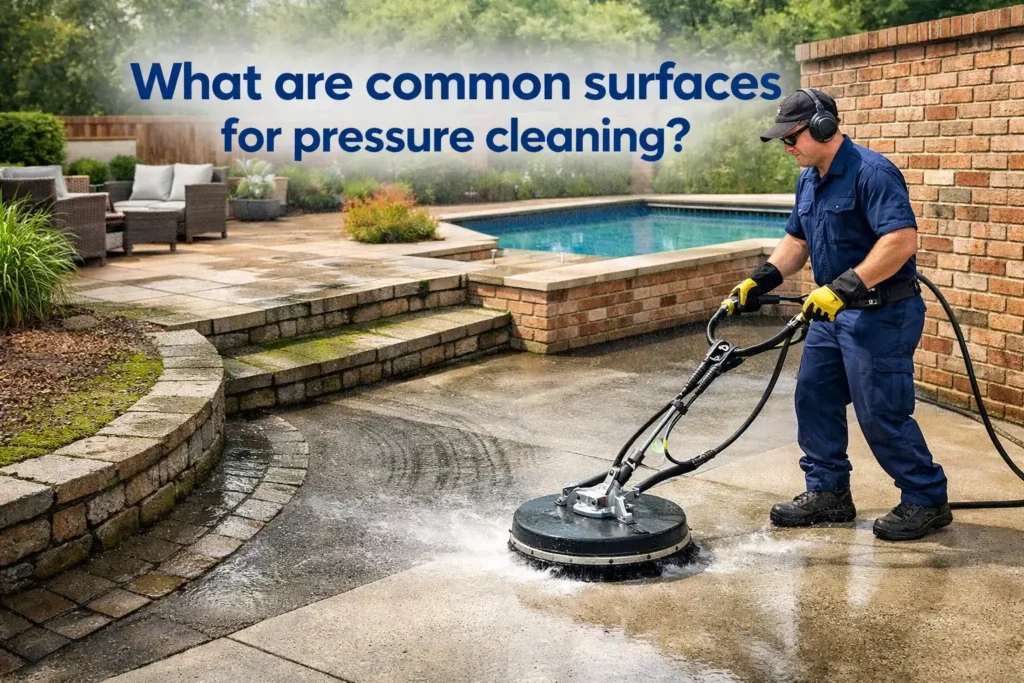
Pressure cleaning is suitable for durable exterior hard surfaces such as concrete driveways, pavers, patios, stairs, retaining walls, garage floors, and pool surrounds. Painted, sealed, weathered, or fragile surfaces often need lower pressure or a soft washing method instead.
Common surfaces for pressure cleaning are durable exterior hard surfaces that collect dirt, algae, mould, traffic film, grease, and weather-related buildup. These surfaces usually include concrete driveways, footpaths, pavers, patios, brick walls, retaining walls, stairs, garage floors, pool surrounds, and commercial exterior hard surfaces. Moisture supports mould growth, algae on walkways increase slip risk, and hard surfaces often need physical soil removal to restore appearance and traction.
Which surfaces are usually pressure-cleaned?

The most common pressure-cleaned surfaces are hard outdoor surfaces with visible soil buildup and low tolerance for manual-only cleaning. Examples include:
- concrete driveways
- concrete paths and walkways
- pavers
- patios
- outdoor entertaining areas
- brick walls
- retaining walls
- stairs
- garage floors
- loading areas
- commercial forecourts
- shared strata common areas
- pool surrounds
- exterior tiled surfaces
Surface suitability table
| Surface | Common contamination | Usual cleaning goal | Method note |
| Concrete driveways | tyre marks, mud, algae, mildew, leaf stain | restore appearance, improve traction | usually suitable for pressure cleaning |
| Paths and walkways | dirt, algae, traffic film, moss | reduce slip risk, improve presentation | usually suitable for pressure cleaning |
| Pavers | grime, weeds, organic staining, joint residue | lift surface soil, refresh paved areas | pressure must be controlled |
| Patios | food residue, drink spills, mould, algae | improve usability and presentation | method depends on finish |
| Brick walls | dust, mildew, cobwebs, runoff marks | remove visible staining | older mortar needs caution |
| Retaining walls | soil splash, algae, dark streaks | improve appearance and maintenance | material type matters |
| Stairs and entries | dirt, rain residue, algae | improve safety and first impression | high-priority service area |
| Garage floors | oil marks, tyre residue, dust | improve cleanliness and function | some stains need treatment beyond water |
| Pool surrounds | sunscreen residue, algae, wet grime | improve safety and cleanliness | tile and grout condition matter |
| Commercial hard surfaces | traffic soil, spills, waste-related grime | improve presentation and access safety | runoff control is essential |
Can concrete driveways and paths be pressure cleaned?

Yes. Concrete driveways and paths are among the most common surfaces for pressure cleaning because they are durable, exposed, and contamination-prone. These areas collect tire residue, mud, dust, leaf staining, algae, and general traffic soil. In damp or shaded zones, algae and moss increase slip risk, which makes cleaning a safety issue as well as a presentation issue.
Concrete cleaning should stay tied to the use case. Concrete pressure cleaning is relevant before property presentation, routine maintenance, lease turnover, inspections, and exterior refresh work. The value is surface restoration, not generic washing.
Can pavers and paved walkways be pressure cleaned?

Yes. Pavers can be pressure cleaned, but the pressure level and spray control must match the paving condition. Pavers collect dirt, weeds, organic growth, and staining in joints and textured faces. They often look dull because contamination settles into the surface and between the units.
Paver cleaning should remain condition-based. Loose joints, weak edges, aged paving, and prior repairs need a more controlled approach. The reason is simple: water pressure that is too aggressive can disturb surface integrity and joint stability. Preservation guidance for masonry shows that excessive pressure and water can dislodge loose mortar and force water deeper into the assembly, which supports a careful substrate-first approach.
Can patios and outdoor entertaining areas be pressure cleaned?

Yes. Patios and outdoor entertaining areas are common pressure-cleaning surfaces because they accumulate daily-use residue and moisture-related growth. Examples include food spills, drink marks, dust, mould, algae, and cobwebs. Algae commonly grows on patios and shaded surfaces, and algae on walkways is a known slipping hazard.
The outcome is not only cleaner paving but also a cleaner, safer, and more usable outdoor area for daily living, guests, and property presentation.
Can brick walls and boundary walls be pressure cleaned?

Yes. Brick walls and boundary walls can be pressure cleaned, but surface age and mortar condition must be checked first. These walls collect dust, runoff staining, algae, mildew, and cobwebs over time. Cleaning improves the visual condition of the frontage and the whole property.
The method must match the substrate. National Park Service preservation guidance states that inappropriate cleaning can damage masonry and that high-pressure water blasting can damage sensitive masonry surfaces. That is why a contractor should assess the brick face, mortar joints, and any preexisting deterioration before cleaning begins.
Can retaining walls be pressure-cleaned?
Yes. Retaining walls are frequently pressure cleaned because they sit close to soil, runoff, and damp shaded zones. These conditions support algae, staining, and dark streaking. Retaining wall cleaning is usually relevant where the wall affects the look of the yard, driveway edge, strata common area, or commercial frontage.
The material still determines the method. Concrete, masonry, rendered finishes, and coated walls do not respond identically to water pressure. The correct process starts with material identification, then pressure selection.
Why are stairs, entries, and access points high-priority surfaces?

Stairs, entries, ramps, and high-traffic access points are high-priority pressure-cleaning surfaces because they affect both first impressions and slip safety. These areas collect rain residue, dirt, traffic film, algae, and daily-use contamination. Oregon State University guidance notes that moss on sidewalks is a slipping hazard and that algae on walkways is also a slipping hazard.
For homes, strata properties, offices, clinics, retail shops, and apartment entries, cleaner access points support safer movement and better presentation.
Can garage floors and hardstand areas be pressure cleaned?

Yes. Garage floors, service yards, and hardstand areas are commonly pressure cleaned because they collect oil residue, tyre marks, dust, and workshop-related grime. These are functional surfaces, but they still influence property cleanliness and usability.
A service page should also state the limit clearly. Pressure cleaning removes a large amount of surface soil, but some oil and grease contamination may need treatment beyond water pressure alone. This keeps the copy accurate and avoids overpromising.
Can pool surrounds and external tiled areas be pressure cleaned?

Yes. Pool surrounds and external tiled areas are commonly pressure cleaned because they stay wet and collect slippery residue. Typical buildup includes algae, dirt, sunscreen residue, and general outdoor grime. Moisture supports mould growth, and algae on wet walkways increases slip risk, so cleaning these surfaces is both a maintenance task and a safety task.
The method should still match the tile finish, the grout condition, and the surrounding drainage conditions.
Are commercial exterior hard surfaces suitable for pressure cleaning?

Yes. Commercial exterior hard surfaces are common pressure-cleaning targets because they carry heavier visible soil loads and stronger presentation requirements. Examples include entrances, footpaths, service yards, loading zones, bin areas, forecourts, and shared external circulation areas.
Commercial cleaning also has an environmental control requirement. NSW EPA states that wash runoff must not enter stormwater drains and should be managed through an approved wash-down arrangement or treatment process. That makes runoff control part of the service method, not an afterthought.
Which surfaces may need lower pressure or soft washing instead?
Painted, sealed, weathered, fragile, or moisture-sensitive surfaces often need lower pressure or a soft washing method instead of standard pressure cleaning. Examples include painted timber, weathered wood, delicate cladding, older masonry, some sealed finishes, and surfaces with weak joints.
The reason is material sensitivity. National Park Service guidance states that waterblasting above 600 psi is not recommended for paint removal on exterior wood because it can force water into the woodwork and damage finishes. The same body of preservation guidance states that high-pressure water over 400 psi can damage sensitive masonry in historic contexts. These figures do not create a universal rule for every modern surface, but they show why substrate matching matters.
Why does method selection matter?
Method selection matters because the wrong pressure, nozzle, spray angle, chemistry, or runoff plan can damage the surface or create a compliance issue. Pressure cleaning is effective, but it is only effective when the method matches the material and the site.
The main technical risks are consistent:
- surface etching
- paint damage
- joint disruption
- mortar wear
- water intrusion around openings
- unnecessary wear on delicate finishes
- uncontrolled runoff entering stormwater drains
These risks are supported by preservation and environmental guidance. National Park Service documents warn that excessive water pressure can damage wood and masonry or force water deeper into assemblies, while NSW EPA states that wash runoff must not enter stormwater drains.
How should a surface be assessed before pressure cleaning?
A surface should be assessed in a fixed sequence before pressure cleaning starts.
- Identify the material.
- Check the surface condition.
- Identify the contamination type.
- Choose the pressure range and nozzle pattern.
- Plan wastewater control and runoff direction.
This instruction sequence matters because material, contamination, and drainage all affect the final result. NSW EPA guidance makes runoff control mandatory in wash-down activity, and preservation guidance shows that incorrect water pressure can damage sensitive materials.
When is pressure cleaning the right choice?
Pressure cleaning is the right choice when the surface is durable, exterior-facing, and holding visible contamination that standard washing will not remove efficiently. Typical examples include:
- dirty driveways
- stained footpaths
- algae-affected outdoor concrete
- weathered pavers
- slippery stairs
- grimy patios
- dirty brickwork
- outdoor areas before sealing, painting, or presentation work
The service value is clear. Pressure cleaning improves appearance, supports traction, removes built-up soil, and prepares exterior surfaces for further maintenance.
When is lower pressure or soft washing the better choice?
Lower pressure or soft washing is the better choice when the surface is delicate, painted, aged, weak-jointed, or more likely to absorb water or suffer finish damage. This includes painted timber, fragile masonry, delicate cladding, and weathered coated surfaces.
This is the more accurate commercial message. Not every exterior surface should be cleaned the same way. The better service promise is method matching, not maximum pressure.
Why choose Westlink Cleaning Services for pressure cleaning?
Westlink Cleaning Services should position this service around assessment first, method second, and cleaning outcome third. That structure is more trustworthy and more conversion-focused than generic blog language. It keeps the copy aligned with a real service decision: which surfaces can be pressure cleaned safely, which surfaces need lower pressure, and which sites need runoff control.
A strong service promise for this page is simple. Westlink assesses the surface, selects the correct method, controls runoff, and cleans the area according to material type, contamination level, and property use.
Conclusion
Common surfaces for pressure cleaning are durable outdoor hard surfaces that hold visible contamination and benefit from controlled high-pressure cleaning. Concrete driveways, paths, pavers, patios, brick walls, retaining walls, stairs, garage floors, pool surrounds, and commercial exterior hard surfaces usually fit this category. Painted, sealed, weathered, or fragile surfaces often need lower pressure or soft washing instead. The correct result depends on surface assessment, method selection, and runoff control.
FAQs
What are the most common surfaces for pressure cleaning?
The most common surfaces for pressure cleaning are concrete driveways, footpaths, pavers, patios, stairs, retaining walls, brick walls, garage floors, pool surrounds, and commercial exterior hard surfaces.
Can all outdoor surfaces be pressure cleaned?
No. Some outdoor surfaces can be pressure cleaned safely, while painted, fragile, sealed, or weathered surfaces often need lower pressure or soft washing.
Are pavers safe to pressure clean?
Yes. Pavers are usually safe to pressure clean if the joint condition, edge stability, and spray control are checked first.
Why are stairs and walkways priority areas?
Stairs and walkways are priority areas because algae and moss on walking surfaces increase slip risk.
What is the difference between pressure cleaning and soft washing?
Pressure cleaning is used on more durable hard surfaces, while soft washing or lower-pressure cleaning is used where the surface is more fragile or more likely to be damaged by stronger pressure.
Why does runoff control matter in pressure cleaning?
Runoff control matters because wash water must not enter stormwater drains during washing activity.
Why does surface type matter before cleaning starts?
Surface type matters because material strength, finish condition, joint condition, and water sensitivity determine the safe cleaning method.


