

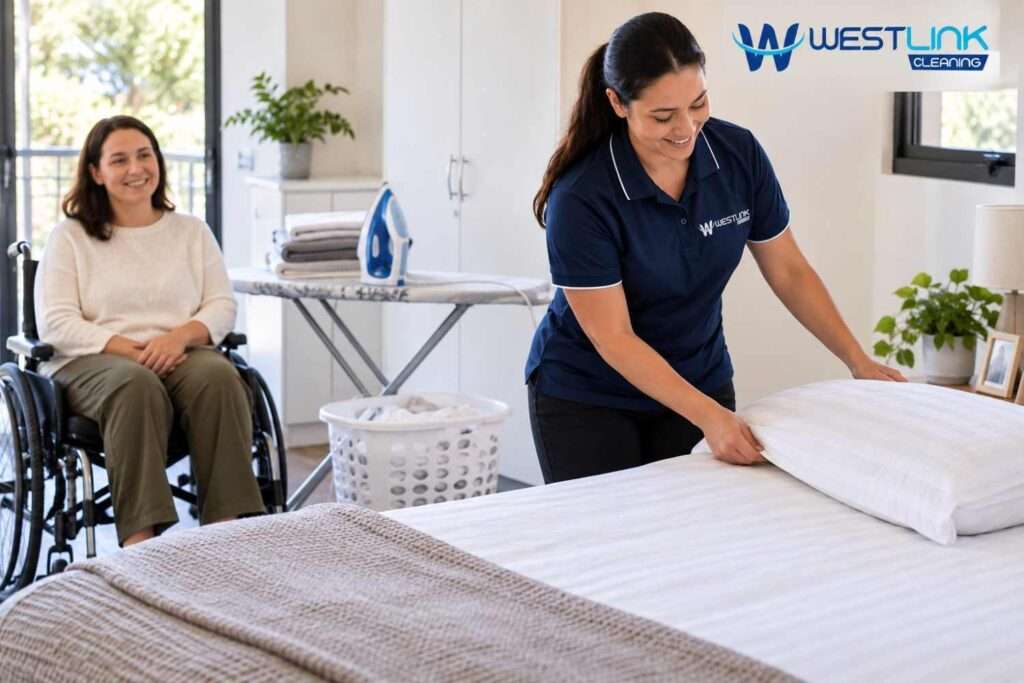
Laundry, ironing, and bed-linen changes may be included as part of NDIS-funded household assistance when a participant’s disability affects their ability to complete these tasks safely, consistently, or independently. However, the NDIS does not fund household chores simply because someone would prefer extra help. The support must relate to the person’s disability-related needs and meet the NDIS reasonable and necessary criteria.
For example, a participant who cannot safely lift wet laundry, change bed sheets due to mobility limitations, or use an iron because of reduced grip strength may need household assistance related to their disability. The decision depends on the person’s individual circumstances, functional ability, goals, and approved NDIS plan.
This guide explains how NDIS support may apply to laundry, ironing, and linen tasks, the situations where these requests are more likely to be considered, what information can support a request, and common mistakes to avoid when discussing household assistance.
Whether you are an NDIS participant, family member, carer, or support coordinator, understanding the difference between ordinary household responsibilities and disability-related support needs can help you have clearer conversations about the assistance required.
Understanding What NDIS Cleaning Support Covers

NDIS cleaning support is generally provided through Core Supports, usually under the Assistance with Daily Life category when a participant needs help with disability-related household tasks. This may include assistance with cleaning, laundry, meal preparation, or household organisation when a disability affects a person’s ability to complete these activities safely and independently.
The purpose of this support is not to replace normal household responsibilities. Instead, NDIS funding aims to reduce the impact of a person’s disability, help maintain a safe living environment, and support greater independence in daily life.
The difference between a personal preference and an NDIS support need depends on the impact of the disability. A task may be considered for support when conditions such as reduced mobility, chronic pain, fatigue, reduced strength, or cognitive difficulties make completing the task unsafe, difficult, or limit a person’s independence.
Are Laundry Services Covered Under NDIS Cleaning?

Laundry assistance may be included as part of NDIS household support when a participant’s disability affects their ability to complete tasks such as washing, drying, sorting, folding, or managing clothes safely and independently.
Examples of situations where laundry support may be considered include:
- Physical limitations, where a participant cannot safely lift wet washing, load a machine, carry laundry baskets, or reach a clothesline.
- Mobility difficulties, where standing, bending, or moving around during laundry tasks causes pain, fatigue, or safety concerns.
- Fatigue-related conditions, where completing a multi-step task like laundry significantly affects the person’s ability to manage other daily activities.
- Chronic health conditions, where reduced strength, pain, or limited endurance makes repetitive laundry tasks difficult to manage.
- Cognitive challenges, where remembering steps, following a laundry routine, or completing cycles safely becomes difficult.
The key factor is the connection between the disability and the task. For example, assistance with operating a washing machine due to reduced hand strength or helping manage heavy bedding due to mobility limitations is different from receiving laundry help simply because someone prefers not to complete the task.
Can NDIS Funding Cover Ironing Clothes?

Ironing may be considered as part of NDIS household assistance when a participant’s disability affects their ability to complete the task safely or independently. Unlike basic laundry tasks such as washing and drying clothes, ironing often requires a clearer connection between the task and the person’s disability-related needs.
Ironing support may be considered when:
- A participant needs assistance preparing clothing for work, medical appointments, or community participation goals, and their disability makes completing the task difficult or unsafe.
- Reduced grip strength, tremors, weakness, or limited coordination make handling a hot iron unsafe.
- Cognitive, sensory, or memory difficulties affect a person’s ability to manage iron temperature, timing, or safety steps.
Ironing is less likely to relate to NDIS support when it is based only on personal preference, appearance, or a desire for a particular household standard. The key consideration is whether the disability creates a genuine barrier that affects the person’s safety, independence, or ability to participate in daily activities.
Are Bed-Linen Changes Included in NDIS Cleaning Support?
Bed-linen tasks such as changing sheets, washing bedding, making beds, and managing linen may be considered as part of NDIS household assistance when a participant’s disability affects their ability to complete these tasks safely or independently.
Changing bed linen can involve more physical effort than many people realise. Tasks such as bending, reaching, lifting mattresses, and handling heavy wet bedding may become difficult for participants with mobility limitations, reduced strength, chronic pain, fatigue, or other functional challenges.
For some participants, maintaining regular linen changes may also be important because disability-related needs affect hygiene management. For example, a person with continence-related needs, skin sensitivity, or limited ability to complete household tasks may require assistance to maintain a safe and suitable living environment.
The key consideration is not the bed-linen task itself, but whether the participant’s disability creates a genuine barrier that affects their safety, independence, or ability to manage daily living activities.
Laundry and Linen Support vs General Housekeeping: Understanding the Difference
The difference between ordinary household responsibilities and NDIS household assistance is not the task itself. The key factor is whether a participant’s disability affects their ability to complete the task safely, independently, or consistently.
| Task | Usually a normal household responsibility | May be considered as disability-related support |
| Laundry (washing/drying) | Managing washing independently as part of everyday home tasks | Assistance needed because disability affects lifting, mobility, strength, memory, or ability to complete the process safely |
| Ironing | Ironing clothes based on personal preference or appearance | Assistance needed because grip limitations, tremors, sensory challenges, or safety risks affect the ability to use an iron |
| Bed making | Making a bed as part of a normal daily routine | Support needed because pain, fatigue, mobility limitations, or reduced strength make the task difficult |
| Changing sheets | Changing linen as part of regular household maintenance | Assistance needed because bending, lifting, reaching, or handling bedding creates safety concerns |
| General cleaning | Routine cleaning that most households manage themselves | Support needed because disability affects a person’s ability to maintain a safe and suitable home environment |
| Household organisation | General tidying or arranging belongings | Assistance needed where disability-related challenges affect safety, routines, accessibility, or daily functioning |
Every participant’s situation is assessed individually. The focus is not whether a task is considered “cleaning” or “housework”, but whether the person’s disability creates a genuine need for assistance that supports daily living and independence.
Examples of Situations Where Laundry Support May Be Relevant

Laundry support is usually considered based on how a person’s disability affects their ability to complete everyday tasks safely and independently. The following examples show situations where assistance with laundry may be relevant:
Mobility limitations: A participant who uses a wheelchair may have difficulty reaching laundry equipment, carrying clothing, or accessing a clothesline safely. Assistance may help them manage these tasks while maintaining independence.
Recovery-related limitations: A participant recovering from an injury or medical procedure may temporarily have difficulty lifting laundry baskets, bending, or completing repetitive household tasks. The impact on daily functioning is the key consideration.
Reduced strength: A person with reduced muscle strength may struggle to handle heavy wet clothing, towels, or bedding safely, increasing the risk of strain or injury without assistance.
Cognitive challenges: A participant with cognitive difficulties may need support with remembering laundry steps, following routines, or completing tasks safely and consistently.
Fatigue-related limitations: Someone experiencing significant fatigue may find that completing laundry uses energy needed for other essential daily activities, such as personal care, appointments, or meal preparation.
Safety concerns: A participant who has difficulty managing heat, appliances, or safety steps due to their disability may need assistance to complete tasks involving equipment such as an iron or washing machine safely.
These examples do not mean a particular diagnosis automatically qualifies someone for NDIS support. The important factor is the connection between the person’s disability, the difficulty they experience, and the assistance needed to maintain daily living and independence.
What Evidence Can Support a Request for Household Cleaning Assistance?

When discussing NDIS household cleaning assistance, it helps to explain how a person’s disability affects their everyday tasks rather than only naming a diagnosis. Information about functional impact can show why support is needed and how it helps the participant maintain safety and independence.
Useful information may include:
- Functional impact details, explaining which household tasks are difficult, unsafe, or harder to complete independently, such as managing laundry, changing bed linen, or maintaining household routines.
- Professional input, such as recommendations from an occupational therapist, physiotherapist, or treating professional that describe how the disability affects daily activities.
- A personal explanation, including what challenges occur, how much effort a task requires, and what happens when the person cannot complete it without assistance.
- Examples of daily impact, such as increased fatigue after household tasks, difficulty managing essential routines, or safety risks when attempting certain activities alone.
The strongest explanations connect a specific household task with a specific disability-related barrier. For example, explaining that reduced grip strength makes handling laundry difficult is more useful than only stating a diagnosis. This helps show how assistance supports the participant’s daily living needs and independence.
Common Mistakes When Asking About NDIS Laundry Support

When discussing NDIS laundry or household cleaning support, one of the biggest challenges is explaining the connection between the task and the impact of a person’s disability. Some common mistakes include:
- Only explaining the diagnosis. A diagnosis can provide context, but it is important to explain how the condition affects everyday activities, such as managing laundry, changing linen, or completing household routines safely.
- Not describing the functional impact. Requests are clearer when they explain what makes a task difficult, unsafe, or harder to complete independently, rather than only naming the condition.
- Listing tasks without explaining the reason for support. Simply requesting “laundry” or “ironing” does not explain why assistance is needed. A stronger explanation connects the task with a specific barrier, such as reduced strength, limited mobility, fatigue, or cognitive difficulties.
- Assuming every household task is automatically covered. NDIS support is based on individual circumstances. A participant may need assistance with one household task but manage another independently, depending on how their disability affects daily living.
For example, saying “I need help with laundry because I have reduced grip strength and cannot safely lift wet clothing” provides more useful information than simply saying “I need someone to do my laundry.”
How Cleaning Providers Usually Help With Laundry and Linen Tasks
NDIS cleaning providers usually begin by understanding the participant’s needs, approved supports, and the household tasks where assistance is required. The goal is to provide support that matches the participant’s circumstances while respecting their choices, routines, and independence. Participants looking for professional assistance can learn more about available NDIS cleaning services and how providers can support disability-related household tasks.
Understanding needs: A provider will usually discuss which tasks are difficult, what type of assistance is needed, how often support is required, and what the participant wants to achieve from the service.
Agreeing tasks: The participant and provider can discuss the tasks included in the service arrangement, ensuring the support delivered aligns with the participant’s approved NDIS supports and agreed goals.
Providing assistance: Support may involve completing certain tasks, providing guidance, or helping the participant do as much as they can safely manage themselves. For example, a worker may assist with sorting laundry, handling heavier items, or setting up routines that make household tasks easier.
Supporting dignity and independence: Many providers use a person-centred approach that focuses on maintaining the participant’s independence, preferences, and confidence. This may include adapting how tasks are completed, using easier-to-manage equipment, or finding safer ways for participants to stay involved in their household routines.
Conclusion
Laundry, ironing, and bed-linen changes may be considered for NDIS household assistance when a participant’s disability affects their ability to complete these tasks safely and independently. The key factor is not the task itself, but how the disability impacts daily living and the person’s need for support.
Every participant’s situation is assessed individually. Clearly explaining the connection between the disability, the household task, and the support needed can help show how assistance improves safety, independence, and everyday life. Westlink Cleaning Services provides support with disability-related household tasks by focusing on participant needs, approved supports, and maintaining independence through personalised assistance.
Frequently Asked Questions
1. Does NDIS pay for laundry services?
NDIS may fund laundry assistance when a participant’s disability affects their ability to complete laundry tasks safely or independently, and the support meets the requirements of their approved plan. The reason for support must relate to disability-related needs rather than simply wanting help with household chores.
2. Can an NDIS support worker wash my clothes?
A support worker may assist with tasks such as washing, drying, sorting, or folding clothes when these tasks are included as part of the participant’s approved household assistance. The type of support provided depends on the participant’s needs, goals, and service arrangement.
3. Is ironing included in NDIS cleaning?
Ironing may be considered when a disability creates a barrier, such as difficulty using an iron safely due to reduced grip strength, tremors, or cognitive challenges. It is less likely to relate to NDIS support when it is only based on personal preference or appearance.
4. Can NDIS funding cover changing bed sheets?
Changing bed sheets may be considered when a participant’s disability makes tasks such as bending, lifting, reaching, or handling bedding difficult or unsafe. The important factor is the impact of the disability on completing the task, not the task itself.
5. Are household chores covered by NDIS?
NDIS does not automatically fund all household chores. Household tasks may be supported when they are connected to a participant’s disability-related needs and meet the reasonable and necessary criteria.
6. Can I use Core Supports for cleaning assistance?
Cleaning and household assistance may be funded through Core Supports under Assistance with Daily Life when the support is included in the participant’s plan and relates to their disability-related needs. The exact supports available depend on each participant’s circumstances.
7. Does everyone with NDIS funding receive cleaning support?
No. Having an NDIS plan does not automatically mean a participant receives cleaning or laundry assistance. Support depends on individual functional capacity, goals, and whether household assistance is considered reasonable and necessary.
8 . What cleaning tasks are not usually covered by NDIS?
Tasks that are not connected to a participant’s disability-related needs are generally not considered NDIS supports. Examples may include cleaning for personal preference, preparing a home for an event, helping other household members, or general tasks that the participant can reasonably manage independently.
9. Does NDIS cover washing bedding?
NDIS may cover assistance with washing bedding when a participant’s disability affects their ability to manage heavy or physically demanding laundry tasks. This may include challenges with lifting bulky bedding, using laundry equipment, or maintaining regular household routines.
10 . Does NDIS pay for ironing?
NDIS may fund ironing assistance when there is a clear disability-related reason for needing help. Ironing based only on personal preference or wanting clothes to look a certain way is less likely to relate to NDIS support needs.


