

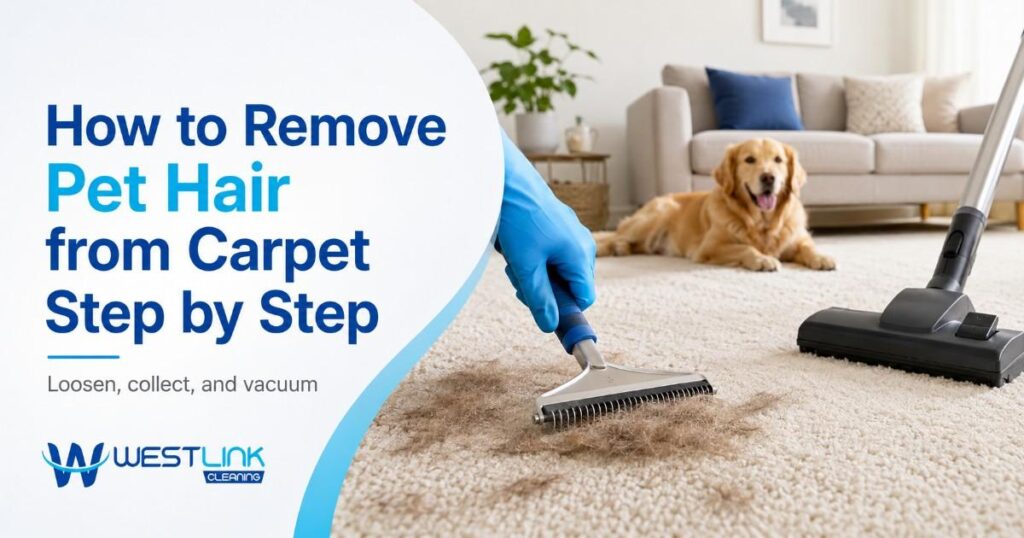
Pet hair is one of the most frustrating carpet problems for dog and cat owners in Sydney. Loose fur often sits on the surface, but fine hairs quickly become trapped between carpet fibres, especially in high-traffic areas where footsteps push hair deeper into the pile.
The best way to remove pet hair from carpet depends on how much hair has accumulated, the carpet type, and the tools available. Simple solutions such as vacuuming, carpet rakes, rubber tools, and lint rollers work well for regular maintenance, while heavily embedded hair requires deeper cleaning methods.
This guide explains how to remove pet hair from carpet, why hair becomes difficult to remove, the tools that work best, mistakes to avoid, and when professional carpet cleaning becomes the better option.
Why Pet Hair Gets Trapped in Carpet Fibres

Pet hair does not simply sit on top of carpet. Carpet fibres create thousands of small spaces where fur, dust, and pet dander collect over time.
Several factors make pet hair harder to remove:
- Static electricity: Dry carpet fibres attract lightweight pet hair and hold it in place.
- Carpet pile height: Thick or high-pile carpets trap more fur compared with low-pile carpets.
- Foot traffic: Walking across carpet presses loose hair deeper into the fibres.
- Pet shedding: Dogs and cats that shed heavily create a constant buildup of fur.
- Dirt and oils: Pet hair mixed with dust, skin oils, and debris becomes harder to lift.
Dog hair and cat hair also behave differently. Dog hair is usually longer and easier to see, while cat hair is finer and more likely to become embedded inside carpet fibres.
Understanding the type of buildup helps determine whether a quick surface clean is enough or whether deeper carpet cleaning is needed.
Learn more about available Carpet cleaning services in Sydney for homes dealing with stubborn carpet problems.
How to Remove Pet Hair from Carpet in Sydney Step by Step

The most effective pet hair removal process in Sydney starts by loosening trapped hair before vacuuming. Vacuuming alone often removes surface fur but struggles with hair stuck deep inside carpet fibres.
Follow these steps:
1. Prepare the Carpet Area
Before removing pet hair:
- Pick up toys, furniture items, and loose objects.
- Move lightweight furniture where possible.
- Remove large debris from the carpet surface.
- Check corners, edges, and areas where pets regularly sleep.
Pet hair usually collects around furniture, along skirting boards, and in places where animals rest.
2. Loosen Embedded Hair
Use a tool that creates friction against the carpet fibres.
Helpful options include:
- Carpet rakes
- Rubber gloves
- Rubber squeegees
- Pet hair brushes
The goal is to lift trapped hair toward the surface rather than forcing it deeper.
3. Vacuum Slowly and Thoroughly
After loosening the hair, vacuum the carpet slowly.
For better results:
- Vacuum in multiple directions.
- Use a pet hair attachment when available.
- Empty the vacuum container regularly.
- Clean filters to maintain suction.
Fast vacuuming often removes only loose debris while leaving embedded pet hair behind.
Use a Vacuum Cleaner With a Pet Hair Attachment
A vacuum cleaner remains one of the most useful tools for ongoing pet hair removal.
Pet-focused vacuum features include:
- Strong suction power
- Motorised brush rolls
- Special pet hair attachments
- HEPA filtration systems
The brush roll helps separate hair from carpet fibres, allowing suction to remove more fur.
For best results, avoid rushing across the carpet. Slow passes give the vacuum more time to collect hair trapped between fibres.
Vacuuming works best as regular maintenance. Heavy pet hair buildup usually requires additional agitation before vacuuming.
Use a Carpet Rake

A carpet rake is designed to pull trapped pet hair from carpet fibres.
The rubber or bristle surface grabs hair and brings it together into visible clumps that are easier to collect.
Carpet rakes work especially well for:
- Pet sleeping areas
- Carpet corners
- High-traffic zones
- Carpets with embedded fur
Use gentle pressure when raking. Aggressive scraping can damage delicate carpet fibres.
Try a Rubber Squeegee, Rubber Gloves or Lint Roller
Rubber tools work because friction and static attraction help gather pet hair.
Rubber Gloves

Put on clean rubber gloves and run your hands across the carpet surface. Hair usually gathers into small piles that are easy to remove.
A slightly damp glove increases collection, but avoid making the carpet wet.
Rubber Squeegee

A rubber squeegee works similarly to a carpet rake by pulling hair together.
It is useful for:
- Large carpet sections
- Pet resting areas
- Hair stuck near carpet edges
These methods are affordable and helpful for small areas that need targeted cleaning.
Use a Lint Roller

Lint rollers are useful for quick pet hair removal.
They work best on:
- Small carpet areas
- Rugs
- Furniture surfaces
- Carpet edges
A lint roller is convenient for removing visible hair but is not designed for deeply embedded fur across large carpet areas.
Regular replacement of adhesive sheets keeps the roller effective.
Use Baking Soda Before Vacuuming

Baking soda is commonly used during carpet maintenance because it helps freshen carpet surfaces and loosen light debris.
A basic approach:
- Sprinkle a small amount over the carpet.
- Allow it to sit briefly.
- Vacuum slowly.
Baking soda does not physically remove all trapped pet hair. It works better as a supporting step combined with brushing and vacuuming.
Avoid using excessive amounts, as leftover powder can affect vacuum performance.
Use Fabric Softener Carefully
Fabric softener is sometimes used as a pet hair removal aid because it helps reduce static between fibres and hair.
A diluted solution is typically applied lightly before vacuuming.
Important precautions:
- Test on a hidden carpet area first.
- Avoid soaking carpet fibres.
- Follow carpet manufacturer recommendations.
Too much moisture or product residue creates additional cleaning problems.
Use Pet Hair Removal Tools
Specialised pet hair tools are designed to target fur that normal household cleaning tools miss.
Examples include:
- Pet hair brushes
- Hair removal blocks
- Rubber cleaning tools
- Carpet grooming tools
The best tool depends on the carpet type and amount of shedding.
A combination approach usually provides better results than relying on one tool alone.
How to Remove Different Types of Pet Hair
Removing Dog Hair From Carpet
Dog hair removal usually requires attention in areas where pets spend the most time.
Common problem areas include:
- Pet beds
- Living room carpets
- Hallways
- Entry areas
A carpet rake or rubber tool helps lift longer strands before vacuuming.
Heavy-shedding dogs usually require more frequent carpet maintenance because loose fur quickly spreads throughout the home.
Removing Cat Hair From Carpet
Cat hair is usually finer and more difficult to collect because small strands become tightly attached to carpet fibres.
Effective methods include:
- Rubber gloves
- Carpet rakes
- Slow vacuuming
- Pet hair brushes
Extra attention is needed around sleeping areas, furniture edges, and corners where cats commonly rest.
Pet Hair Removal Mistakes Sydney Homeowners Should Avoid
Some cleaning methods create more problems instead of solving them.
Avoid these mistakes:
Vacuuming Too Quickly
Fast vacuum passes leave trapped hair behind. Slow movement gives the machine time to lift and collect fur.
Using Only Vacuuming for Heavy Hair Buildup
Vacuuming is important, but deeply embedded hair usually requires agitation first.
Scrubbing Carpet Too Aggressively
Hard brushing or scraping damages carpet fibres and affects appearance.
Applying Too Much Water
Excess moisture creates drying problems and increases the risk of residue buildup.
Ignoring Vacuum Maintenance
Dirty filters and full vacuum containers reduce suction performance.
How to Prevent Pet Hair Building Up in Carpet

Preventing buildup is easier than removing large amounts of trapped fur.
Helpful habits include:
Regular Vacuuming
Frequent vacuuming removes loose hair before it becomes embedded.
Groom Pets Regularly
Brushing pets reduces the amount of loose fur released around the home.
Clean Pet Bedding
Pet beds collect large amounts of hair and should be cleaned regularly.
Use Mats Near Entry Points
Mats help reduce dirt and debris entering carpeted areas.
Schedule Routine Carpet Maintenance
Regular cleaning helps maintain carpet appearance and hygiene, especially in homes with multiple pets.
For professional home cleaning support, explore Residential Carpet Cleaning.
When to Hire Professional Carpet Cleaners in Sydney

DIY methods work well for everyday pet hair removal, but some situations require professional equipment.
Professional carpet cleaning is worth considering when:
- Pet hair remains after repeated vacuuming.
- Carpet has strong pet odours.
- Fur is deeply embedded in the fibres.
- Pets regularly use the same carpet areas.
- A rental property requires detailed cleaning before inspection.
Professional cleaners use specialised equipment designed to remove deeper contamination from carpet fibres.
Methods such as Carpet steam cleaning use powerful extraction processes to remove trapped dirt, debris, and residues that normal household tools struggle to reach.
Choosing professional cleaning also helps extend carpet life by removing buildup that contributes to fibre wear.
Frequently Asked Questions About Removing Pet Hair From Carpet
How do I remove pet hair from carpet without a vacuum?
Rubber gloves, carpet rakes, lint rollers, and rubber squeegees help collect pet hair manually. These methods work best for smaller areas, while large carpet sections usually require vacuuming.
Why does my vacuum leave pet hair behind?
A vacuum might leave pet hair behind when the hair is deeply embedded, the suction is reduced, the filter is blocked, or the wrong attachment is being used.
What is the best tool for removing dog hair from carpet?
A combination of a carpet rake and a vacuum with a pet hair attachment usually provides the best results because the rake loosens hair and the vacuum collects it.
Does baking soda remove pet hair from carpet?
Baking soda helps freshen carpet and loosen some debris, but it does not remove all embedded pet hair. Brushing and vacuuming remain necessary.
How do you remove cat hair from carpet?
Cat hair is fine and often sticks tightly to carpet fibres. Rubber gloves, carpet rakes, and slow vacuuming help lift and remove it.
Can professional carpet cleaning remove pet hair?
Professional carpet cleaning equipment removes deeper dirt and trapped debris that household tools often leave behind. The process is especially useful for carpets with heavy pet hair buildup.
How much does professional carpet cleaning cost?
The cost depends on factors such as carpet size, condition, number of rooms, and cleaning requirements. Read more about Carpet cleaning cost in Sydney to understand common pricing factors.
How long does carpet cleaning take?
Cleaning time depends on the number of rooms, carpet condition, and cleaning method used. Find more details about how long carpet cleaning take.
Final Thoughts on Removing Pet Hair From Carpet
Removing pet hair from carpet becomes much easier when the right method is matched with the level of buildup.
Regular vacuuming, carpet rakes, rubber tools, and pet hair brushes help manage everyday shedding. Homes with heavy pet hair, odours, or deeply trapped fur benefit from professional cleaning methods that reach deeper into carpet fibres.
A consistent maintenance routine keeps carpets cleaner, improves indoor comfort, and reduces the effort needed for future cleaning.
For professional carpet care and cleaning support, visit Westlink Cleaning Services for more information.


