

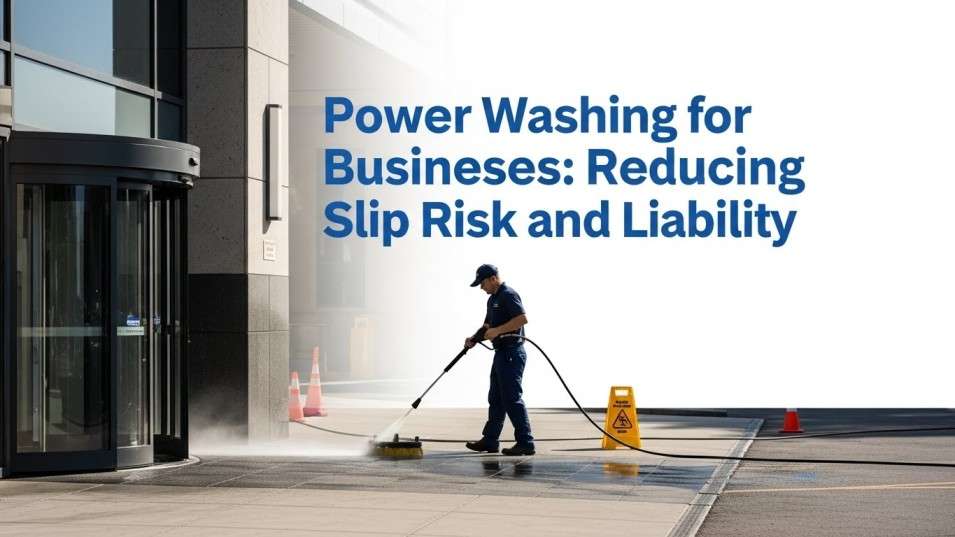
As a commercial cleaning specialist with over 13 years of experience, I have seen how neglected outdoor and entry surfaces can quickly become high-cost slip hazards. Regular power washing for businesses reduces risk by removing algae, mould, mildew, grease, gum, and other contaminants that cut traction on walkways, entrances, ramps, and car parks. It supports WHS and OHS obligations by showing active hazard control, improves safety confidence for staff and customers, and can lower exposure to claims, legal disputes, and preventable incident costs when paired with proper equipment, training, and insurance.Insights from industry operators and research point to a practical prevention approach: keep surfaces clean and slip-resistant, address wet-weather and seasonal growth early (including hot water methods for oils and stubborn residues), design out hazards where possible through drainage and maintenance, and respond fast to spills and debris. As a content hub, this topic connects naturally to deeper guides on workplace injury prevention,pressure cleaning methods, and liability control, with supporting articles like DIY vs professional power washing and slip-resistant surface maintenance.
Why Power Washing Matters for Business Safety

Slips happen fast. A wet floor or mossy path turns a routine walk into an emergency room visit. For businesses, this means downtime, claims, and reputational hits. Power washing changes that. It uses high-pressure water to strip away slip-causing buildup, making surfaces safer.
Consider the stats: Falls account for 43% of injury hospitalizations in Australia, with slips as a top culprit. Globally, similar patterns show businesses facing billions in costs. Power washing targets root causes like biofilm and grease, improving surface traction and preventing incidents.
From my experience, restaurants and retail stores see the biggest wins. Grease from kitchens or dirt from foot traffic creates hazards. Regular washing keeps these areas compliant and safe.
Key Benefits: Safety, Savings, and Compliance
Power washing delivers more than clean looks. It builds a safer workplace.

1. Enhanced Workplace Safety
Power washing removes slip hazards like algae buildup and mold. These grow in damp spots, turning smooth surfaces slick. Blasting them away restores natural grip.
In high-traffic zones, like entrances or carparks, it prevents accidents. Tappt notes that full OHS compliance, including public liability insurance, starts with clean surfaces. This ties into broader injury prevention, where clear walkways boost employee morale and reduce absenteeism.
2. Cost Savings from Reduced Liability
Slip-and-fall claims hurt the bottom line. Average payouts range from $40,000 to $100,000 per incident, with total costs exceeding $1.28 billion annually. Power washing cuts these risks and can help support lower insurance premiums.
A quick cost-benefit example: a mid-sized business spends $5,000 yearly on professional washing. If it prevents one $50,000 claim, the ROI is clear. Factor in avoided medical bills and lost productivity, and the savings add up fast.
3. Regulatory Compliance and Peace of Mind
Laws demand safe environments. Safe Work guidelines stress eliminating hazards at the design stage, like slip-resistant floors and proper drainage. Power washing supports this by maintaining surfaces and reducing slippery buildup.
The Building Codes Board (ABCB) requires slip-resistant standards for stairs, ramps, and landings under the National Construction Code (NCC). Neglect here can invite fines. Businesses show due diligence through regular cleaning, helping avoid legal trouble.
| Benefit | Description | Impact |
| Safety Boost | Removes contaminants like mildew and oil | Lowers fall rates by up to 50% in treated areas |
| Cost Reduction | Prevents claims and downtime | Saves $40k+ per avoided incident |
| Compliance | Meets WHS and NCC rules | Reduces fines and audits |
How Power Washing Works: Methods and Equipment
Power washing blasts surfaces with pressurized water, often heated, to remove dirt.

1. Core Methods
Cold water washing suits light grime. Hot water or steam, as Alpha CPS suggests, dissolves tough oil and gum—ideal for cooler months when moss thrives.
Soft washing uses lower pressure with chemicals for delicate areas, preventing damage while targeting biofilm removal.
2. Essential Equipment
Pros use commercial-grade washers (1,000 to 4,000 PSI) with nozzles for precision. Safety gear includes grip boots and eye protection.
Frequency matters: quarterly in humid spots where algae grows quickly due to weather. This keeps risks low without overdoing it.
Step-by-Step Process

1. Assess risks: Identify hazards like grease spots
Goal: Know what you are cleaning, what could go wrong, and what controls you need before you start.
- Do a 2-minute walk-through
- Start at the highest-traffic areas: entrances, ramps, stairs, loading zones, carparks, bin areas, and kitchen exhaust discharge zones.
- Look for “risk surfaces”: smooth tiles, sealed concrete, painted lines, metal drains, and ramps.
- Start at the highest-traffic areas: entrances, ramps, stairs, loading zones, carparks, bin areas, and kitchen exhaust discharge zones.
- Identify the contamination type (this drives your method)
- Grease/oil: dark stains, slippery feel, food court areas, kitchen back doors.
- Algae/mould/biofilm: green or black growth, shaded and damp corners, south-facing walls, areas that stay wet.
- Mud/dust/sand: construction edges, carparks, stormwater tracks.
- Chewing gum / sticky residue: walkways and retail strips.
- Grease/oil: dark stains, slippery feel, food court areas, kitchen back doors.
Read it in more detail: What are pressure washing chemicals?
- Spot high-risk conditions
- Poor drainage or pooling water.
- Uneven surfaces, cracks, trip hazards.
- Electrical risks: outdoor power points, signage wiring, pumps.
- Public exposure: pedestrians, vehicles, nearby businesses, children.
- Poor drainage or pooling water.
- Decide your controls before you touch the trigger
- Exclude people from the work zone (cones, tape, signage).
- Plan runoff direction so you do not wash contaminants into drains.
- Select pressure and nozzle based on surface and soil type (start low, test first).
- Exclude people from the work zone (cones, tape, signage).
Quick checklist
- What’s the main contaminant (grease, algae, dirt)?
- Where are the slip zones (ramps, entries, painted lines)?
- Where will the water run?
- Who could enter the area during cleaning?
2. Prepare: Clear clutter, protect plants
Goal: Create a safe workspace, prevent damage, and control overspray and runoff.
- Clear and secure the area
- Move mats, furniture, bins, signage, trolleys, and loose items.
- Sweep or blow off loose debris first (pressure washing loose grit can scratch surfaces).
- Move mats, furniture, bins, signage, trolleys, and loose items.
- Protect nearby surfaces and assets
- Cover or move: outdoor furniture, deliveries, electrical items, door thresholds, and sensitive finishes.
- Pre-wet surrounding areas if you plan to use detergents, so any overspray dilutes quickly.
- Cover or move: outdoor furniture, deliveries, electrical items, door thresholds, and sensitive finishes.
- Protect plants and landscaping
- Pre-rinse plants with clean water before applying any chemical.
- Keep chemical application controlled (low-pressure sprayer is safer than blasting).
- Rinse plants again after the wash.
- Pre-rinse plants with clean water before applying any chemical.
- Set up safety and traffic control
- Put a wet floor and work in progress signs well before the hazard zone.
- Use cones and barrier tape to form a clear boundary.
- If vehicles are involved, set a spotter or block access.
- Put a wet floor and work in progress signs well before the hazard zone.
- Prep equipment
- Check hoses for damage and secure connections.
- Confirm correct nozzle and pressure settings.
- Test the trigger gun and ensure you have stable footing.
- Check hoses for damage and secure connections.
Quick checklist
- Area cleared and swept
- Barriers and signs placed
- Plants protected (pre-rinse done)
- Runoff path planned
3. Wash: Apply pressure evenly
Goal: Remove contamination without damaging the surface or spreading the hazard.
- Start with a small test patch
- Choose an inconspicuous spot.
- Start with lower pressure and a wider fan tip.
- Confirm you are not etching concrete, stripping coatings, or damaging grout.
- Choose an inconspicuous spot.
- Pre-treat (recommended for grease and biofilm)
- Apply the right cleaner for the contamination:
- Degreaser for oils and food grease.
- Mould/algae treatment for biological growth.
- Degreaser for oils and food grease.
- Give it dwell time so chemistry does the heavy lifting.
- Do not let chemicals dry on the surface.
- Apply the right cleaner for the contamination:
- Use consistent technique
- Keep the nozzle at a steady distance from the surface.
- Use overlapping passes (like mowing a lawn).
- Work methodically from one end to the other to avoid missed strips.
- Use a surface cleaner attachment for large flat areas for more even results and less streaking.
Read it in more detail: Where power washing outperforms pressure cleaning.
- Keep the nozzle at a steady distance from the surface.
- Control splash and overspray
- Angle spray away from doors, windows, vents, and pedestrians.
- Avoid blasting directly into joints, cracks, or under door seals.
- Avoid aggressive pressure on painted lines and softer surfaces.
- Angle spray away from doors, windows, vents, and pedestrians.
- Do not “polish” a slippery surface
- Over-aggressive washing can remove texture or damage coatings, which can make surfaces worse.
- If traction is the goal, cleaning must remove film and grease without damaging the grip profile.
- Over-aggressive washing can remove texture or damage coatings, which can make surfaces worse.
Quick checklist
- Test patch completed
- Pre-treatment applied where needed
- Overlapping passes, even coverage
- Overspray controlled
4. Rinse and dry: Ensure no residue
Goal: Remove all loosened contaminants and chemical residue, then reduce the chance of a new slip hazard.
- Rinse thoroughly
- Rinse from the cleanest area toward the dirtiest runoff path.
- Keep rinsing until water runs clear and no foam remains.
- Pay extra attention to corners, grooves, and textured surfaces where residue hides.
- Rinse from the cleanest area toward the dirtiest runoff path.
- Manage runoff
- Do not let dirty water pool on walkways or ramps.
- Squeegee water toward a controlled collection point if needed.
- If you are working near drains, use barriers or capture methods where required.
- Do not let dirty water pool on walkways or ramps.
- Dry the area
- Use a squeegee on flat surfaces.
- Allow airflow and time for full drying before reopening.
- Keep signs up until the surface is dry and safe.
- Use a squeegee on flat surfaces.
Quick checklist
- No foam or slick feel remaining
- No pooling water
- Drying method used
- Area kept closed until safe
5. Inspect: Check traction improvement
Goal: Confirm the cleaning achieved safer grip and there is no new risk created.
- Visual inspection
- Look for remaining sheen or oily patches.
- Check edges, corners, and shaded zones where algae returns first.
- Look for remaining sheen or oily patches.
- Tactile check (simple and practical)
- With safe footwear, lightly test the surface.
- It should feel clean and “grippy,” not slick or soapy.
- With safe footwear, lightly test the surface.
- Confirm no damage
- No etched concrete lines, lifted coatings, damaged grout, or loosened pavers.
- No water forced into doorways or building gaps.
- No etched concrete lines, lifted coatings, damaged grout, or loosened pavers.
- Reopen safely
- Remove barriers only after the surface is dry.
- Replace mats or furniture once the area is stable and clean.
- Remove barriers only after the surface is dry.
- Record and improve (optional but powerful)
- Note what worked: chemical, dwell time, nozzle, attachments.
- Mark recurring problem zones and schedule preventive cleans before buildup returns.
- Note what worked: chemical, dwell time, nozzle, attachments.
Quick checklist
- No slick residue
- High-risk zones rechecked
- Surface intact (no etching or lifting)
- Safe to reopen
Regulations and Proof: Data-Backed Risk Management

Regulations guide safe practices. Safe Work Australia urges hazard identification, training, and safe work method statements (SWMS) for high-risk tasks.
Monash University reports show slips cause 59% of fall hospitalizations, with annual costs over $1.28 billion. ABCB recommends NCC updates for better standards on stairs and handrails.
Disclaimer: Always consult local laws; this isn’t legal advice.
Case Studies: Real-World Examples

Take a retail store. Humid weather fueled algae on their entrance ramp, leading to two slips in a year. After quarterly power washing, incidents dropped to zero. They saved $20,000 in claims and saw happier staff.
Comclean shares similar stories: clean exteriors protect investments and cut legal issues. Civil Craft highlights urban wins, clearing mould from footpaths for safer public areas.
These examples show power washing’s role in liability reduction strategies.
DIY vs Professional Power Washing: Tips and Trade-offs
DIY appeals for small jobs. Rent equipment, follow safety steps, but risks include improper pressure damaging surfaces.

Pros bring expertise, insurance, and efficiency. Pressure Cleaning Guys note pros cut risks better, showing safety dedication.
| Option | Pros | Cons |
| DIY | Cost-effective for minor tasks | Lacks expertise, potential for injury |
| Pro | Compliant, thorough results | Higher upfront cost |
Maintenance Plans: Long-Term Slip Prevention

Build a plan: Assess quarterly, wash as needed. In humid areas like Sydney, schedule more often.
Use AI-driven tools for smart timing—predict buildup based on weather data. This adds efficiency.
Include a risk assessment checklist:
- Check for algae/mold weekly.
- Test surface traction after rain.
- Document cleanings for audits.
- Train staff on spill response.
Connect to “Slip-Resistant Surface Maintenance” for ongoing tips.
Insurance impacts: Clean records lower premiums. Employee morale rises in safe spaces.
Conclusion
Power washing reduces slip risks and liability by keeping surfaces clean and compliant. It saves money, meets regulations, and protects people.
Ready to start? Contact a professional service for a free assessment. Invest today for a safer tomorrow.
As an expert in commercial cleaning, I recommend building this into your routine—it’s a smart move for any business.
FAQs
1. How often should businesses power wash to prevent slips?
Ans. Aim for quarterly washes, more in high-traffic or humid areas. Safe Work Australia stresses regular maintenance to eliminate wet floor hazards. In Sydney, where algae builds fast, every 2-3 months keeps traction high.
2. What regulations apply to slip prevention in businesses?
Ans. Follow Safe Work guidelines for hazard elimination and NCC standards from ABCB for slip-resistant surfaces. This includes good drainage and training to avoid falls.
3. Can power washing really reduce liability claims?
Ans. Yes, by removing contaminants like grease and mold. Monash studies show slips cost billions; prevention cuts claims by addressing root causes.
4. What’s the difference between power washing and pressure washing?
Ans. Power washing often includes heated water for tough grime, while pressure washing uses cold. Both improve surface traction, but hot works best for oil.
5. How does power washing improve workplace injury prevention?
Ans. It clears biofilm and debris, boosting grip. Pair with PPE like grip boots as backup, per Safe Work guidance.
6. Are there DIY tips for slip-resistant maintenance?
Ans. Yes, use mild detergents and scrub brushes for small areas. But pros ensure compliance and avoid damage.
7. What equipment do I need for commercial power washing?
Ans. Commercial units (1,000-4,000 PSI), nozzles, and safety gear. Westlink Services highlights training for safe use.
8. How much does a slip-and-fall accident cost a business?
Ans. Averages $40,000-$100,000 per claim, plus indirect costs like lost productivity.
9. Does power washing help with regulatory compliance?
Ans. Absolutely. It supports WHS duties by maintaining safe walkways, reducing audit risks.
10. What are common slip hazards in commercial spaces?
Ans. Wet floors, clutter, algae, grease. Power washing targets these for better risk assessment and prevention.


