

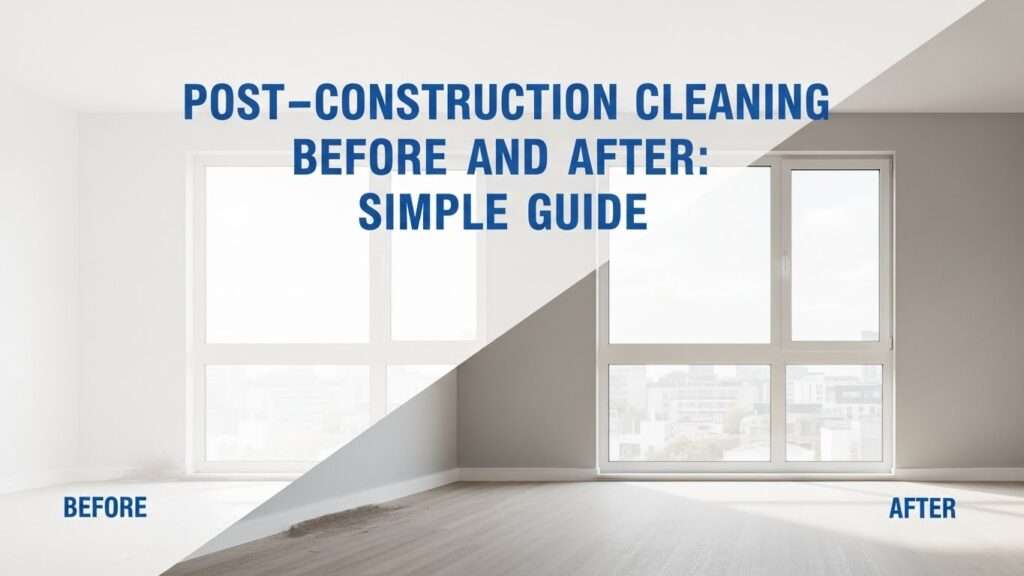
Post-construction cleaning is a specialized cleaning process done after a building project or renovation is finished, focusing on removing construction debris, fine dust, and leftover residue to ensure the space is safe, hygienic, and ready for use.
Unlike regular weekly cleaning, it targets the mess that construction creates, such as dust that keeps resettling, grit on floors, debris hidden in corners and tracks, paint splatter, grout haze, silicone smears, and sticky adhesive marks from protective films or tape.
This matters because fine dust can affect indoor air quality, especially for people with allergies or asthma, and grit can scratch new floors, tiles, timber, or glass if it is walked through or cleaned improperly.
To get the best result, post-construction cleaning is usually done in stages: a rough clean removes the bulk waste, packaging, and heavier dust so the site is safe and workable; a detailed clean focuses on edges and missed areas like skirting boards, frames, tracks, switches, fittings, and cabinetry while carefully removing light residue without damaging surfaces; and a final sparkle clean polishes high-visibility areas like glass, mirrors, bathrooms, benches, stainless steel, and floors, with floor cleaning completed in the correct order (vacuum first, then wash and finish) so grit is removed before any wet cleaning.
Residential and Commercial Post-Construction Cleaning: Before and After
Post-construction cleaning before and after for homes is the difference between a place that looks finished from far away and a home that is truly safe and ready to move into up close.
Before cleaning, you often see fine dust on high shelves and in corners, gritty floors that feel rough under your feet, dusty lines along skirting boards and cabinet edges, sticker marks and specks on windows, and kitchens or bathrooms that look new but still feel dusty or streaky because building residue is still there.
After a proper post-construction clean, the home feels finished: high dust is removed so it does not fall back down, corners and edges look sharp in sunlight, window tracks and sills are cleaned so dust does not keep returning, kitchen cleaning surfaces and handles feel clean to touch, bathrooms look fresh with clearer mirrors and shiny fittings, and floors look even and feel smooth because the grit is vacuumed up before washing.
Post-construction cleaning, before and after, for commercial sites is the difference between an almost-ready fit-out and a workplace that is ready for handover and opening day.
Before office cleaning, shops often have leftover packaging near entrances; dust on bulkheads and partition tops that keeps dropping onto desks and floors; fingerprints and sticker marks on glass that show under bright lights; dusty skirting lines and corners that look unfinished during inspections; and floors with dust film, streaks, or footprints across large areas.
After a professional commercial cleaning, the whole site looks consistent: walkways and front areas are cleared first for safety and first impressions, high dust is removed to stop it resettling, glass and partitions look clear from different angles, edges and borders are detailed so they look as clean as open spaces, bathrooms and tea points feel hygienic and ready for staff, floors look more even with less film, and a final quality check fixes small streaks and smudges so the site meets handover standards
Commercial Post-Construction Cleaning Before and After
Commercial post-construction floor clean before and after

Before
On the “before” side, the floor looks new, but it does not look finished.
You can see a light dusty film sitting on top of the metal plates, plus scuff lines and tracked marks where people and equipment have been moving through the space.
On this kind of textured metal flooring, dust and grit get trapped inside the pattern, so a quick mop usually just spreads it around.
That is why the surface looks dull and patchy, even if the site is almost complete.
After
On the “after” side, the same floor looks more even and more professional. The haze is gone, the texture looks cleaner, and the surface has a brighter, uniform finish.
The heavy marks are less noticeable because the grime layer has been removed, not just wiped over.
The space also looks safer and more ready for handover because there is less loose grit that can be tracked, kicked up into the air, or scratched into the surface during final site access.
Commercial warehouse post-construction floor clean before and after

Before
On the “before” side, the warehouse floor still looks like an active site.
You can see dark patches, drag marks, and a dusty film across the concrete, especially around the pallets and stacked materials.
This is typical after a fit-out or storage setup because forklifts, pallet jacks, boots, and moving cartons grind grit into the surface.
The floor ends up looking uneven, with dirty walk lines and scattered residue that make the whole area feel unfinished.
After
On the “after” side, the floor reads much cleaner and more open.
The surface looks lighter because the top layer of dust and grime has been lifted, not just pushed around.
The heavy staining is reduced, the walkways look clearer, and the space feels more ready for normal operations.
Even if some permanent wear remains, the main change is that the floor looks controlled and presentable, which is what matters most for a commercial handover.
Commercial fit-out floor polish before and after (lab or workshop)

Before
On the “before” side, the floor looks clean at first glance, but it has that cloudy, hazy layer that makes the whole surface look flat.
You can also see patchy areas where some sections look slightly different from others.
That usually happens during a fit-out because fine construction dust keeps settling, and people keep walking through while trades are still finishing.
The dust mixes with light moisture, footprints, and general site traffic, so instead of a clear finish, you get a dull film that hides the true color and makes the floor look inconsistent.
After
On the “after” side, the floor looks sharper and more professional.
The haze is gone, so the surface reflects the overhead lights more clearly, and the finish looks smoother.
The patchiness is reduced because the residue has been removed evenly across the whole area, not just in spots.
The result is a cleaner, more uniform look that feels “handover ready,” especially for a lab or workshop where a neat, controlled environment matters.
Commercial corridor post-construction floor restoration before and after

Before
On the “before” side, the corridor floor looks tired even though the space is new.
You can see a dull finish and a thin layer of grime that has built up during the final stages of the project.
Corridors take the most traffic on a site, so they collect dust, grit, and scuff marks from boots, ladders, trolleys, and tools.
The surface marks stand out because the light hits the floor in a long line, so any haze or streaking becomes more obvious.
At this stage, the floor is usually safe, but it still looks like a work zone rather than a completed commercial space.
After
On the “after” side, the floor looks brighter and more even. The main change is that the film and embedded dirt have been lifted properly, so the corridor has a cleaner, more consistent finish from end to end.
Machine work helps because it cleans the surface evenly across the full width, instead of leaving patchy areas or mop lines.
The corridor now looks presentation-ready, with clearer walk lines and a finish that suits handover, inspections, or opening day.
Commercial fit-out handover clean before and after (hallway or entry)

Before
On the “before” side, the space still feels like a job site. You can see packaging, paint buckets, and leftover materials sitting in the hallway or entry area.
That clutter usually means two things: trades have only just finished, and the final clean has not happened yet.
Along with the mess, there is usually a fine layer of builders’ dust on the floor and around the edges, even if it is not obvious from a distance.
In an entry or hallway, this stands out because it is the first area people walk through and the first place clients notice marks, footprints, and scattered debris.
After
On the “after” side, the area looks ready to hand over. The clutter is removed, the floor looks clean and even, and the space feels open instead of crowded.
A proper handover clean does not just tidy up; it resets the presentation. That means the dust is removed from the floor, edges look sharper, and the whole entry reads as finished.
This is the kind of result that supports inspections, tenant move-in, photos, and opening day because the space looks complete and professional.
Residential Post-Construction Cleaning Before and After
Residential kitchen post-construction clean before and after

Before
The kitchen is new, but it still looks like the build has just wrapped up. There is packaging and small leftover bits from installation, and that fine dust is still sitting around the space.
Even when the cabinets and benchtops are in, the dust film makes everything look a little dull, and the floor can feel gritty, so it does not feel ready to use yet.
After
Now it looks like a real finished kitchen. The clutter is removed, the dust is properly cleaned off surfaces, and the floor looks even and fresh.
The space feels clean, open, and ready for handover, so you can move in and start using it without the “site” feeling.
Living area post-construction clean before and after (floor protection removed)

Before:
The living area still looks like the job is in progress. Tools, boxes, and protective coverings are taking up space, and there is usually dust and small bits of site residue sitting on the floor from people moving in and out.
When floor protection is still down, it often hides what is really happening underneath, but the room still feels crowded and unfinished because the space is being used for storage and final touch-ups.
After:
Once everything is removed and the cleaning is done, the room finally looks like a living area again.
The floor is uncovered, cleaned, and looks more even because the dust film and tracked marks are gone.
With the clutter cleared, the space feels bigger, brighter, and ready for furniture, move-in, and normal daily use.
Yard waste removal before and after (property clean-up)

Before:
The yard is piled up with renovation or household waste, so the outdoor space is basically unusable.
A pile like this usually includes mixed items like timber offcuts, packaging, broken furniture, or general rubbish, and it quickly makes the whole area feel messy.
It can also create safety issues because it blocks walkways, attracts pests, and makes it harder to move around the property.
After:
Once the waste is removed, the yard instantly looks bigger and more organized. The area is open again, walkways are clear, and it feels safer to use.
Visually, it also lifts the whole property because the outside now looks clean, cared for, and ready for normal use.
Residential room handover clean before and after (wainscoting area)

Before:
The room looks like the job is nearly finished, but it still feels like a work site. Boxes, packaging, and leftover bits from installation are sitting around, and small scraps are scattered across the floor.
That mess hides the new wall panels, and any fine dust in the corners and along the edges makes the whole space look unfinished.
After:
Everything is cleared out, and the room is properly detailed. The floor is clean, the edges look neat, and the wainscoting and paintwork stand out the way they should.
Instead of looking like an active site, the room feels fresh, sharp, and ready for handover or move-in.
Tile and grout deep clean before and after (residential hallway)

Before:
The hallway tiles don’t always look “dirty,” but they can still look tired. The grout lines start to darken from everyday foot traffic, and that makes the whole floor look uneven.
Even after a normal mop, the surface can keep a dull, built-up look because residue and fine dirt sit in the grout and along the edges.
After:
After a proper deep clean, the tiles look brighter and more even, and the grout lines come back closer to their original color.
The floor feels fresher overall, with a cleaner finish through the walking path and along corners. It makes the hallway look lighter, tidier, and much better presented.
FAQs: Post-Construction Cleaning Before and After
1) What is post-construction cleaning?
Post-construction cleaning is a deep, detail-focused clean done after building or renovation work. It removes builders’ dust, debris, and residue so the space is safe, hygienic, and ready for handover or move-in.
2) How is it different from regular house cleaning?
Regular cleaning maintains a lived-in space. Post-construction cleaning removes fine dust that keeps resettling, grit that can scratch surfaces, and residue like paint specks, grout haze, silicone smears, and adhesive marks that standard cleaning usually cannot fully remove.
3) Why does dust keep coming back after renovations?
Because builder’s dust is ultra-fine and sits on ledges, inside frames, and in tracks. If high dust and hidden edges are not removed first, they drop back down after you clean the floors, making it feel like the place never stays clean.
4) What are the main “before” signs you need a post-construction clean?
Common signs include gritty floors, dusty skirting lines, dust in corners and window tracks, smudges on glass, sticker residue, paint splatter, grout haze, and a dull film on surfaces even though everything looks new.
5) What are the main “after” signs of a proper result?
The space feels finished. High dust is gone, edges look sharp in sunlight, glass is clear from different angles, tracks and sills are clean, kitchens and bathrooms feel clean to touch, and floors look even and feel smooth because grit was removed before any wet cleaning.
6) Do you always need to clean in stages?
Yes, for best results. A rough clean clears debris and heavy dust, a detailed clean handles edges and missed areas, and a final sparkle clean polishes high-visibility surfaces. Staging prevents re-dusting and stops grit from being spread across new finishes.
7) What does a rough or initial construction clean include?
It focuses on safety and access. It removes bulk waste, packaging, offcuts, and heavier dust so the site is workable and the next detailed clean is not fighting piles of debris.
8) What does the detailed clean include?
This is where most of the quality comes from. It targets skirting boards, corners, door frames, window tracks, switches, fittings, cabinetry edges, and any light residue that makes a new space look unfinished.
9) What is a sparkle clean?
A sparkle clean is the final presentation step. It polishes glass, mirrors, bathrooms, benches, stainless steel, and floors so the property looks handover-ready for inspections, photos, tenants, or opening day.
10) What is the safest order for floors?
Dry removal first, then wet cleaning. Vacuuming removes grit so you do not drag it across tiles, timber, or glass. After that, you wash and finish, which gives a more even result and reduces scratching risk.


