

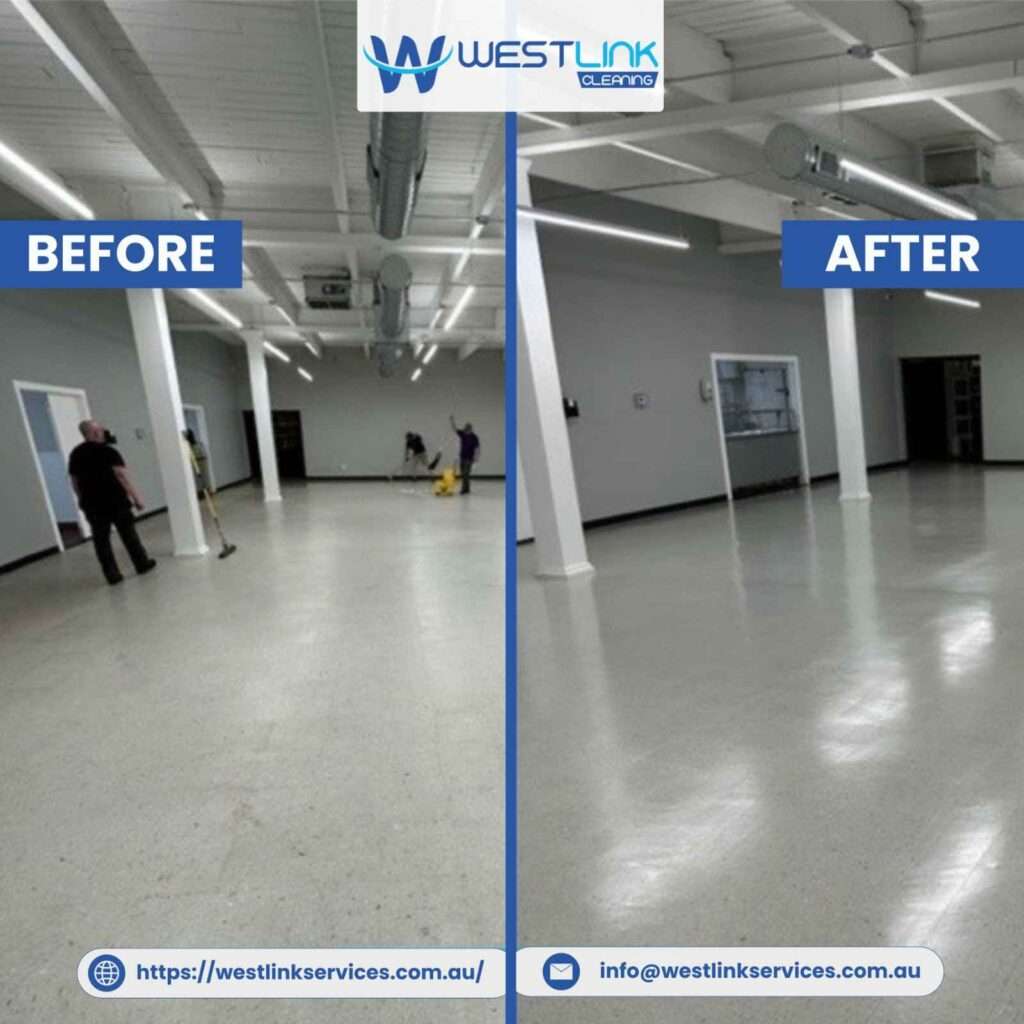
Floor cleaning before and after shows what changes when you remove built-up soil, grease, stains, and old coatings from a floor, then rinse and dry it the right way. Results vary by floor type, damage level, and past products used. A good “after” looks even, feels less gritty, and stays cleaner longer because the right method matched the surface and the mess.
Before vs After: What Real Floor Results Look Like
In my 13 years of cleaning floors, the most common “before” signs are dark traffic paths, sticky spots, patchy shine, and grout lines that look darker than the tile, and the fastest way to judge a trustworthy before-and-after is to check the details, not the shine. Look for clean corners, lighter grout lines, fewer dull patches, and a floor that does not look cloudy, because cloudiness usually means residue was left behind from poor rinsing, wrong chemicals, or mopping that spreads soil instead of lifting it.
A true “after” looks even in color, has clean edges, and feels dry and stable underfoot, while the “before” usually looks dull, feels gritty, and hides soil in corners, grout lines, and traffic lanes. The biggest reason a floor looks bad is not only the dirt you see, but also fine grit that grinds into the surface, grease that leaves a film, and old product layers that trap soil instead of protecting the finish.
Quality checks you can do in 60 seconds
- Edge check: Corners and skirting lines should not be darker than the middle.
- Grout check: Lines should look more even, not just “wet” or “oily.”
- Swipe test: A white tissue should not pick up grey film after it dries.
- Slip check: The floor should not feel slick from leftover product.
If you want a safe, repeatable plan for better results, use a structured approach like professional floor cleaning services.
Safety note: Wet cleaning raises slip risk, so professionals control water, use warning signs, and aim for fast dry times.
Floor cleaning Projects with results
Timber floor cleaning before and after
Commercial timber floor cleaning restores warmth and an even tone. Timber shows wear fast because grit scratches the surface. Problem features dull patches and traffic lines from daily footfall. We dry vacuumed, used a wood-safe cleaner, scrubbed with a soft pad, and wiped dry. The result looks more even and less patchy. Maintenance tip: Use a soft broom or vacuum daily.

Before signs
- Dull, dry-looking patches across the boards
- Dark traffic lanes where people walk the most
- Fine grit is sitting in joints and along edges
- Scuff marks and rubbed areas near doors
- Uneven tone that makes the floor look tired
- The floor looks cloudy even after sweeping
After the results signs
- Timber tone looks warmer and more even
- Dull lanes are reduced, and the floor looks cleaner overall
- Less patchiness from board to board
- Edges look tidier with less dust build-up
- The floor looks clearer under the light
- Surface feels smoother underfoot
Floor tile and grout cleaning before and after
Residential tile and grout cleaning revives walkways. Tile and grout trap soil in grout lines. Problem features dark grout from moisture and tracked dirt. We applied grout-safe pre-spray, scrubbed lines, rinsed well, and dried the floor. Result lightens grout lines and evens the look. Maintenance tip: Dry wet areas fast.

Before signs
- Grout lines look dark or uneven
- The tile looks cloudy or streaky after mopping
- Dirt sitting in corners and along edges
- Build-up around joins and along grout grooves
- Dull patches in walkways
- Wet areas look stained or grimy
After the results signs
- Grout lines look lighter and cleaner
- The tile surface looks clearer, not hazy
- Corners and edges look detailed, not skipped
- Colour looks more even across the floor
- Less visible staining in high-use zones
- Floor feels cleaner and less sticky
Commercial floor strip and seal before and after
Commercial strip and seal resets a worn floor finish. Sealed floors need the right coating to resist soil. Problem features patchy shine and trapped dirt from old layers. We tested a small area, stripped the old finish, neutralized and rinsed, then applied fresh sealer. The result looks more even and easier to mop. Maintenance tip: Use a pH-neutral cleaner, not a harsh degreaser.

Before signs
- Patchy shine with worn zones
- Stubborn marks that stay after mopping
- The floor looks dull even after deep cleaning
- The old finish looks uneven or built up
- Dark lanes in traffic paths
- Surface grabs dirt quickly
After the results signs
- Finish looks even and consistent
- The floor looks brighter and easier to maintain
- Reduced patchiness and wear look
- Light reflects more evenly across the area
- Dirt does not stick as fast
- Floor looks restored, not just “wiped down.”
For a full reset like this, many clients choose stripping and sealing floors when the floor stays dull after normal cleaning.
Hard floor cleaning before and after
Commercial sealed hard floor cleaning improves traction and appearance. Sealed hard floors show marks where traffic is heavy. Problem features dull lanes and scuff build-up from shoes and trolley wheels. We dust, remove grit, pre-treat scuffs, scrub with a machine, and rinse to remove residue. The result looks cleaner and less streaky. Maintenance tip: Put mats at entries to catch grit.

Before signs
- Dull lanes in walking paths
- Scuff build-up from shoes and wheels
- Fine grit along edges and in corners
- Streaky look from poor rinsing
- Small dark marks near entrances
- The floor looks grey even when “clean.”
After the results signs
- The floor looks cleaner and more even
- Scuff marks reduce, and lanes look lighter
- Less streaking and haze
- Corners and edges look sharper
- Surface looks better under lights
- The walkway feels safer with less grit under the shoes
Commercial carpet on the floor cleaning before and after
Commercial carpet extraction lifts soil from high-traffic zones. Carpet holds grit deep in the fibers. Problem features dark traffic lanes from embedded soil and spills. We vacuumed first, pre-treated spots, extracted with hot water, and set the airflow to dry fast. The result looks brighter and feels fresher. Maintenance tip: Vacuum slowly two to three times per week in traffic lanes.

Before signs
- Dark traffic lanes and dull colour
- Flattened pile in high-use paths
- Spot stains that stand out
- Grit trapped in fibers (rough feel)
- Musty or stale smell in closed areas
- The carpet looks uneven from room to room
After the results signs
- Traffic lanes look lighter and more even
- Overall colour looks fresher
- Spots look reduced and less obvious
- The carpet feels softer after a proper rinse
- The room smells cleaner and neutral
- Space looks more presentable for staff or clients
Industry best practice supports steps like pre-vacuum and extraction (see the IICRC S100 carpet cleaning standard).
Commercial kitchen tile floor cleaning before and after
Commercial kitchen tile floor cleaning restores a safer, cleaner surface. Kitchen floors collect grease that turns into slippery film. The problem features a sticky floor and dark grout from oil and food soil. We removed loose debris, applied degreaser, scrubbed with a floor machine, and rinsed fully. The result looks cleaner and less sticky. Maintenance tip: Rinse after degreaser so film does not stay behind.

Before signs
- Sticky feel under shoes
- Grease film that makes tiles look dull
- Dark grout lines from oil and food soil
- Build-up near equipment and work zones
- Slippery-looking patches in traffic lanes
- Dirt collects along edges and corners
After the results signs
- The floor looks cleaner and less greasy
- Reduced sticky feel underfoot
- Grout lines look lighter and more even
- Surface looks clearer, not cloudy
- Corners look detailed and rinsed
- The kitchen looks safer and more hygienic
If your grout lines keep going dark, a focused tile and grout cleaning service helps because it targets grout soil, not just the tile face.
Mall floor cleaning before and after
Commercial mall floor cleaning brightens large open areas. Mall floors show wear fast because traffic is constant. The problem features a dull look from fine grit and tracked soil. We dusted, grit first, scrubbed with a machine, and rinsed and dried the floor. The result looks cleaner and more even across the corridor. Maintenance tip: Increase dust mopping on busy days.

Before signs
- Dull, worn look across large areas
- Dark traffic paths from constant footfall
- Fine grit creates a dusty film
- Scuff lines near turns and entrances
- Uneven tone from section-to-section cleaning
- The floor looks tired under the overhead lights
After the results signs
- The floor looks brighter and more even across the corridor
- Reduced dull lanes in walking paths
- Less visible scuffs and marks
- The cleaner looks under the lights and reflections
- Corners and edges look maintained
- The area looks “inspection-ready” for the day
Commercial event floor cleaning before and after
Commercial event floor cleanup turns a messy site into a usable space. Event floors collect spills, dirt, and trash fast. The problem features heavy soil and sticky patches from foot traffic and waste. We removed debris, spot-treated stains, scrubbed the surface, and dried it. The result looks ready for guests and staff. Maintenance tip: Schedule a quick mid-event spot clean if spills are common.

Before signs
- Heavy soil and footprints in walkways
- Sticky patches from spills
- Dark spots where trash or drinks had sat
- Grit and debris along edges
- The floor looks patchy and messy
- The room feels stale from mixed spills and dirt
After the results signs
- Surface looks cleaner and more even
- Sticky patches reduce or disappear
- Walkways look clear and ready for guests
- Edges look tidier after debris removal
- The floor feels safer with less grit under shoes
- Space looks reset and usable again
Concrete floor pressure cleaning before and after
Outdoor concrete pressure cleaning restores color and reduces slippery build-up. Concrete holds algae and grime in pores. The problem features dark staining from moisture and dirt. We pre-wet, pressure cleaned in passes, rinsed, and controlled run-off. The result looks brighter and less patchy. Maintenance tip: Keep drains clear so water does not sit.

Before signs
- Dark staining from moisture and dirt
- Algae or grime build-up in shaded areas
- Patchy look across the surface
- Slippery-looking film in wet zones
- Dirt trapped in concrete pores
- Edges look heavily stained
After the results signs
- Concrete looks brighter and less patchy
- Reduced dark staining and grime
- Cleaner edges and corners
- The walkway looks safer and less slick
- Surface tone looks more even
- The outdoor area looks maintained and cared for
Slip risk matters most on outdoor walkways, so controls and warning signs are important (see OSHA guidance on slips, trips, and falls).
Post-construction hard floor cleaning before and after
Post-construction hard floor cleaning removes cement film and trade dust. New floors trap fine dust that keeps settling. Problem features haze and marks from building work. We dry removed dust, used the right cleaner for the surface, scrubbed, and rinsed well. The result looks clearer and more handover-ready. Maintenance tip: Avoid harsh acids unless the floor maker allows it.

Before signs
- Dust haze across the floor
- Cement film or fine trade dust that keeps returning
- Marks from tools, shoes, and site traffic
- Cloudy look under light
- Dirt trapped along edges and corners
- The floor looks unfinished even after sweeping
After the results signs
- The floor looks clearer and more finished
- Reduced haze and film on the surface
- Cleaner corners and detail lines
- Less visible trade marks and footprints
- Light reflects more evenly
- Space looks handover-ready and presentable
Before and After Floor Cleaning Gallery Sets
In my 13 years of cleaning floors, I group results by floor type and method so you can match your floor to the right process. Use these sets as your image placements inside the blog, and keep each set near the most relevant section.


What damages floors in simple terms
Cleaning floors, most “damage” starts as dirt, plus the wrong cleaning habits. Here are the causes in plain words.
- Abrasive grit: Sand and fine stones scratch floors and remove shine.
- Traffic lanes: Soil grinds in where people walk the most.
- Grease film: Oil sticks to the tile and turns into a dull, slippery layer.
- Residue: Soap and cleaner left behind attract more dirt.
- Grout staining: Grout absorbs soil and moisture and looks darker.
- Hard water minerals: White haze forms when water dries and leaves minerals.
- Old coatings: Worn sealer traps dirt and turns patchy.
- Too much water: Water seeps into the edges and can swell some materials.
- Wrong chemical: Strong acid or strong alkali can etch or fade a surface.
- Mould and algae: Moist areas grow biofilm that makes floors slippery.
A simple tool that helps on most floors is microfiber because it traps soil better than old cotton methods (see this peer-reviewed research on microfiber cleaning performance).
DIY vs hire a professional (simple checklist table)
In my 13 years of cleaning floors, DIY works best for light soil and routine care, and pros work best for deep soil, coatings, and risk areas. Use this table to decide fast.
| Situation | DIY is OK | Hire a pro |
| Light dust, small spills | Yes | |
| The floor looks dull but not sticky | Maybe | |
| Grout lines are dark | Yes | |
| The floor feels sticky after mopping | Yes | |
| Patchy shine or old sealer | Yes | |
| Heavy traffic lanes | Yes | |
| You need a fast dry time for safety | Yes | |
| You do not know the floor material | Yes |
DIY can make it worse when
- You should avoid using vinegar or strong chemicals on sensitive floors.
- You use abrasive pads that scratch the surface.
- You skip rinsing and leave a film behind.
- You seal a floor without stripping or proper prep first.
What a professional floor cleaning involves (step-by-step)
In my 13 years of cleaning floors, the best results come from the same repeatable steps every time. A good pro process looks like this.
- Inspect and identify the floor: We check the material, wear, and risk areas.
- Please test a small patch: We confirm the chemical and pad choice is safe.
- Dry soil removal: We vacuum or dust mop to remove grit first.
- Pre-treatment: We target grease, spots, or grout lines.
- Machine scrub or extraction: We lift soil, not just spread it.
- Rinse and remove residue: We flush out dirt and cleaner film.
- Dry fast: We use airflow, so the floor is safe sooner.
- Optional sealing: We apply sealer only when prep is correct.
- Quality check: We check edges, corners, and slip risk.
For workplace walking surfaces, safety guidance also stresses controlling slip hazards during cleaning and keeping surfaces in a safe condition (see CDC guidance on preventing slips, trips, and falls).
How to keep results longer (maintenance by floor type)
After 13 years of cleaning floors, I’ve learned the “after” look lasts longest when you keep grit under control, match the cleaner to the floor type, and rinse when the product calls for it.
Tile and grout
Daily: Sweep or vacuum grit.
Weekly: Mop with a mild cleaner and rinse if it feels sticky.
Monthly: Spot scrub grout lines before they go dark.
Timber or wood floors
Daily: Dry dust mop or vacuum with a soft head.
Weekly: Damp clean with a wood-safe product.
Monthly: Treat small marks early so they do not become stains.
Sealed hard floors
Daily: Dust mop to stop scratching.
Weekly: Auto-scrub or mop with neutral cleaner.
Monthly: Check for dull lanes and fix early.
Strip and seal floors
Daily: Dust mop and use mats at entries.
Weekly: Neutral cleaner only.
Monthly: Inspect for wear in traffic lanes.
Carpet
Daily: Vacuum traffic lanes slowly.
Weekly: Spot treat spills fast.
Monthly: Schedule a deeper clean based on traffic.
Outdoor concrete
Weekly: Rinse heavy soil and remove algae build-up.
Monthly: Treat slippery spots early and keep drains clear.
Conclusion
In my 13 years of cleaning floors, the best before-and-after results come from matching the method to the floor and removing residue fully. If you want the same outcome on your site, share your floor type, the main problem, and a few clear photos, and we will recommend the right process and timing.
When you are ready, you can get a quote and tell us your floor type, total area, and whether you want a deep clean, grout work, or strip and seal.
FAQ: Frequently Asked Questions
1) Why does my floor still look dirty after I mop?
A floor can look dirty after mopping because you left residue or you spread soil. Rinse when needed and change water often.
2) How often should I deep clean tile and grout?
Deep clean when grout stays dark after normal mopping. High traffic areas need it more often than low traffic rooms.
3) Does steam cleaning damage tile grout?
Steam can help, but high heat and pressure can weaken poor grout. Test first and avoid blasting damaged lines.
4) Is vinegar safe for floors?
Vinegar can harm some stones and some finishes. Use a neutral cleaner unless the floor maker says vinegar is safe.
5) Can professional cleaning remove scratches?
Cleaning removes soil and film, not deep scratches. Some floors need polishing, refinishing, or a new coating.
6) Do I need to seal grout after cleaning?
Sealing can help slow staining on some grout. Do it only after the grout is clean and fully dry.
7) What is strip and seal?
Strip and seal removes old finish and applies a new protective coat. It helps when the floor stays dull even after deep cleaning.
8) How long does strip and seal last?
It depends on traffic and maintenance. Better daily dust control and a neutral cleaner can extend life.
9) How long do floors take to dry after professional cleaning?
Dry time depends on water use, airflow, and humidity. Pros aim to reduce slip risk by drying faster.
10) What is the best way to stop grout from turning black again?
Dry wet areas fast and remove soil early. Use mats, rinse when needed, and book periodic grout deep cleaning.


