

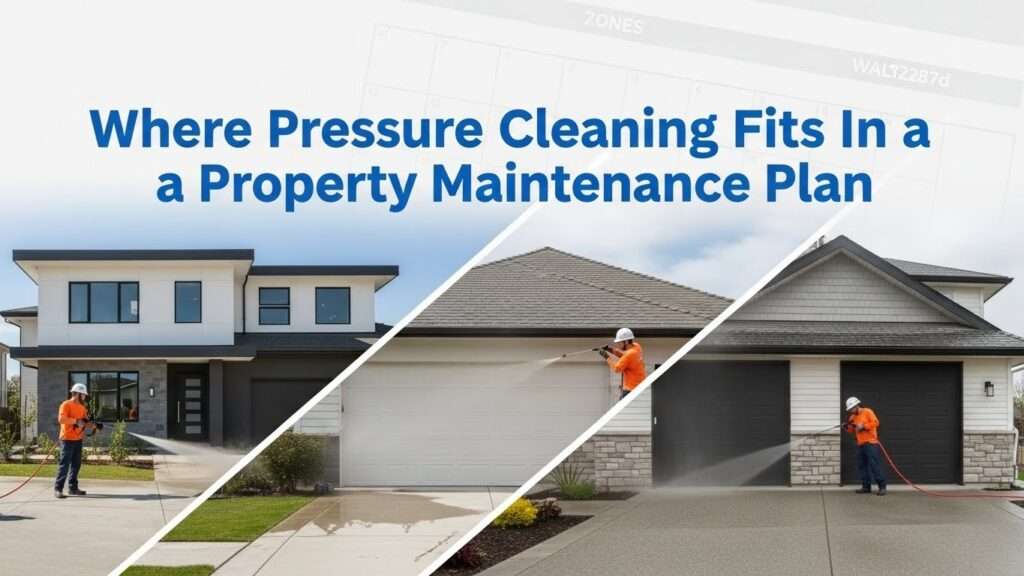
Property owners often overlook pressure cleaning in their maintenance routines, yet it serves as a foundational step that prevents damage, prepares surfaces for other tasks, and extends the lifespan of structures. Pressure cleaning removes accumulated dirt, mold, algae, and pollutants from exteriors like roofs, driveways, siding, and decks using controlled high-pressure water streams. It fits into a property maintenance plan as a preventive measure, performed seasonally or annually, typically before painting, sealing, or gutter work, to ensure clean adhesion and proper drainage. This practice shifts maintenance from reactive repairs, such as fixing cracked concrete or replacing rotted wood, to proactive care that saves costs and maintains value.
In this guide, property owners learn how pressure cleaning integrates with broader strategies. First, it defines pressure cleaning and contrasts it with reactive approaches. Next, it explains how contaminants harm surfaces through chemical and physical processes. Then, it details pressure cleaning’s role as a preparatory step for related tasks such as gutter cleaning, painting preparation, surface sealing, and landscaping health. The content outlines its place in monthly, seasonal, and annual schedules, including risks of neglect and overdoing it. Residential, commercial, and strata properties receive tailored considerations. This structure equips readers with a complete model for incorporating pressure cleaning into total property care, building a cycle of inspection, cleaning, protection, and monitoring.
Why Pressure Cleaning Serves as a Preparatory Step for Key Tasks

Pressure cleaning serveses as a critical preparatory step because it removes built-up dirt, grease, mold, algae, and loose contaminants that interfere with inspections, repairs, coatings, and surface treatments. Exposing the true condition of a surface, it allows professionals to identify cracks, structural weaknesses, corrosion, or water damage that would otherwise remain hidden.
1. Gutter Cleaning
Gutters collect leaves and debris that foster bacterial growth, but pressure cleaning precedes this by rinsing rooflines and fascia boards. Algae-slicked gutters overflow during rains, eroding foundations below. A pre-clean exterior blast dislodges airborne spores that clog downspouts, making gutter sweeps more effective and less frequent. Technicians start here to direct water away from plants, linking cleaning to drainage health. This sequence prevents water pooling that warps soffits or floods landscapes.
For deeper insights, consult guidelines from building safety authorities on managing high-pressure risks during exterior work.
2. Painting and Repainting
Fresh paint fails on grimy substrates, peeling within months from trapped moisture. Pressure cleaning strips loose flakes and contaminants, creating a profile for primer grip. On siding, it reveals chalky residues that signal oxidation, prompting spot repairs before coating. This prep extends paint life from five to ten years, reducing cycles.
Owners time it six weeks before application, allowing surfaces to dry fully. In repaints, it uncovers hidden rot, guiding targeted fixes. Without this step, pigments separate, inviting cracks that demand full strips later.
3. Sealing and Waterproofing
Sealers repel water only on pristine bases; dirt-filled pores absorb treatments, wasting product. Pressure cleaning opens textures for even penetration, as seen in driveways, where it exposes aggregates for silicone infusion. This barrier halts efflorescence and freeze damage, preserving pavers.
Post-clean application cures faster on bare stone, forming a breathable shield against vapor buildup. Neglect this order, and seals crack under embedded grit, accelerating wear.
4. Landscaping and Drainage Health
Overgrown edges trap mulch against walls, promoting rot, but pressure cleaning clears perimeters for air circulation. It rinses pollen and spores from patios, preventing weed seeds from sprouting in beds. In drainage, it unclogs gravel trenches of silt, ensuring runoff diverts from foundations.
This prep supports planting by sterilizing soil-contact zones, reducing fungal threats to shrubs. Landscape crews follow with edging, creating a buffer that maintains clean lines year-round.
These intersections form a maintenance web where pressure cleaning acts as the reset button, amplifying each task’s impact.
How Pressure Cleaning Integrates into Maintenance Schedules

Pressure cleaning integrates into maintenance schedules as a proactive measure that preserves the condition, safety, and appearance of surfaces across residential, commercial, and industrial settings. By including it at regular intervals, property managers and facility teams can prevent the buildup of dirt, grime, mold, and algae that accelerate surface deterioration.
1. Monthly Checks
Incorporate visual scans during monthly walks: note algae streaks on north-facing walls or oil sheen on lots. A light rinse—under 1,500 PSI—handles fresh buildup without disruption. Commercial sites add this to security patrols, catching spills that escalate hazards. Residential owners pair it with hose tests for leaks, keeping exteriors vigilant.
2. Seasonal Maintenance
Spring demands a full exterior wash to shed winter salts and pollen, prepping for summer seals. Autumn follows, removing leaf acids before freezes lock in damage. Coastal properties double up in wet seasons to combat humidity-driven growth. Adjust nozzles for seasonal vulnerabilities: wider fans for broad patios in fall.
Industry frameworks stress seasonal alignment to sync with weather patterns, optimizing resource use.
3. Annual Property Care Plans
Anchor an annual deep clean in spring, covering all surfaces in a two-day blitz. Budget 10 percent of upkeep funds here, yielding returns through deferred repairs. Strata committees vote on this in winter meetings, coordinating with resident feedback. Track via apps that flag cycles, ensuring compliance with preservation standards.
Preventive vs Reactive Maintenance: The Role of Pressure Cleaning

Preventive maintenance anticipates issues through scheduled actions, while reactive maintenance addresses problems after they emerge. Pressure cleaning embodies prevention by eliminating contaminants before they penetrate materials. A quarterly exterior rinse halts mold spores from rooting into siding, averting the need for full replacements years later.
Reactive approaches wait for visible decay, such as efflorescence on brick walls from unchecked moisture. Technicians then deploy aggressive fixes, like sanding and repointing, which cost three times more than routine cleans. Studies on building upkeep show preventive strategies cut long-term expenses by 20 to 30 percent, as regular pressure cleaning preserves structural integrity.
Owners build preventive habits by logging clean dates alongside inspections. This cycle, clean, assess, protect, creates resilience against weather cycles. Reactive fixes disrupt operations, especially in commercial spaces where downtime erodes revenue. Shift to prevention, and pressure cleaning becomes the linchpin that keeps plans efficient and predictable.
Maintaining Visual Appearance Through Pressure Cleaning
First impressions matter. Pressure cleaning restores shine to siding, driveways, and roofs, boosting curb appeal.
For rentals or sales, clean properties attract better tenants or buyers. It signals care and reliability.
Schedule cleanings before peak seasons to keep looks fresh. Combine with landscaping for a polished effect.
How Dirt, Mold, Algae, and Pollution Damage Surfaces

Contaminants attack surfaces through layered mechanisms that weaken bonds over time. Dirt, a mix of soil particles and urban dust, settles into pores and traps moisture. On concrete, it forms a gritty film that abrades under foot traffic, leading to micro-cracks. These fissures allow water ingress, expanding during freezes to shatter slabs.
Mold and algae thrive in damp shadows, secreting acids that etch materials. Algae on roofs produce oxalic acid, dissolving calcium in tiles and creating pinholes for leaks. Mold on wooden decks penetrates fibers, causing rot that softens supports and invites insects. Pollution, including vehicle exhaust and industrial soot, deposits hydrocarbons that oxidize paints, fading colors, and flaking layers.
These effects compound. A polluted driveway absorbs oils that react with rainwater to form acidic runoff, corroding rebar in the underlying steel. Untreated, a single untreated stain evolves into widespread deterioration within two years. Pressure cleaning interrupts this progression by flushing residues, exposing damage for early repair. Owners who ignore these dynamics face escalating costs: a minor algae spot ignored balloons into a $5,000 siding overhaul.
Risks of Skipping Pressure Cleaning

Neglect invites cascading failures. Unchecked mold infiltrates insulation, spiking energy bills by 15 percent through poor thermal barriers. Algae-weakened roofs shed granules, voiding warranties and hastening leaks. Commercial facades lose sheen, deterring clients and dropping values by up to 7 percent.
Health risks mount: airborne spores trigger allergies, while slippery decks cause falls, costing thousands in claims. Environmentally, runoff carries pollutants untreated, straining local systems. Over the years, skipped cleaning compounds into structural overhauls, turning a $500 service into $10,000 in fixes.
Pressure Cleaning, Compliance, and Inspections

Pressure cleaning plays a key role in maintaining compliance and passing inspections. By removing dirt, mold, algae, and other buildup, it ensures exteriors meet building codes and safety standards. Regular cleaning supports adherence to guidelines from organizations such as the International Facility Management Association, helping facilities remain inspection-ready and reduce potential violations.
Over Cleaning vs Correct Scheduling in Pressure Cleaning

Excessive pressure cleaning can damage surfaces, stripping sealants and exposing concrete or wood to accelerated wear. On softwoods, frequent washes can gouge fibers and trap water, while hard surfaces may erode prematurely. Proper scheduling balances cleaning needs with material tolerance: test patches determine safe PSI, and maintenance logs prevent overlap.
Correct scheduling spaces cleaning based on exposure biannually for shaded decks, annually for sun-exposed brick or concrete. Professionals adjust frequency as protective layers build, preserving surfaces, reducing maintenance costs, and extending the lifespan of finishes.
Read More In Detail: Pressure Cleaning Chemicals
Pressure Cleaning’s Role in Health and Safety

Pressure cleaning plays a vital role in health and safety by maintaining clean, hazard-free exteriors. Removing moss, oil, and debris from walkways reduces slip risks, particularly during wet seasons, while eliminating mold and other allergens improves air quality around the property. For commercial sites, regular cleaning supports compliance with health and safety codes, protects occupants, and helps avoid fines. Incorporating pressure cleaning into safety audits also highlights potential risks, ensuring a safer environment for all.
Residential, Commercial, and Strata Considerations in Pressure Cleaning

Residential plans prioritize curb appeal and family safety, focusing on play areas and fences. Low-traffic homes suffice with annual sessions, emphasizing eco-detergents near gardens.
Commercial demands quarterly hits on high-footfall zones like entrances, integrating with branding refreshes. Pollution-heavy sites add bi-monthly spot cleans to uphold professional images.
Strata properties balance collective needs, scheduling communal votes for semi-annual exteriors. Shared walls require phased work to minimize noise, with funds pooled for bulk efficiencies. Each type tailors intensity: gentle for heritage homes, robust for warehouse lots.
Integrating Pressure Cleaning with Other Services

Pressure cleaning links closely with related tasks for efficient workflows.
It pairs with gutter cleaning to remove debris that clogs systems. Clean gutters first, then pressure wash below to clear runoff stains.
Before painting, pressure cleaning strips old layers for better adhesion. This extends paint life by 2-5 years.
Sealing follows cleaning to lock in protection against moisture. Clean surfaces absorb sealants evenly.
Landscaping benefits too. Wash paths after trimming to remove clippings and enhance borders.
In yearly maintenance, slot it mid-cycle. This bridges early inspections and late repairs, creating smooth transitions. For details on yearly cycles, see our annual property checklist.
Combine with inspections to fix issues on the spot. Repairs like crack filling come next, followed by protective coatings.
This integration saves time and money. Use software to sequence tasks logically.
Conclusion
Pressure cleaning anchors a plan that anticipates threats and sequences protections seamlessly. Owners who embed it gain control over decay, turning properties into enduring assets. Start with an audit, then layer in connected tasks for a fortified approach. This model not only satisfies immediate needs but scales to support evolving care demands.
Explore related strategies in our gutter cleaning guide for seamless drainage integration, painting preparation tips to maximize coatings, surface sealing checklist for waterproof defenses, and annual maintenance blueprint for full-year oversight.
Read More In Detail: Basic Pressure Cleaning Equipment Types
Frequently Asked Questions
1. How often do I need to pressure clean my driveway?
Schedule driveway pressure cleaning twice a year, once in spring and once in fall, to remove seasonal buildup and prevent oil stains from setting.
2. Does pressure cleaning damage my roof tiles?
No, when professionals use low-pressure soft washing techniques, it safely removes algae without dislodging granules or causing cracks.
3. Can I pressure clean before painting my house exterior?
Yes, complete pressure cleaning two to four weeks before, allow full drying, ensuring paint adheres smoothly without trapped moisture.
4. What happens if I skip pressure cleaning for a year?
Buildup accelerates surface erosion, leading to cracks in concrete and rot in wood, which could cost hundreds in repairs.
5. Is pressure cleaning eco-friendly?
Professionals use biodegradable detergents and capture runoff to minimize environmental impact, aligning with sustainable care practices.
6. How does pressure cleaning help with gutter maintenance?
It clears debris from roof edges first, reducing clogs in gutters and improving overall water flow away from foundations.
7. Should I seal my deck after pressure cleaning?
Absolutely, apply a water-repellent sealant within a week to lock in cleanliness and protect against future UV and moisture damage.
8. What’s the difference between pressure cleaning and power washing for patios?
Pressure cleaning uses cold water for gentle dirt removal, while power washing adds heat for grease. Opt for pressure on stone patios to avoid etching.
9. How much does professional pressure cleaning cost for a standard home?
Expect $300 to $600, depending on size and surfaces, with packages bundling multiple areas for savings.
10. When is the best time to pressure clean before landscaping?
Perform it a month before planting to sterilize soil zones and ensure clean edges for new beds and pathways.


