After pressure cleaning your driveway, deck, or siding, the next steps protect the surface and keep it looking fresh. Rinse away any loosened debris to prevent streaks, then let everything dry completely based on the material and weather, usually 24 to 48 hours. Once dry, inspect for damage like loose paint, splintered timber, or worn sealant, fix any issues, and then seal or paint if needed to lock in long-term protection and slow re-soiling.
Here’s a quick checklist to guide your aftercare:
- Rinse thoroughly:
means flushing the surface with clean, low-pressure water right after pressure cleaning to wash away any leftover detergent, degreaser, or loosened grime. A gentle hose rinse prevents dried soap film, streaks, and sticky residue that can attract dirt again. - Dry completely:
means giving the surface enough time to release moisture all the way through, not just feel dry on top. Most areas need 24 to 72 hours, depending on the material (concrete, pavers, timber, render) and conditions like humidity, shade, and airflow. - Inspect and repair:
means closely checking the surface after it’s fully dry to find any damage the pressure wash revealed or caused, then fixing it before sealing, staining, or painting. Look for cracks, etched or rough concrete, loose grout or joint sand, splintered timber, and lifted or peeling paint. - Ventilate areas:
means improving airflow right after cleaning, especially in garages, carports, under eaves, and other shaded or enclosed spaces where moisture lingers. - Protect with sealant or paint:
means applying a protective finish after pressure cleaning to help the surface resist water, stains, UV fading, and fast re-soiling. Only do this once the area is fully dry, then follow the product’s instructions. - Maintain regularly:
means doing small, routine upkeep so your freshly cleaned surface stays cleaner for longer and does not quickly build up algae, grime, or stains again. Sweep or blow off debris weekly, rinse lightly when needed, clean spills quickly, and schedule a deeper wash seasonally to prevent slippery growth and reduce wear. - Store gear safely:
Clean nozzles and hoses; drain water from the pressure washer.
Follow these steps to keep your surfaces looking sharp and lasting longer.
After-Pressure-Wash Checklist
Start your post-cleaning routine with this simple workflow. It takes minutes but saves hours of fixes later. I always tell homeowners: treat aftercare like the cleanup after a big cookout, quick and thorough, or regret follows.
- Rinse off residue.
Right after shutting off the pressure washer, grab a garden hose with a gentle spray nozzle. Blast away any leftover detergent or degreaser. This stops chemical burns on skin or plants and prevents white streaks from drying minerals. - Clear the area.
Move hoses, buckets, and tools out of the way. Sweep or blow off loose grit with a leaf blower. Wet debris can trap moisture and promote mildew growth. - Assess the weather.
Check humidity, temperature, and shade. High humidity slows drying by 50%. If rain looms, cover edges with tarps to shield from puddles. - Walk the surface lightly.
Test one spot after 4-6 hours. Press a finger down if no mark; it’s walkable. But hold off on heavy loads. - Log your notes.
Jot down surface types and PSI used. This helps track what works next time and spots patterns in wear.
Do this checklist every time. In my experience guiding small business owners through seasonal cleans, skipping it leads to callbacks for slippery algae returns.
Read More In Detail: Pressure Washing Chemicals
Drying Time Rules After Pressure Cleaning
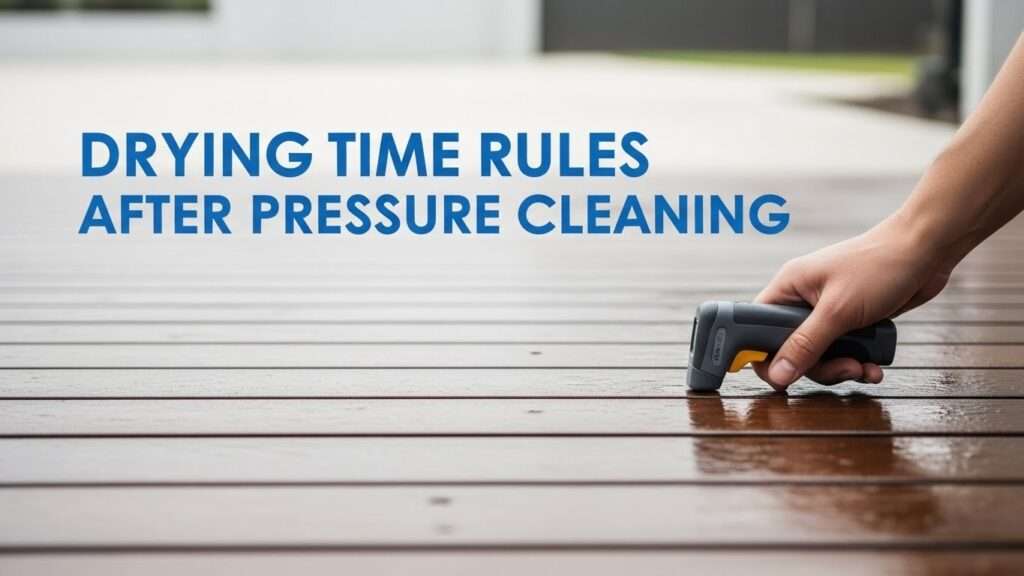
Drying sets the pace for everything else. Rush it, and sealers, bubble, or paint peels. Factors like porosity how much water a surface soaks up, play a big role. Concrete pores drink deep, while slick tiles shed fast. Temperatures above 50°F (10°C) and low humidity under 60% speed things up. Shade or indoor spots double in time.
Concrete
Concrete slabs and driveways hold water in their pores. Expect 24-48 hours in sunny, dry air. Test by sprinkling water if it beads up and evaporates quickly, it’s ready. High-porosity mixes from older pours take longer; new ones cure slower, too. I’ve seen driveways stay damp under covers for three days in muggy weather.
Pavers
Pavers vary by material; sand-set ones drain faster than mortar-bound. Aim for 24 hours. Joint sand can hold moisture, so blow it out first. Brick pavers absorb less than concrete ones, cutting time to 12-24 hours. Watch expansion joints; trapped water there leads to cracks.
Brick
Brick’s clay body wicks water evenly. Dry in 24-36 hours outdoors. Porous bricks in walls or patios need extra ventilation. Avoid direct sun at first; it pulls moisture to the surface, causing efflorescence (that white powdery salt bloom).
Timber/Decking
Timber fibers swell with water, raising the grain. Wait 48-72 hours minimum. Softwoods like pine dry more slowly than hardwoods. Shade decks hit 96 hours easily. Feel the wood’s fuzzy texture means more wait time.
Painted Surfaces
Painted siding or fences already repel water, but cleaning opens micro-cracks. Give 12-24 hours. Check for lifted edges; wet paint flakes faster under pressure.
Render/Stucco
This cement-based finish cracks if dried unevenly. Plan for 48 hours. High humidity traps steam inside walls, risking bubbles. Indoors, fans help.
Outdoor Tiles
Tiles on patios glaze over grout lines. Dry in 12-24 hours. Porous stone tiles like travertine take 36 hours; ceramic sheds quickly. Slippery when wet test traction early.
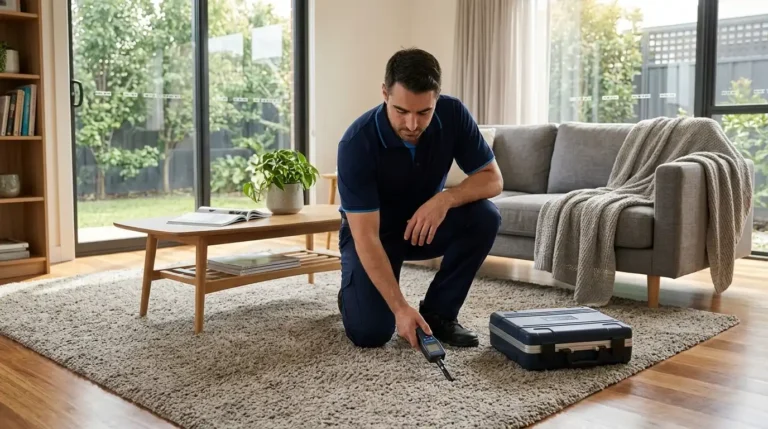
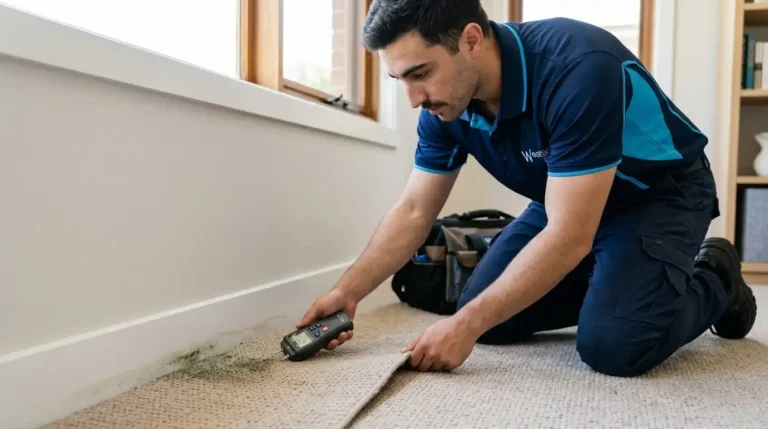
Pro tip: Use a moisture meter for precision. Cheap ones run $20 and pay off in avoided redo’s.
When Is It Safe to Walk, Place Furniture, or Drive on It After Pressure Cleaning
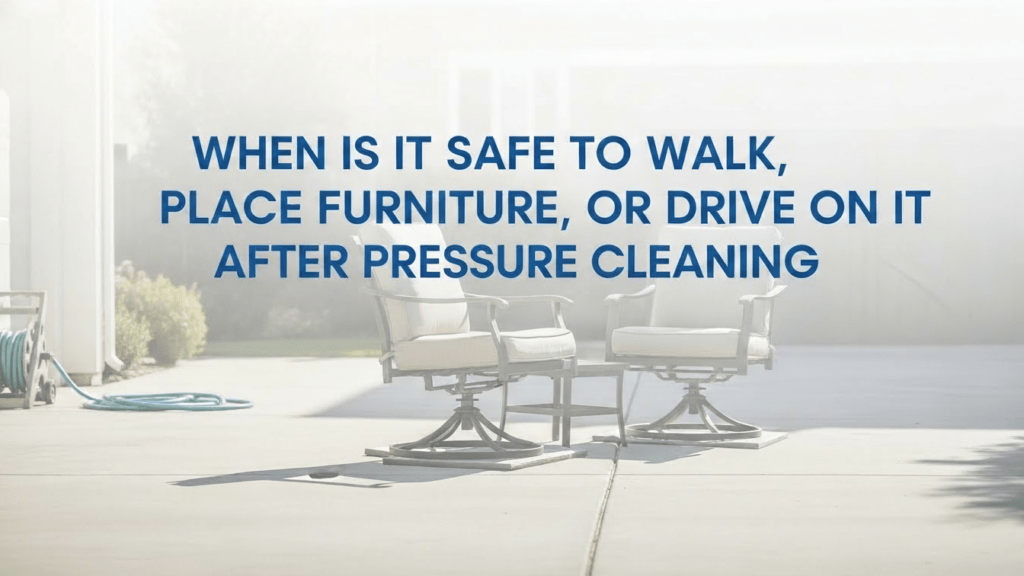
Timing foot traffic, chairs, or cars wrong invites slips or dents. Walk on it when dry to the touch, no squish underfoot. For concrete or pavers, that’s often 24 hours; timber needs 48. Furniture weighs more, so double the wait and use pads underneath to spreadthe load.
Driving amps risks. Asphalt or concrete driveways handle light cars after 48 hours, but full loads wait 72. Wet surfaces soften, and tires track grit that etches. I’ve advised shop owners: tarp the center strip till cured, or watch ruts form overnight.
Warnings matter here. Slip risk spikes on tiles or decks, add non-slip strips if algae lurked pre-clean. For garages, keep doors open; trapped fumes from wet concrete mix with exhaust.
Ventilation and Moisture Control After Pressure Cleaning

Moisture lingers in garages, under eaves, or on shaded patios. It breeds mildew and weakens adhesion for new paint. Open windows and doors wide. Run fans to push air across surfaces. Box fans on stands work best.
In enclosed spots like carports, dehumidifiers pull excess humidity. Aim below 50% RH. Shade slows evaporation by 30%, so prune overhanging branches for sun access. Indoors, wipe edges with microfiber cloths to speed things up.
Safety first: Good airflow cuts mold spores that irritate lungs. If you spot black spots returning, hit them with a vinegar spray before they spread.
Post-Pressure Cleaning: Inspect for Damage and Problems
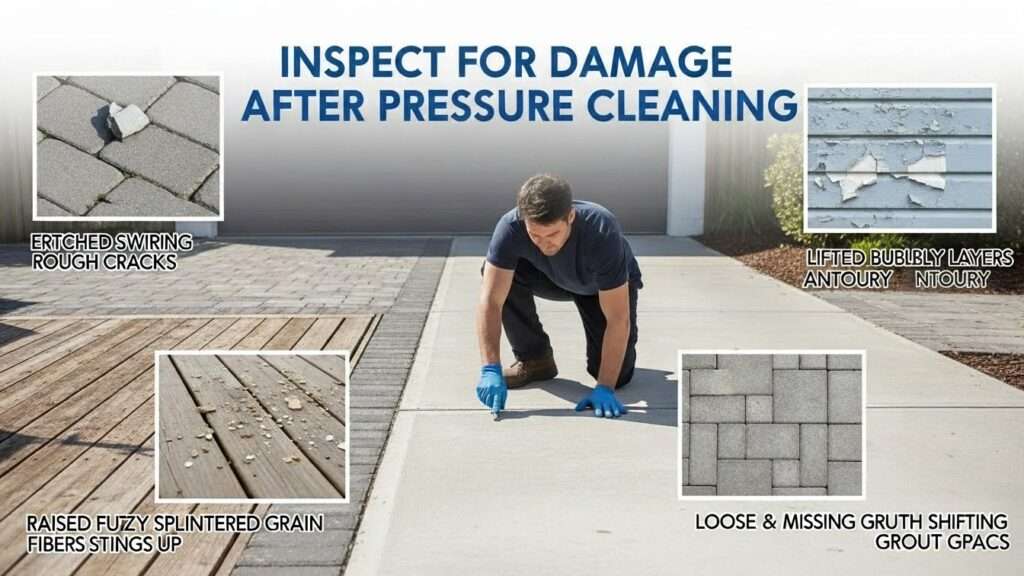
is the step where you check every surface after it has fully dried to spot issues caused by pressure, water intrusion, or leftover residue. This includes looking for etched concrete, lifted paint, loose grout, splintered timber, cracked sealant, rust on metal fixtures, and damp stains that signal water getting behind walls or joints. Catching these problems early helps you fix small defects quickly, avoid bigger repairs, and make sure sealing, staining, or painting bonds properly and lasts longer.
Etched Concrete
Swirling marks from too-narrow nozzles scar the top layer. Feel for roughness; smooth with a grinder if shallow.
Lifted Paint
Bubbles or peels mean water hit behind old coats. Scrape loose bits; sand smooth before priming.
Loose Grout
Tiles or pavers shift if the grout pops. Poke lines with a screwdriver—repoint with matching compound.
Splinters in Timber
Raised fibers snag skin. Sand lightly after full dry to seal pores.
Water Ingress Signs
Dark stains on the walls signal cracks letting water in. Caulk expansion joints pronto.
Broken Seals
Old sealers crack under blast. Test with water if it soaks in, strip remnants.
Catch these early. In my consultations, unchecked etching turns a $200 fix into $2,000 resurfacing.
Protect Landscaping and Metals After Washing
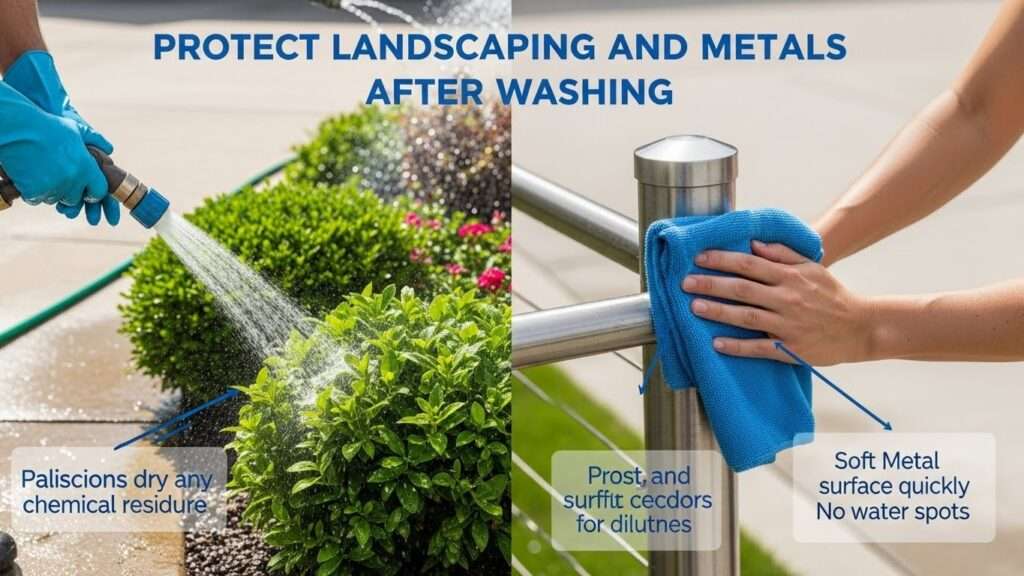
Rinse leaves on plants hit by the spray to remove any chemicals. Water the soil around them deeply to dilute residues. Wipe off overspray from garden features.
For metals like railings or fixtures, dry them quickly to stop rust. Wipe with a clean cloth and apply a rust inhibitor if spots appear. Lubricate hinges or moving parts to keep them smooth. In real jobs, we see flash rust form fast on untreated metal, so act quickly.
Handle Common After-Pressure-Cleaning Problems
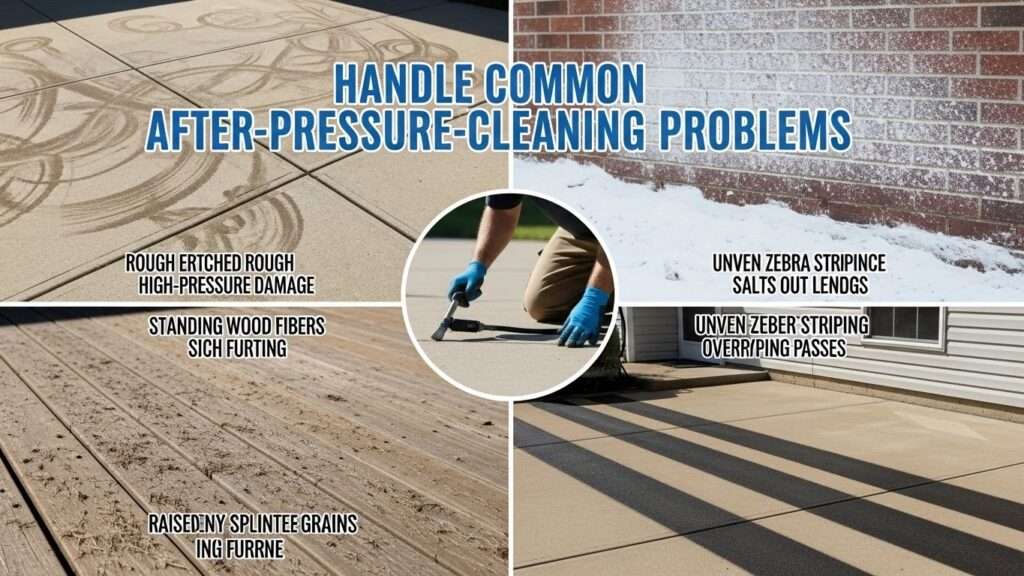
Streaks or zebra striping happen from uneven cleaning or residues. Fix by rinsing again with even passes. Efflorescence is white powder from salts in concrete or brick leaching out. Brush it off gently; it often fades, but seal it later to reduce it.
Fuzzy wood means raised fibers from high pressure cleaning. Sand smooth and condition with a wood brightener. For spotty algae return, improve drainage and add shade control, like trimming trees.
Fix Common Post-Cleaning Issues
Streaks happen from uneven rinsing. Tiger striping dark bands stems from overlapping passes. Blast them with low PSI and fresh water.
Efflorescence salts up from minerals leaching as water dries. Scrub with a stiff brush and dilute muriatic acid (wear PPE). Rinse well to avoid runoff issues.
Fuzzy wood on decks? Sand the grain flat, then stain. Slippery algae return fast in shade. Treat with a copper-based algaecide.
Mildew spots bloom in grout lines. Bleach solution kills it; ventilate to dry. For stubborn cases, pros use oxygen cleaners.
Tackle one spot at a time. Document fixes for insurance if the damage is tied to your washer’s power.
Protect the Surface Next Pressure Cleaning
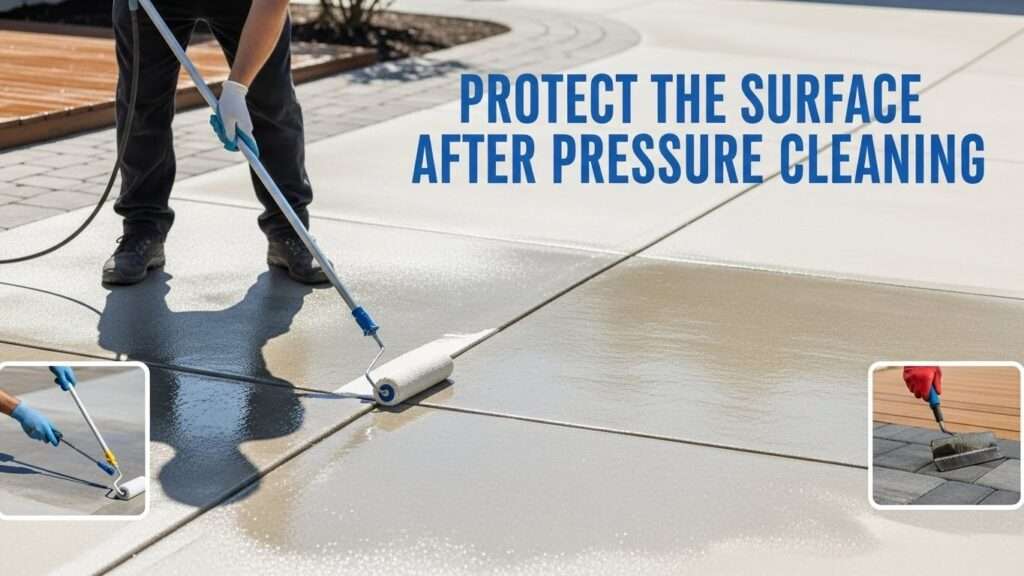
Protection starts with the right barrier. “Dry to the touch” means the surface feels okay but inside holds moisture bad for sealers. “Fully dry” is no beads on a test sprinkle. Cure time is 7-28 days for full strength, per manufacturer guidelines.
When to Seal Concrete/Pavers
Wait 48 hours post-wash. Penetrating sealers soak into pores for deep guard; acrylic ones film the top for shine. Apply two coats, 4-6 hours apart. Reseal yearly to block water absorption.
When to Repaint
48-72 hours minimum. Prime first for adhesion; wet surfaces reject it. Use exterior latex; cure 24 hours between coats.
When to Stain Timber
72 hours dry. Oil-based stains penetrate fibers best; water-based stains dry faster. Two coats seal against UV fade.
Choose based on porosity. For more on selecting sealers, check pros’ picks.
Prevent Rapid Re-Soiling After Pressure Cleaning
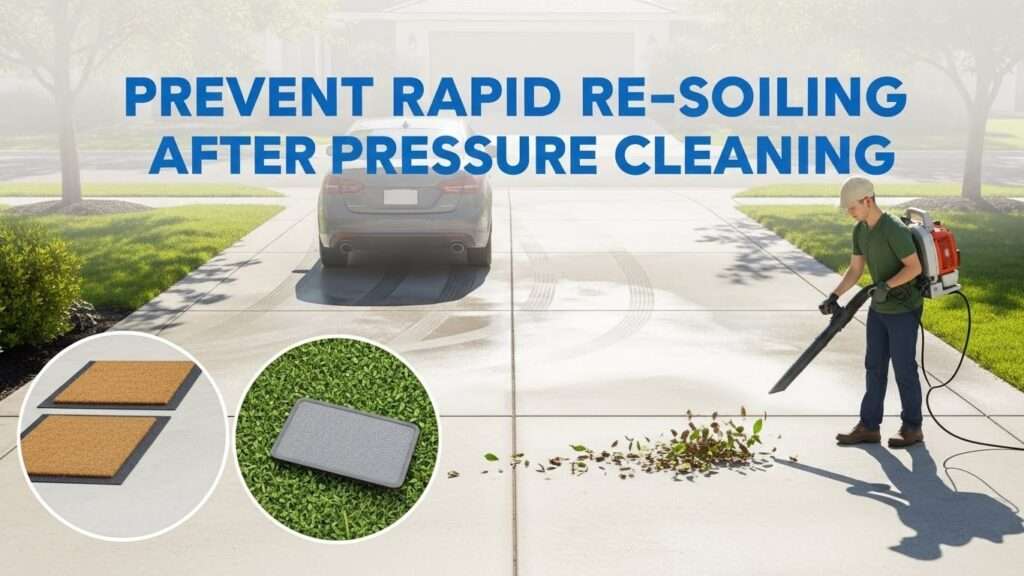
Fresh cleans soil quickly without habits. Sweep weekly to clear debris. Hose monthly with low pressure, no detergents unless grimy.
Schedule deep clean twice yearly. Park cars off-center to spread wear. Trim plants to cut the shade that feeds algae.
For businesses, add mats at entries. This cuts 40% of tracked dirt. Link to our maintenance calendar for reminders.
Clean and Store Your Equipment Properly
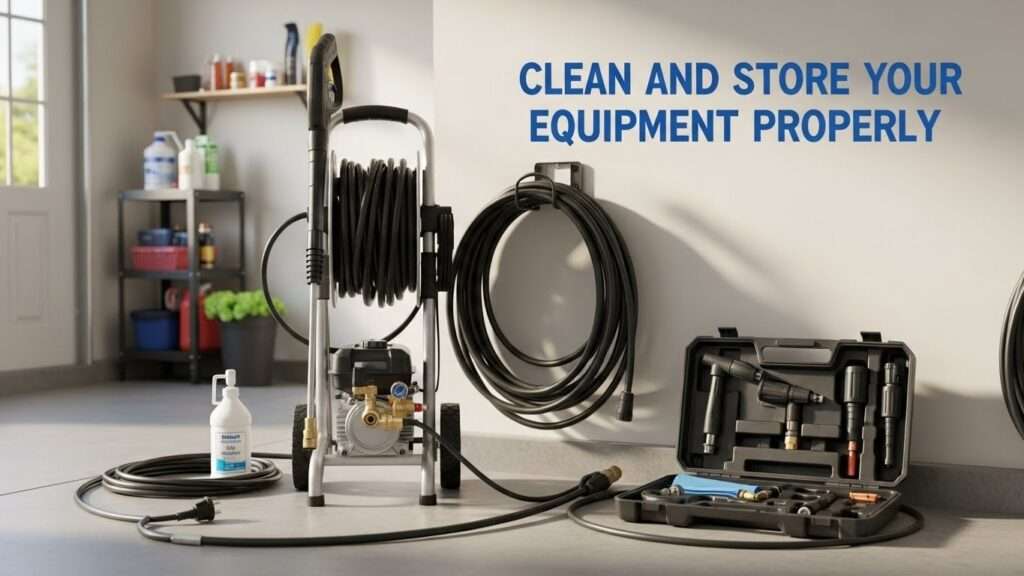
Neglect gear, and clogs kill your next job. Flush the pump with fresh water 5 minutes post-use. Run a vinegar mix through hoses to dissolve minerals.
Wipe nozzles clean; store dry to fend rust. Coil hoses with loosely tight bends crack. Drain the washer fully; tip it upright.
Safety note: Unplug before storage. Check cords for frays. OSHA stresses daily tests for leaks to avoid slips.
Frequentl Asked Question
How long does concrete take to dry after pressure washing?
Concrete dries in 24-48 hours in dry weather. High humidity or shade stretches it to 72 hours. Test by sprinkling water if it soaks in, wait more.
Can I walk on my deck right after pressure washing?
No, wait 48 hours minimum. Timber needs full dry to avoid warping. Light steps okay after 24 if sunny, but skip shoes.
Is it safe to drive on a freshly washed driveway?
Hold off 48-72 hours for cars. Wet concrete softens under tires, causing tracks. Light vehicles sooner if fully dry.
When should I seal pavers after cleaning?
Seal after 24-48 hours once dry. Apply penetrating sealer for joints; acrylic for color pop. Two coats lock out stains.
How do I fix streaks from pressure washing?
Rinse immediately with a low-pressure hose. For dried streaks, scrub with baking soda paste. Prevent by even passes.
Can pressure washing damage painted surfaces?
Yes, high PSI lifts paint. Use under 1500 PSI and wide nozzles. Inspect post-wash; repaint lifted spots after 48 hours dry.
What’s the best way to prevent mildew after washing?
Ventilate well and apply mildewcide. Trim shade plants. Reseal to block moisture, check OSHA safety tips for gear.
How often should I pressure wash my home exterior?
Twice a year for most. More in pollen-heavy areas. Always follow with sealing to cut re-soil.
Is it okay to pressure wash in the rain?
Avoid wet adds, slip risk, and dilute detergents. Post-rain, wait for dry. For runoff control, see EPA guidelines.
Should I hire a pro for sealing after washing?
Yes, if over 1000 sq ft or uneven surfaces. They ensure even coats. DIY for small jobs with a roller, follow the paint primer advice.