

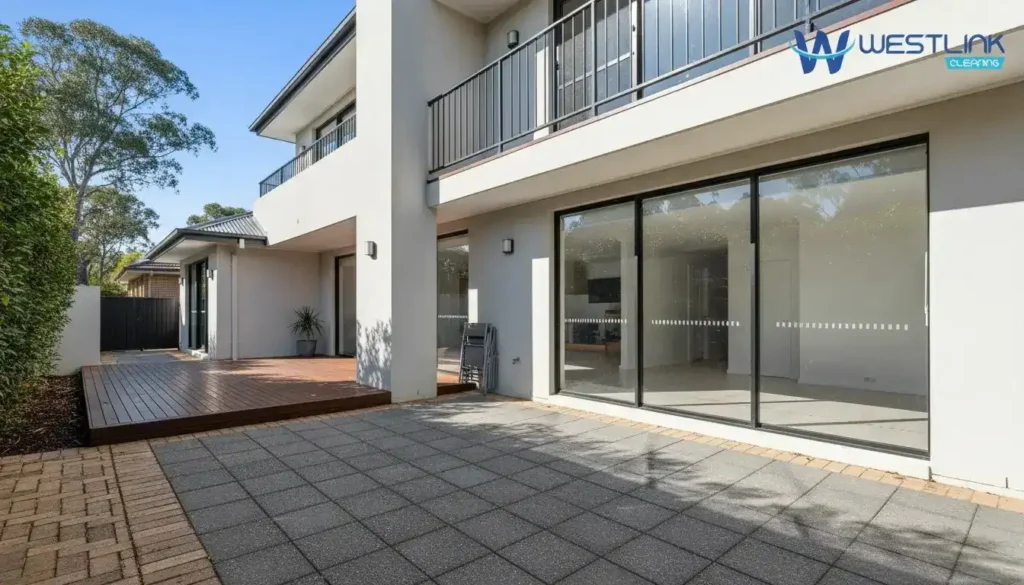
Australian weather affects exterior surfaces by exposing them to strong UV, moisture, salt, heat, wind, and temperature changes that fade coatings, roughen timber, corrode metal, stain masonry, and encourage mould or algae growth.
These effects are often easier to notice in Australia because exterior surfaces can face long sun exposure, coastal air, wet-dry cycling, dust, and sharp seasonal changes depending on location. Exterior materials rarely fail because of one weather event. They usually deteriorate because the same forces act on them again and again over time.
Why does weather damage exterior surfaces?
Weather damages exterior surfaces because outdoor materials constantly react to sunlight, water, oxygen, salts, dirt, and temperature change.
That reaction creates both chemical and physical stress. Sunlight can break down exposed surface layers. Water can enter pores, cracks, joints, and weak coating films. Salt can attract moisture and speed up corrosion. Heat and cooling can make materials expand and contract. Wind can carry grit that wears finishes down.
Damage is usually gradual at first. A surface may only look dull, slightly rough, or harder to clean. Later, the same surface may begin to chalk, crack, peel, rust, stain, or support biological growth.
Which weather conditions cause the most damage to exterior surfaces?
The weather conditions that cause the most damage are strong sun, UV radiation, rain, humidity, coastal salt, heat, wind, dust, and repeated temperature swings.
Each one affects surfaces differently:
- Sun and UV fade colour and break down exposed surface chemistry.
- Rain and humidity increase wetness time and encourage moisture-related damage.
- Salt air speeds up corrosion and reduces coating life.
- Heat and temperature changes stress joints, sealants, and rigid finishes.
- Wind and dust abrade surfaces and increase dirt build-up.
- Shade and poor airflow allow dampness, mould, and algae to remain longer.
The most serious damage usually appears where several of these conditions overlap.
How do sun and UV affect exterior surfaces?

Sun and UV affect exterior surfaces by breaking down pigments, binders, fibres, and exposed surface layers over time.
This is why painted walls may fade, lose sheen, or become chalky. It is also why timber often turns grey and rough outdoors. UV damage is usually strongest on surfaces that face long direct sun, such as exposed walls, fences, pergolas, gates, handrails, and decks. Australia’s outdoor UV conditions are well known to be intense, and the ARPANSA UV Index is a useful reference for understanding how strong UV exposure can be across different locations.
The first signs are often subtle. Colour may look lighter. The finish may lose richness. The surface may feel drier or more powdery. Later, the protective layer weakens and becomes more vulnerable to moisture and dirt.
How do rain, humidity, and trapped moisture affect exterior surfaces?

Rain, humidity, and trapped moisture affect exterior surfaces by keeping them wet long enough to cause staining, swelling, salt movement, decay, and biological growth.
Moisture becomes a larger problem when surfaces do not dry quickly. That often happens in shaded areas, sheltered corners, low-ventilation zones, and places with poor drainage. Walls behind dense plants, paving near garden beds, deck edges, and lower wall sections are common problem areas. The Queensland Health mould guidance also explains that trapped moisture and nearby vegetation can support mould growth, which is why damp exterior zones often deteriorate faster than open, sunlit surfaces.
Moisture can lead to:
- blistering or peeling paint
- mould or algae growth
- rough or swollen timber
- damp staining
- white salt deposits on masonry
- corrosion where metal stays wet too long
Rain alone is usually not the main problem. Repeated wetting without proper drying is what causes lasting damage. When damp biological growth starts building up on hard surfaces, it helps to understand practical cleaning methods such as how to clean mould from concrete floor so the surface is cleaned properly without creating more damage.
How does coastal salt air affect exterior surfaces?

Coastal salt air affects exterior surfaces by attracting moisture, accelerating corrosion, and shortening the life of coatings, fittings, and exposed assemblies.
Salt-related damage is not limited to beachfront properties. Any site exposed to marine air can be affected, especially where surfaces are sheltered and do not get washed down regularly by rain. This is one reason BlueScope maintenance guidance recommends routine washing for surfaces that are not naturally cleaned by rainfall, particularly in marine environments.
Salt is usually more damaging in:
- fasteners and brackets
- cut edges and overlaps
- metal gates and railings
- window frames and tracks
- areas under eaves and awnings
- undersides of exposed metal sections
These zones collect contamination and often stay damp longer. That is why metal may corrode faster in sheltered coastal areas than on more open surfaces that are naturally rinsed.
How do heat and temperature changes affect exterior surfaces?
Heat and temperature changes affect exterior surfaces by causing repeated expansion and contraction.
That movement may be small, but it happens often. Over time, it stresses paint films, joints, sealants, render, and brittle finishes. Hairline cracks may widen. Sealant may separate from the joint edge. A coating may begin to split where movement is repeated.
Dark surfaces, exposed metal, and sun-facing elevations often show this stress first because they heat up faster and reach higher surface temperatures.
How do wind, dust, and storm exposure affect exterior surfaces?
Wind, dust, and storm exposure affect exterior surfaces by adding abrasion, dirt load, and impact stress.
Wind can carry grit that scratches painted, sealed, or glazed surfaces. Dust can hold moisture, dull finishes, and make cleaning harsher when the surface is scrubbed aggressively. Storm-driven rain can also expose weak joints, blocked drainage paths, and areas where the protective finish has already started to fail.
This kind of weathering is common on exposed frontages, roadside properties, coastal sites, and open outdoor areas. Where dust, grime, and biological residue become heavy, it also helps to understand how pressure cleaning works before choosing a cleaning method for the surface.
How does weather affect painted exterior surfaces?

Weather affects painted exterior surfaces by causing fading, chalking, cracking, blistering, peeling, and poor colour retention.
Paint is usually the first layer to show weather damage because it is the outer protective barrier. UV can fade colour and weaken the binder. Moisture can get behind the film and reduce adhesion. Heat movement can stress older or brittle coatings. Salt and grime can shorten coating life further.
Common warning signs include:
- faded colour on sun-facing walls
- chalky residue on the hand after touching the surface
- bubbles or blisters
- flaking edges
- peeling near joints, windows, or damp areas
- patchy staining over masonry
A coating defect is often a sign of a deeper issue. Repainting over trapped moisture or active salt movement usually does not solve the real problem.
How does weather affect timber exterior surfaces?

Weather affects timber exterior surfaces by causing greying, roughness, checking, shrink-swell movement, and higher long-term decay risk.
Timber responds strongly to both UV and moisture. Sunlight weakens the surface layer. Rain and weathering then wear away that weakened material. This is why outdoor timber often becomes dull, grey, dry-looking, or fibrous before more serious damage appears.
Moisture also makes timber expand and contract. That repeated movement can lead to small surface cracks, joint stress, and finish breakdown. Common high-risk areas include:
- decks
- fences
- pergolas
- exposed posts
- handrails
- steps
- timber around planters and garden edges
When timber stays wet too often, the risk of decay and coating failure increases. For maintenance planning on decks and similar surfaces, how to clean exterior timber flooring is a useful related guide.
How does weather affect metal exterior surfaces?

Weather affects metal exterior surfaces by increasing corrosion, pitting, rust staining, and local coating breakdown, especially in sheltered or salt-exposed areas.
Metal rarely corrodes evenly across the whole surface at the start. It usually begins where water, salt, or dirt stay longer. That is why rust often appears first around screws, brackets, cut edges, hinges, base plates, joints, and overlaps.
A small rust mark may look cosmetic, but it often shows where the protective system has already failed locally. Near the coast, this tends to happen faster because salt helps the surface stay wet and more corrosive.
How does weather affect brick, render, and concrete surfaces?

Weather affects brick, render, and concrete surfaces by driving moisture movement, salt deposits, staining, algae growth, and gradual surface breakdown.
These materials often appear solid and stable, but many are porous enough to absorb and release water. When moisture moves through them, it can carry salts to the surface. As the water evaporates, white powdery deposits may be left behind. This is often seen on brick, mortar, render, and concrete.
Common signs include:
- white salt deposits
- dark damp patches
- green or black biological growth
- stained paving
- small cracks
- paint failure over masonry surfaces
A white deposit on masonry usually points to moisture movement, not just a surface dirt problem.
How does weather affect glass, seals, and exterior fixtures?
Weather affects glass, seals, and exterior fixtures by increasing dirt retention, salt film build-up, seal stress, and hardware wear.
Glass may still look sound from a distance, but the surrounding system often weathers first. Window tracks collect grit. Salt film makes surfaces harder to keep clean. Rubber seals may harden or lose flexibility over time. Exterior fittings such as brackets, lights, hinges, and fixings may also wear faster when moisture and dirt are left in place.
These areas are easy to overlook during routine maintenance, even though they often show early weather-related stress.
What are the first signs that weather is damaging exterior surfaces?

The first signs are usually visible changes in colour, texture, moisture behaviour, and adhesion.
Look for:
- faded or uneven paint colour
- chalky residue on coated surfaces
- rough grey timber
- black or green growth in damp areas
- rust marks near metal fixings
- cracked or shrinking sealant
- white powder on masonry
- surfaces that stay wet or dirty longer than nearby areas
- local peeling, blistering, or flaking
These early signs matter because they help you identify the cause before the substrate becomes more difficult to repair.
How can you tell whether the problem is UV, moisture, or salt?
You can often tell whether the problem is UV, moisture, or salt by checking where the damage appears and what form it takes.
| Damage pattern | Likely cause | Typical surfaces |
| fading, chalking, colour loss on exposed elevations | UV and heat | painted walls, trims, timber |
| black or green growth in shaded areas | trapped moisture | walls, decks, pavers, fences |
| rust in coastal or sheltered exterior zones | salt and moisture | gates, railings, fasteners, cladding |
| white powder on brick or concrete | moisture-driven salts | masonry, render, concrete |
| blistering or peeling near damp zones | moisture behind the finish | painted timber, masonry, render |
| cracking around joints and edges | thermal movement | coatings, sealants, render |
The exposure pattern often tells you more than the defect alone.
What should you check first when you notice weather damage?
You should check the exposure pattern, the moisture source, the drainage, and the actual surface condition before planning a repair.
Start with these steps:
- Compare nearby areas.
Check whether the same material looks different on a sunnier, drier, or more sheltered side. - Check for moisture sources.
Look for leaking gutters, overflowing downpipes, failed sealants, blocked drainage paths, and plants against walls. - Check how fast the area dries.
A surface that stays wet too long is a higher-risk area
. - Check whether the issue is only contamination or deeper damage.
Dirt, algae, or salt film may be removable. Rust, repeated efflorescence, blistering, and soft timber usually indicate a more serious issue. - Check small failure points first.
Joints, edges, corners, fasteners, and undersides often fail before large flat surfaces do.
How can you reduce weather-related damage?

You can reduce weather-related damage by cleaning correctly, controlling moisture, managing salts, improving drainage, and repairing small failures early.
A simple maintenance routine is usually more effective than waiting for obvious failure. Good practice includes:
- inspect exterior surfaces every six months
- inspect more often in coastal, shaded, or high-soiling areas
- wash or rinse sheltered surfaces that do not get natural rainfall cleaning
- keep gutters, drains, and downpipes clear
- trim vegetation away from walls, fences, and lower surfaces
- repair cracked sealant and small coating breaks early
- avoid recoating a damp or contaminated surface before the cause is fixed
Small preventive actions usually cost less than large corrective repairs. On painted walls, timber, and more delicate finishes, it is also useful to understand what is soft washing so the cleaning method matches the material instead of relying on high pressure by default.
When is DIY maintenance enough, and when is expert help needed?
DIY maintenance is usually enough for routine inspection, gentle cleaning, salt rinsing, and minor upkeep, but expert help is needed when the problem points to active moisture ingress, widespread coating failure, severe corrosion, or structural cracking.
DIY care is usually suitable for:
- basic inspection
- light cleaning
- washing accessible surfaces
- removing surface dirt and light biological growth
- trimming vegetation
- clearing simple drainage blockages
- replacing small failed sealant sections
Expert assessment is usually needed when you see:
- recurring white salts on masonry
- large peeling or blistering paint areas
- repeated damp staining with no obvious surface cause
- rust around important structural fittings
- timber that feels soft or badly split
- cracks that reopen after patching
- extensive mould contamination
- render or concrete that sounds loose or hollow
The main rule is simple: fix the cause before fixing the finish.
What is the main takeaway?
Australian weather affects exterior surfaces by combining UV, moisture, salt, heat, dust, and movement stress on the same material over time.
That is why weather damage often appears as a chain of related problems rather than one isolated defect. Regular inspection, correct cleaning, moisture control, and timely repair help reduce deterioration and keep exterior surfaces in better condition for longer.
Frequently Asked Questions
1. Does Australian sun damage exterior paint faster?
Ans. Yes, strong UV can accelerate fading, chalking, and loss of colour retention on exterior paint. The effect is usually strongest on sun-facing walls and exposed trims that receive long direct sunlight.
2. Why does timber turn grey outside?
Ans. Timber turns grey outside because sunlight degrades the surface and weather gradually erodes that weakened layer. Moisture and surface wear then make the timber look rougher and more weathered.
3. Why do coastal properties need more exterior maintenance?
Ans. Coastal properties need more exterior maintenance because salt increases corrosion risk and helps contaminants stay active on exterior surfaces. Sheltered sections often need the most attention.
4. What is the white powder on exterior brick or concrete?
Ans. The white powder is usually a salt deposit left behind as moisture moves through the material and evaporates. It often points to a moisture issue rather than a simple cleaning issue.
5. Why do shaded outdoor surfaces get mold or algae?
Ans. Shaded outdoor surfaces get mold or algae because they dry more slowly and stay damp longer. Poor airflow and nearby vegetation can make the problem worse.
6. Why does paint peel more in damp areas?
Ans. Paint peels more in damp areas because moisture can get behind the film and weaken adhesion. The surface usually needs moisture control before repainting.
7. Can wind and dust really damage exterior finishes?
Ans. Yes, wind and dust can damage exterior finishes by scratching surfaces, increasing dirt load, and making cleaning more abrasive. This is common on exposed frontages and roadside properties.
8. Which exterior surfaces need the most attention?
Ans. Painted walls, timber decks and fences, coastal metalwork, exposed masonry, pavers, and shaded damp areas usually need the most attention. These surfaces tend to show weather damage earlier than more protected areas.
9. Is cleaning enough to fix weather damage?
Ans. Cleaning is enough only when the problem is surface-level contamination. Deeper issues like moisture ingress, active corrosion, recurring salt deposits, and failed coatings need more than cleaning.
10. How often should exterior surfaces be checked?
Ans. Exterior surfaces should usually be checked at least every six months. Coastal, shaded, and high-soiling properties often benefit from more frequent checks.


